
Insights
Beni Camera Robot Enters Shipping: Sourcing Follow-Cam Hardware
INDUSTRY NEWS · CAMERA ROBOTS & IMAGING HARDWARE · SEPTEMBER 2026
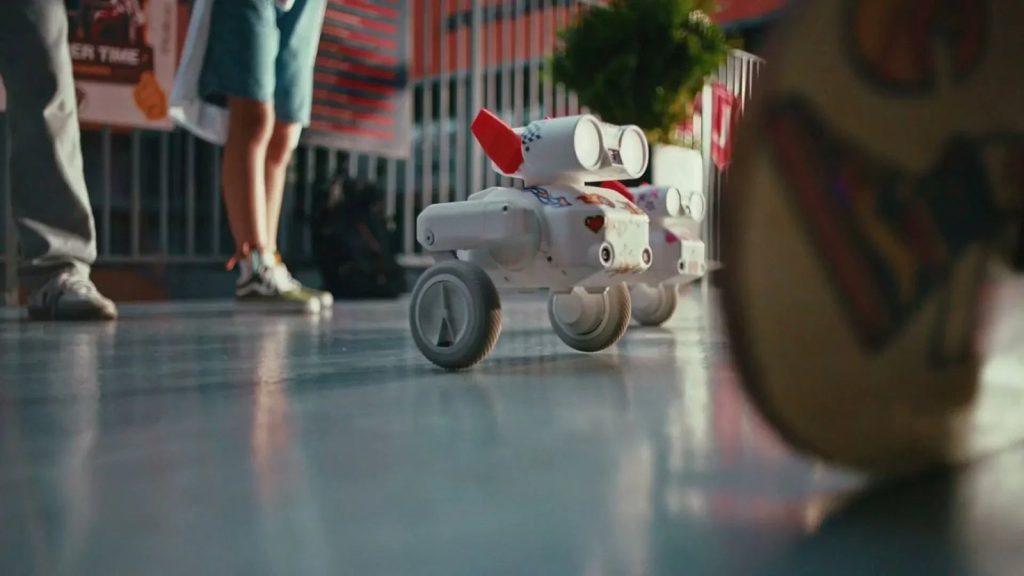
Beni, the all-terrain follow-cam robot from Mondo Robotics, has moved from crowdfunding into shipping. For a category that has spent two years demonstrating capability, the interesting part starts now: what breaks, what gets re-ordered, and who supplies it.
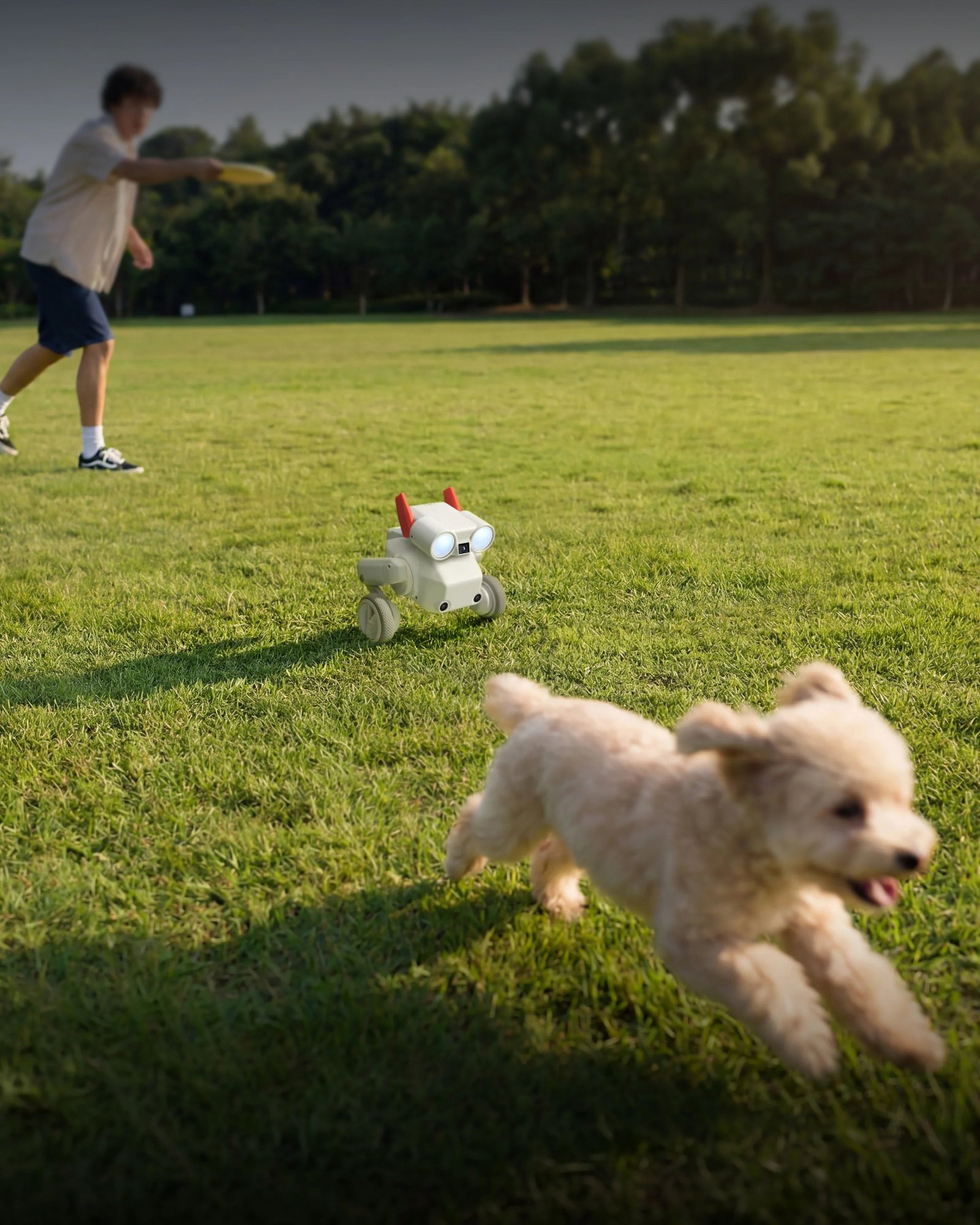
The launch story is well documented. Mondo Robotics was founded by Shuo Yang, an engineer who came out of DJI and later worked on Tesla’s Optimus program, together with former DJI colleagues. Its first product, Beni, is a small all-terrain camera robot that follows a user and films them without a second person holding a camera. The crowdfunding campaign raised roughly US$2.9 million, and the official store lists a price range of about US$499 to US$799 depending on configuration.
What matters more for the supply chain is that the program has now entered its shipping stage. TUOLAN TRADE understands from its sourcing desk that units are moving to customers, with the official product page still presenting the device as a reserve-and-ship offer. Media coverage of the delivery phase is still thin, which is normal for a first-generation hardware product that has not yet run a full quarterly cycle.
What Beni actually is, in engineering terms
Strip away the marketing and Beni is a compact mobile platform carrying a stabilised camera head. The published specification is specific enough to reason about:
- Top follow speed of about 17.9 mph (roughly 29 km/h) — fast enough for cycling and trail running, which forces real requirements onto motor torque, wheel grip and control-loop latency.
- 4K at 30fps, 3K at 60fps, 1080p at 100fps — a conventional small-sensor imaging stack, not a cinema system, which keeps the optical module in the volume-manufacturable range.
- 32GB internal storage plus a microSD slot, with following, filming and playback handled on-device and no internet required — an architectural choice that keeps latency and privacy local and removes cloud cost from the bill of materials.
- 3.86 lbs (1.75 kg), 8.5 × 7.1 × 7.1 in — light enough to be carried in a backpack, heavy enough to need a real suspension and gimbal design.
- About 1.5 hours per battery, up to 4.5+ hours with two swaps — a swappable pack design, which turns batteries into a repeat-purchase accessory rather than a one-off component.
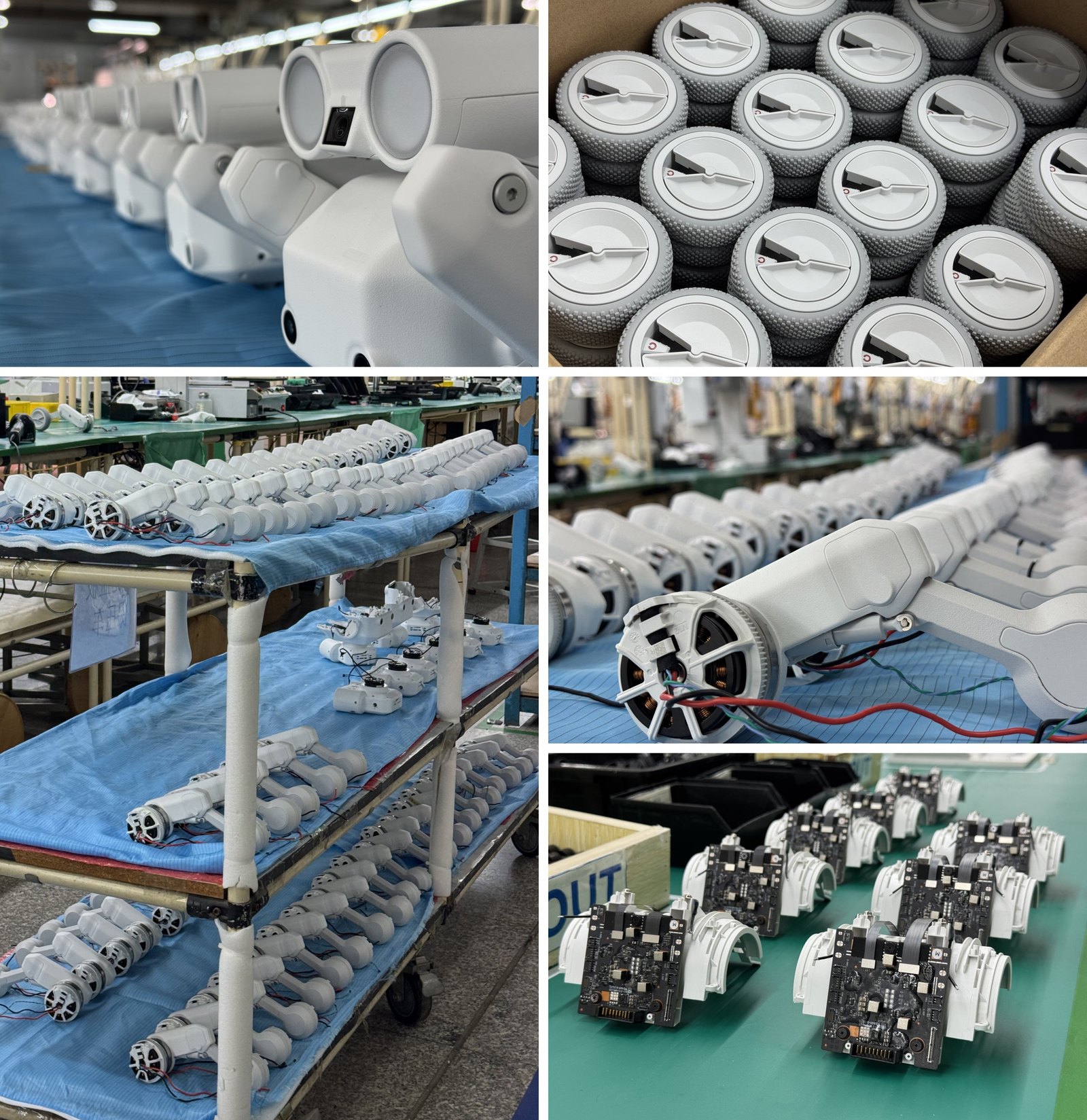
None of those numbers are exotic on their own. The difficulty is that they have to hold simultaneously in a device that is thrown into a car boot, rolled across gravel and asked to hold a framing decision while moving. That is a system-integration problem before it is a component problem.
Beni Camera Robot: Imaging & Sourcing Overview →
Why the shipping phase matters for component sourcing
- The first re-order is spares, not a second build. Once units are in customers’ hands, demand shifts to batteries, wheels, gimbal assemblies and lens covers. These are low-value, high-urgency items that reward a supplier who can ship small quantities quickly.
- Optics stay in the volume tier, which is good news. A 4K@30fps class module does not require exotic glass or extreme tolerances. That keeps the optical path inside the reach of mainstream precision-lens and coating suppliers rather than a handful of specialists.
- Gimbal mechanics are the likely yield risk. Three-axis stabilisation combines bearings, motors, drivers and calibration. Failures there surface as image-quality complaints, not as obvious hardware faults — which makes incoming inspection of motor and bearing lots worth the cost.
- Swappable batteries create a certification and shipping question. Replacement packs cross borders as lithium cells, so UN 38.3 documentation and packaging compliance become part of the accessory supply chain rather than an afterthought.
- A second generation is the real opportunity. First-generation hardware typically converges on a short list of changes within two quarters: better thermal behaviour, cheaper housing, tighter optics. Suppliers who are already qualified when that list is written usually capture it.
How to approach follow-cam and robot imaging sourcing
- Quote the sub-assembly, not the part. A tested gimbal head or a pre-focused camera module removes calibration work from the assembly line and usually lowers total cost even at a higher unit price.
- Define the acceptance test before the price. Framing stability, drift under load and battery cycle life are the parameters customers notice first; they belong in the specification, not in the complaint log.
- Keep two qualified optical suppliers. Lens and coating capacity is shared with phones, wearables and automotive programs, so a single qualified source is a scheduling risk rather than a price risk.
- Plan for accessories on day one. Batteries, wheels and mounts are where repeat revenue sits for consumer robots, and they are also the cheapest way to keep a customer relationship active between product generations.
- Ask for lot traceability on moving parts. Motors, bearings and gimbals behave differently lot to lot. Traceable batches turn a field failure into a targeted recall instead of a blanket one.
Sourcing camera robot optics, gimbals or accessories?
Send your target specification, annual volume, packaging constraints and required delivery window to sales@tuolango.com and we will return a sourcing comparison with qualified suppliers and lead times.
Sources and disclosure
Sources: Mondo Robotics official product pages for Beni (dimensions, weight, top follow speed, recording modes, storage, battery life, price range and on-device processing) and public reporting on the company background and crowdfunding total of approximately US$2.9 million. Shipping-stage status was confirmed through the TUOLAN TRADE sourcing desk and is not yet reflected in public media reporting. The component, procurement and supply-chain observations above are TUOLAN TRADE analysis and are not attributed to any cited source. Edited and analysed by TUOLAN TRADE.