
Insights
RobCo Passes $1 Billion Valuation as Alfie Industrial Robot Heads to US Floors
ROBOTICS & SMART HARDWARE · INDUSTRIAL AUTOMATION · OCTOBER 2026
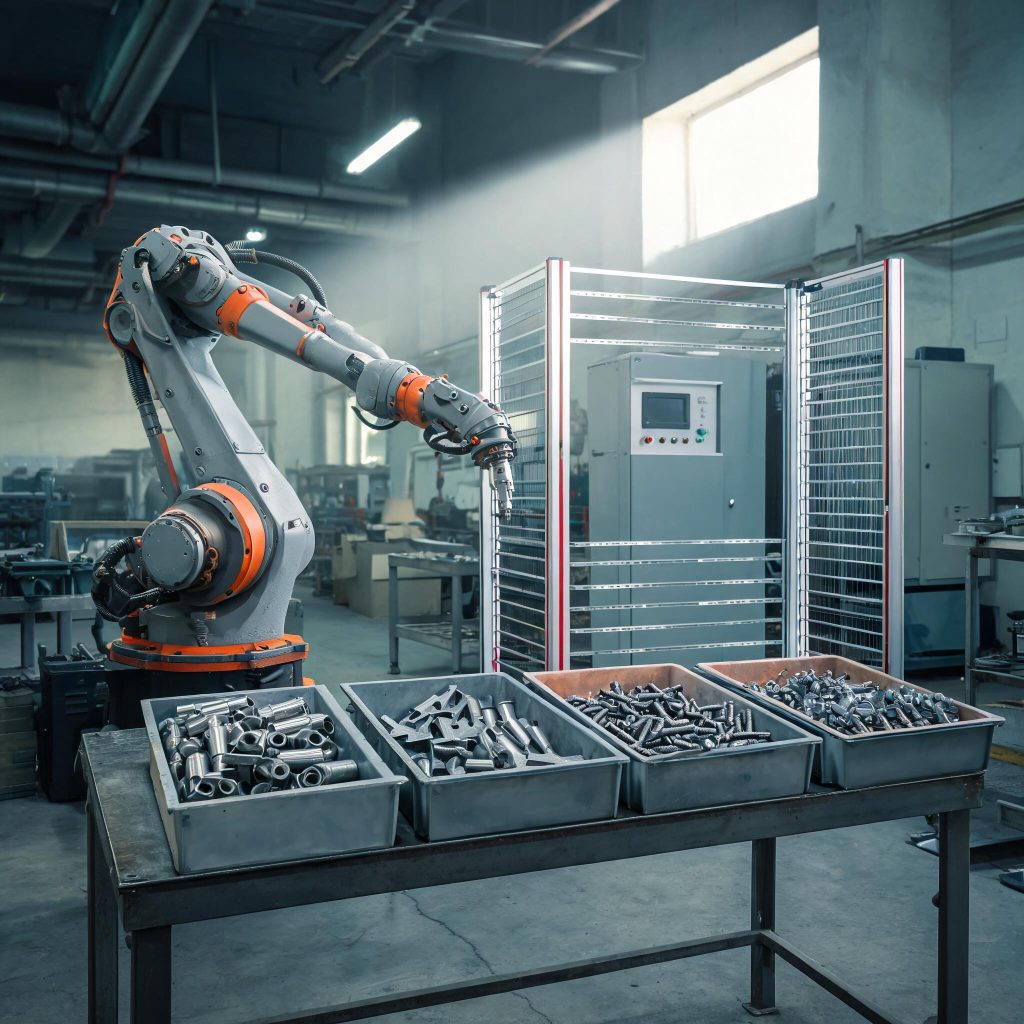
Munich-based RobCo says it has passed a $1 billion valuation, doubling it in nine months, and is moving its centre of gravity to the United States, where it already builds in Austin, Texas and runs a lab in San Francisco. Its next product, the autonomous industrial robot Alfie, will be launched commercially at the company’s first summit in Munich on 4 March 2027.
Robotics & Automation News reported the valuation on 5 October 2026. Existing investors including Sequoia, Lightspeed, Greenfield, Kindred, Lingotto and Promus Ventures participated alongside new investors including Cherry Ventures and European Tech Collective. Co-founder and chief executive Roman Hölzl described the round as an opportunity to strengthen the company while giving long-standing employees the chance to realise part of the value they created.
Alfie and the high-mix problem
Alfie is positioned against the work that has historically resisted automation: high-mix, unstructured, safety-critical tasks on real factory floors. RobCo describes the robot as combining perception, reasoning and execution in one unit, rather than as a fixed-function cell designed around a single part family.
That framing matters commercially. Traditional industrial robotics pays for itself on long runs of identical parts, because the cost of fixturing and programming is amortised over high volume. High-mix production inverts the economics: setup dominates, so the useful automation must perceive a new part, plan a motion and execute it without a bespoke fixture for each changeover. Every one of those three functions is sensor-heavy.
The US is now the growth market
RobCo states that customer operations now span more than a dozen US states, supported by manufacturing and assembly operations in Austin and a San Francisco lab, and that its chief executive has relocated to the United States to drive the expansion personally. Sequoia partner Luciana Lixandru framed the investment around physical AI — systems that act in the world rather than only reason about it.
The statement is consistent with the wider pattern in the sector this autumn, where capital and deployment announcements have clustered around industrial and logistics automation rather than consumer humanoids: Flexiv exhibiting force-controlled adaptive robots at IROS 2026, Comau building a robotic order-preparation system for Decathlon e-commerce operations, Dürr launching four robots for automotive paint shops, and Ency Software and Estun partnering on integrated robot programming. Autonomous freight and delivery are moving in parallel, with Kodiak and IKEA preparing driverless freight operations in Texas and Deliveroo working with Coco Robotics on UK deliveries.
Camera & Robot Hardware Sourcing →
Where the component demand lands
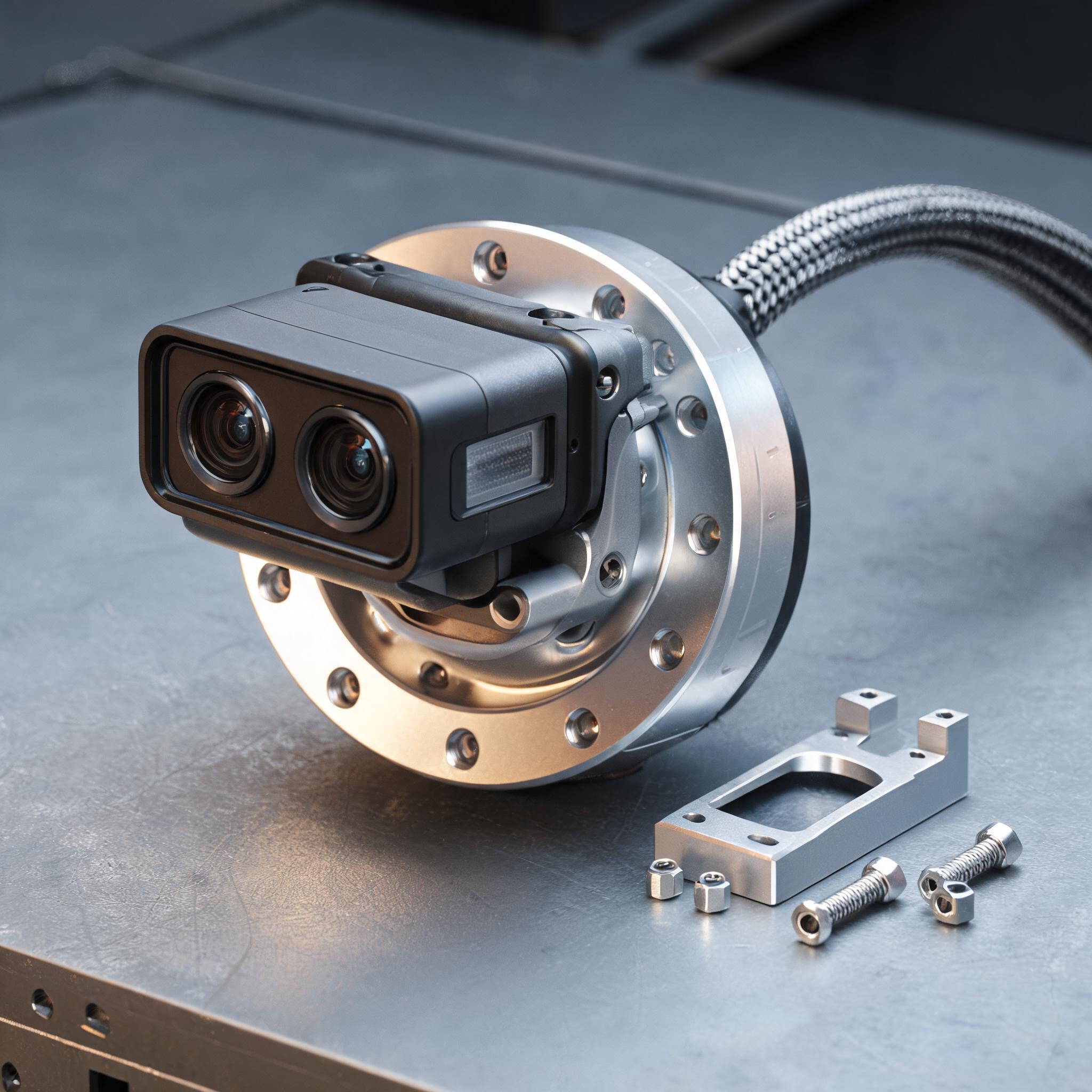
- Perception is the bill of materials. A robot that must identify an unknown part needs depth sensing, one or more imaging channels, illumination and the optics in front of each sensor. That is a optics procurement line item, not an accessory.
- Depth cameras are the specification to watch. Field of view, working range, baseline and accuracy determine which parts the system can pick. Those parameters come from the optical and sensor design, and they belong in the RFQ.
- Industrial environments set the qualification bar. Vibration, ambient light, coolant mist and dust all degrade perception. Ask for performance data under representative conditions rather than in a laboratory.
- Design for changeover, not for one part. Accessories that help a cell re-fixture quickly — adjustable mounts, quick-change optics, configurable illumination — carry a disproportionate share of the value in high-mix production.
- US assembly shifts the sourcing question. With manufacturing and assembly operations in Austin, the practical question for suppliers is not only unit cost but landed cost, lead time and documentation for a US build.
Sourcing perception hardware or automation accessories?
Send your working range, field of view, accuracy, environmental conditions, mounting interface and annual volume to sales@tuolango.com and we will return a qualified-supplier comparison for camera modules, imaging optics and mounting hardware.
Sources and disclosure
Sources: Robotics & Automation News, “RobCo reaches $1 billion valuation as investors back US expansion”, 5 October 2026 — valuation described as having surpassed $1 billion and doubled in nine months, participation by existing investors Sequoia, Lightspeed, Greenfield, Kindred, Lingotto and Promus Ventures and new investors Cherry Ventures and European Tech Collective, the Alfie autonomous industrial robot targeting high-mix, unstructured, safety-critical factory work, commercial launch at RobCoN in Munich on 4 March 2027, US customer operations across more than a dozen states, manufacturing and assembly operations in Austin, Texas and a lab in San Francisco, the chief executive’s relocation to the United States, and comments from CEO Roman Hölzl and Sequoia partner Luciana Lixandru. Sector context from Robotics & Automation News reports of 30 September–2 October 2026 on Flexiv at IROS 2026, Comau and Decathlon, Dürr paint-shop robots and the Ency Software–Estun partnership, and reports of 6 October 2026 on Kodiak with IKEA in Texas and Deliveroo with Coco Robotics in the United Kingdom. Component and qualification observations are TUOLAN TRADE analysis and are not attributed to any cited source. Edited and analysed by TUOLAN TRADE.