
Insights
UV to MWIR Waveplates for Machine Vision
<
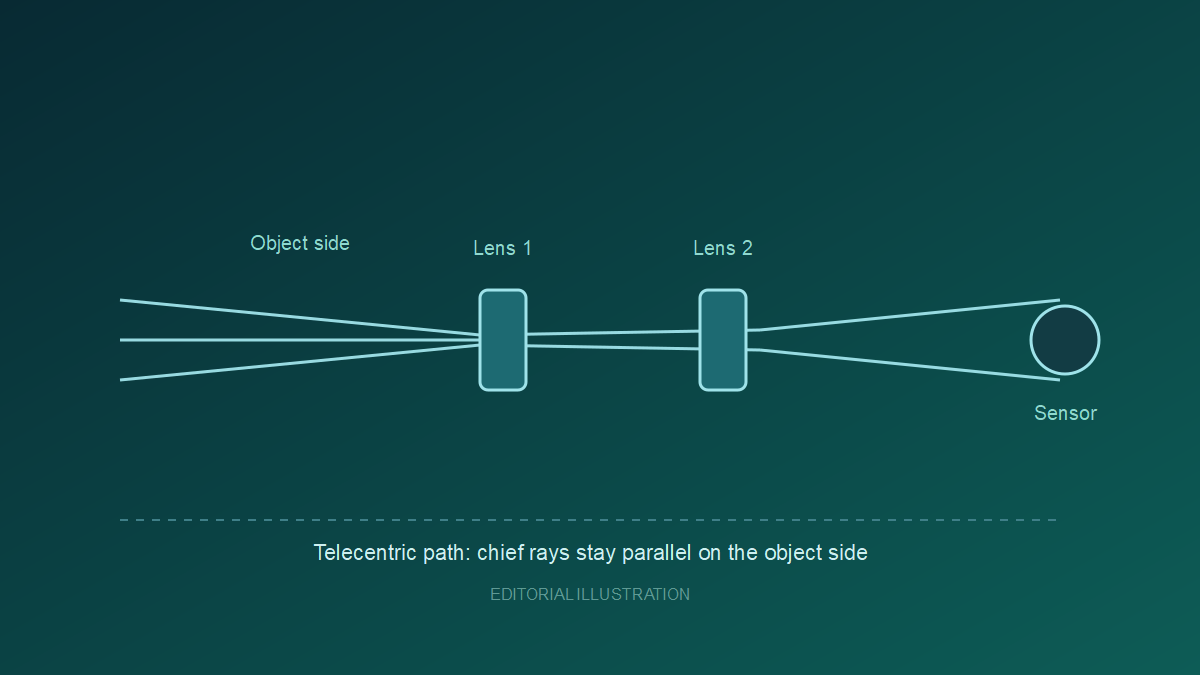
INDUSTRY NEWS · PRECISION OPTICS · SEPTEMBER 12, 2026 Two announcements this week are useful reference points for anyone specifying precision optics: Edmund Optics now lists off-the-shelf waveplates covering ultraviolet through mid-wave infrared, and Basler is pairing telecentric optics with hybrid AI to make PCB drilling inspection more reliable. Catalog optics and application-driven lens design rarely make headlines, but they shape what engineers can actually buy and deploy. This week’s items span both ends of that spectrum — a wider off-the-shelf polarization range, and a machine-vision architecture that combines classical telecentric imaging with AI inference. Edmund Optics announced that its stocked waveplate range now covers ultraviolet through mid-wave infrared wavelengths. For laboratories and OEMs working across multiple bands, stocked retarders shorten prototype cycles considerably: a waveplate that used to require a custom run and an 8–12 week lead time can increasingly be ordered from the shelf. The same week, the company also announced a point-source microscope that combines optical alignment, centering and inspection in one instrument, and configurable LUMIMAX ring lights for machine-vision integrators. Mid-wave infrared coverage is particularly relevant to the thermal-imaging supply chain, where chalcogenide and germanium optics dominate lens assemblies. Buyers specifying infrared lenses increasingly ask for matching polarization and window components from the same spectral range. Basler published a use case describing how telecentric lenses combined with what it calls hybrid AI improve the reliability of PCB via-drilling position detection. Telecentric illumination keeps magnification constant across the field, while a hybrid pipeline splits work between FPGA pre-processing and GPU inference — a division of labor Basler also describes in a separate technical article on computing power in AI vision systems. The company additionally extended photometric-stereo imaging to continuously moving objects, and released a high-speed line-scan inspection approach for copper foil and copper-clad laminate. TUOLAN TRADE sources visible and infrared lens assemblies, windows, filters and polarization optics from qualified Chinese factories, with factory audit support for overseas buyers. Send your specification through the contact page or email sales@tuolango.com. This article was compiled from the public internet sources listed above. Product capabilities reflect manufacturer statements as of their publication dates. All images are original editorial illustrations, not photographs of any product.Off-the-shelf waveplates, UV to MWIR
Telecentric optics plus hybrid AI for PCB inspection
Why this matters for sourcing precision optics
Sources