
Insights
IFA Cyber Pet Award: A New Smart Pet Component List
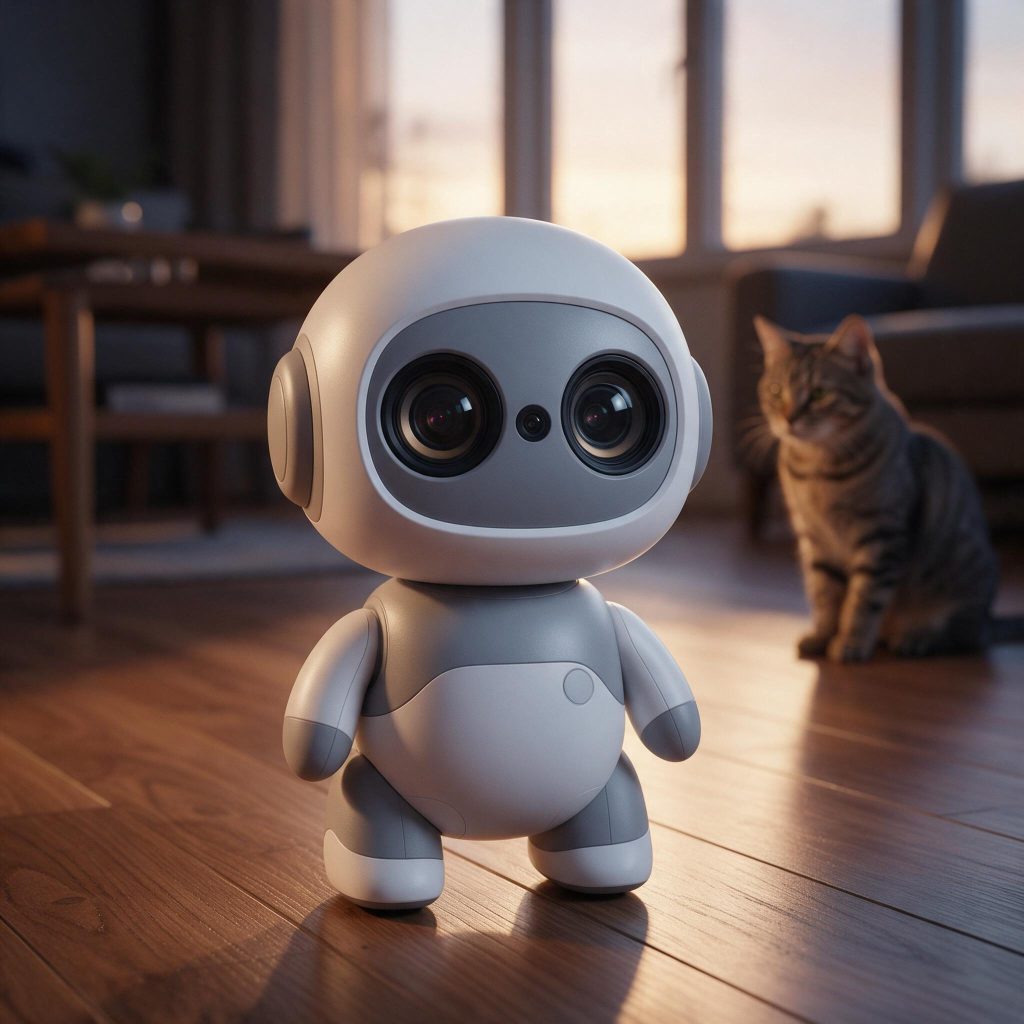
INDUSTRY NEWS · SMART PET & COMPANION ROBOTICS · SEPTEMBER 2026
A companion robot took an IFA Innovation Award in the home-entertainment category this month, and the product it was given for is not a vacuum or a speaker. It is a “cyber pet” that is designed to notice a house rather than obey it. For anyone sourcing in pet tech, that is a category signal worth reading carefully.
OlloBot showed its OlloNi SS1 and L1 companion robots at IFA Berlin from 4 to 8 September 2026, its first offline appearance in Europe, at stand H1.2_174. In a follow-up release dated 23 September, the company said OlloNi SS1 took an IFA Innovation Award in the home-entertainment category and appeared in the show’s robot runway segment alongside other humanoid and robotics brands.
The product description is the interesting part for a sourcing audience. OlloNi SS1 is presented as carrying an emotional-intelligence engine, an interaction system and a movement-memory module, using cameras, microphones and additional sensors to perceive its environment, recognise household members and pets, and read tone, expression and behavioural detail. The stated design goal is a device that learns a household over time and develops a distinct character per home — explicitly differentiated from devices that wait for a command.
OlloBot is a brand of Ollobot Robotics Limited, headquartered in Hong Kong and part of the Shenzhen-listed Huichang Technology group (300578). The company frames the target use cases in human terms rather than technical ones: elderly people living alone, families split across cities, dual-income parents, and young urban renters coming home to an empty flat.
Why a companion robot matters to pet-tech sourcing
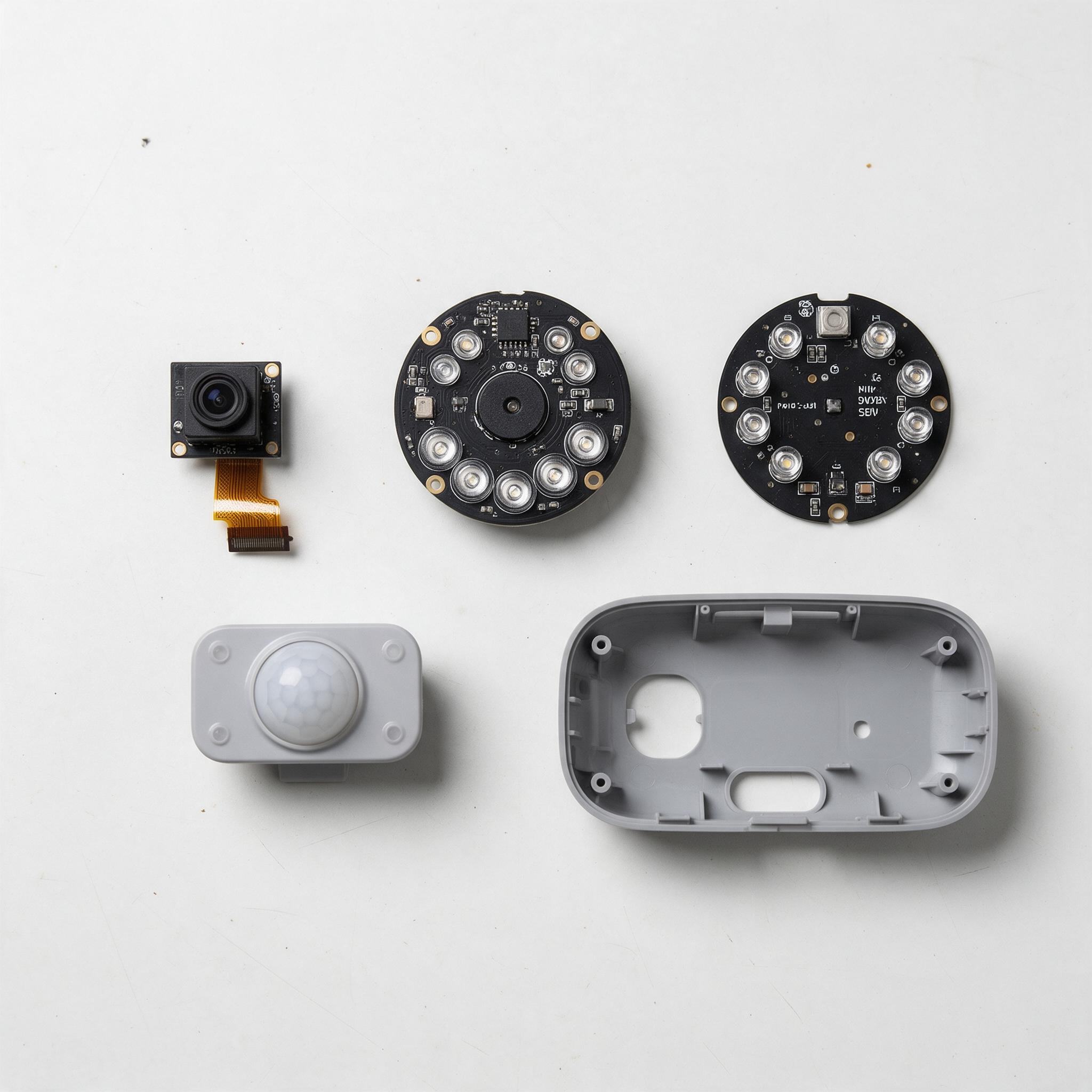
Companion robotics and pet technology are converging on the same bill of materials. Both need a camera that works indoors in poor light, a microphone array, presence and motion sensing, and a compute module that can run recognition locally. Both are sold on an emotional promise and judged on whether the device is still being used in month three.
- The sensor stack is nearly identical. Multi-object recognition, pet-versus-person classification and indoor low-light imaging are the same problems in a feeder, a litter box, a pet camera and a companion robot.
- Awards are being used as distribution. An IFA Innovation Award plus a runway appearance is a retail and channel argument, not a laboratory one. Expect award language to appear in listing copy across this category through the holiday season.
- Price bands are still forming. Companion robots are entering at a premium tier while mainstream pet devices compete under USD 250. The same optical and sensing components are being bought by both, which caps component cost and puts pressure on the premium tier to prove its value.
- Privacy claims are becoming a purchase criterion. Once a device in the home recognises faces and pets continuously, where processing happens — on-device or in the cloud — becomes a sourcing question you will be asked by retail partners.
Custom Sourcing for Smart Devices →
How to specify for a pet-tech or companion device programme
- Write the recognition requirement as a measurable spec. Night-time accuracy at a stated distance and lighting level, false-trigger rate per day and latency are the numbers that decide whether users keep the device.
- Choose the camera module against the night case. Colour night vision and infrared illumination choices change both the BOM and the certification path; decide them before the industrial design is frozen.
- Separate on-device from cloud processing in the contract. Retention periods, region of processing and what leaves the device should be documented at component level, not summarised in a marketing page.
- Plan the plastic and mechanical tooling alongside optics. Sensor placement, window flatness and stray-light control are mechanical decisions that constrain optical performance.
- Buy the second version, not the first. Category-defining devices are iterated quickly. Locking a component that can only serve one industrial-design revision is the most common cost mistake in this segment.
Building a smart pet or companion device for the US market?
Send your target price, volumes and feature list to sales@tuolango.com and we will return component and factory options with landed-cost estimates.
Sources and disclosure
Sources: PR Newswire Asia release issued by OlloBot, “OlloBot makes its official IFA Berlin 2026 debut”, 4 September 2026; follow-up OlloBot release, “OlloBot debuts in Europe, bringing cyber pets to the centre of attention in Berlin”, 23 September 2026; mirrored coverage from DoNews and 21st Century Business Herald carrying the same release. Product features, award category, stand number, exhibition dates and corporate ownership are reproduced as the issuer states them and have not been independently verified by us. Market and cost observations are our own editorial analysis. This article is original editorial analysis by TUOLAN TRADE for industry reference and is not a product endorsement. Company and product names remain the property of their respective owners.