
Insights
Silicon Lenses Pass 900 Million Units: Coupling Optics
INDUSTRY NEWS · PRECISION OPTICS & INFRARED · SEPTEMBER 2026
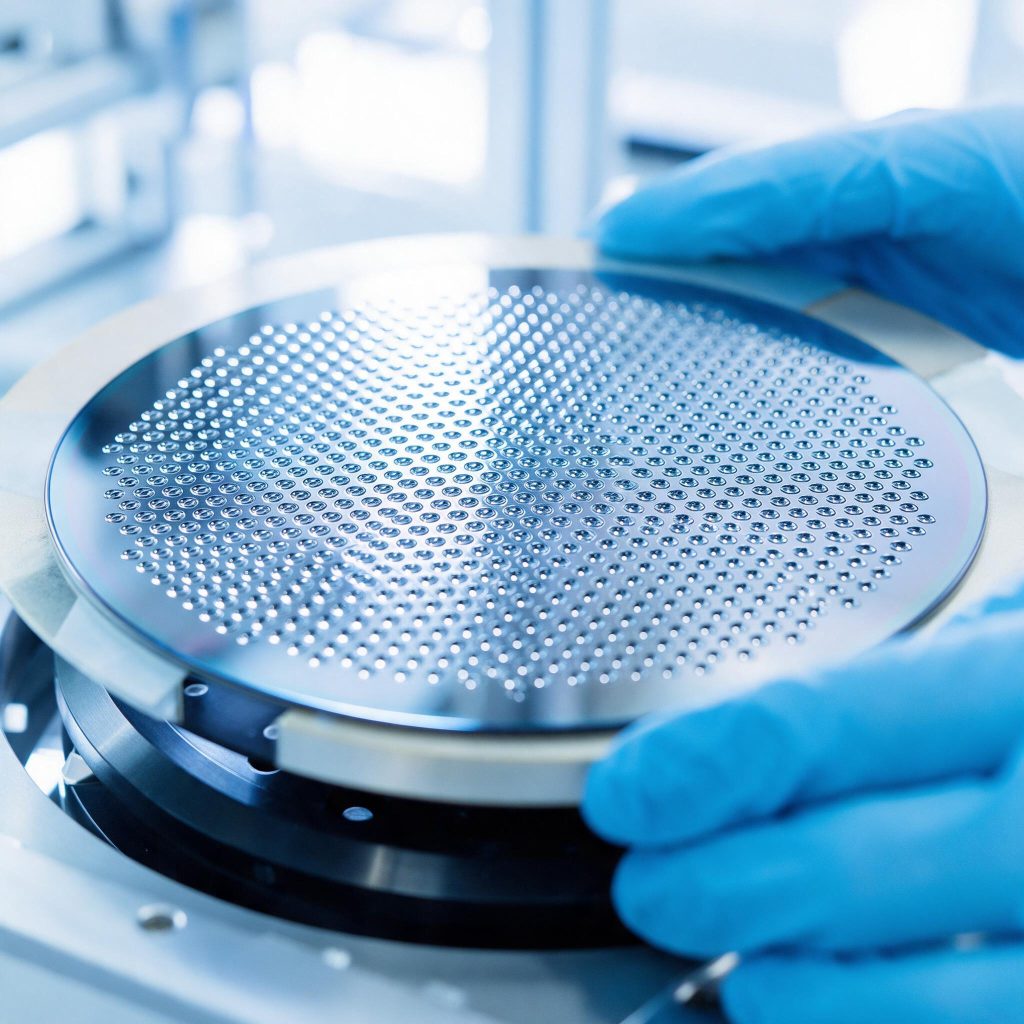
One company has shipped more than 900 million silicon lenses and says its customers cover over 95% of the world’s optical module makers. That number matters well beyond datacentre optics, because the same wafer-level silicon micro-optics capability is what infrared imaging has always needed and rarely gets in volume.
At ECOC 2026, which opened in Málaga, Spain on 21 September 2026, SUNA (苏纳) presented silicon lens and silicon capacitor product families aimed at CPO, NPO, optical I/O, optical circuit switching, transceivers and advanced packaging. The company reported that cumulative silicon lens shipments have passed 900 million units, that its customers cover more than 95% of global optical module companies, and that its silicon capacitors have reached volume delivery with leading customers.
The company was founded in 2014 by researchers from Tsinghua University and the Chinese Academy of Sciences, and describes itself as owning a complete, independent chip development and manufacturing line spanning the full fabrication chain, with wafer-level manufacturing for the optical parts. It states product applications across optical communications, advanced packaging, consumer electronics, automotive electronics, industrial lasers and healthcare.
Why a silicon lens volume number is a supply signal
As modules move to 1.6T and 3.2T and co-packaged architectures advance, the optical path between the chip and the fibre gets shorter and the tolerance budget gets tighter. Coupling optics that were once a passive accessory become a yield-determining component, and the supplier that makes them by the wafer is the one that can hold unit cost while the volume climbs.
- 900 million units is a process maturity statement. A lens delivered in that volume from wafer-level manufacturing implies stable lithography, etch and singulation, plus the metrology to hold it. Buyers should read this as evidence of reproducibility, which is the thing custom optics programmes most often lack.
- The portfolio is optical plus electrical in one house. Lenses address coupling; silicon capacitors address high-frequency power integrity. Both appear on the same high-speed module board, and one supplier covering both reduces the number of separate qualifications a module house must run.
- Coverage claims need a scope definition. “More than 95% of global optical module companies” is a customer-count statement, not a revenue or share statement, and the source does not break it down. Treat it as a breadth indicator rather than a market-share figure.
- Silicon is also an infrared material. Silicon transmits into the mid-infrared, which is precisely why silicon and germanium dominate infrared windows and imaging optics for thermal cameras. A supplier with volume silicon micro-optics capability sits one process step away from infrared optical components, and infrared buyers should be tracking that adjacency.
How to source silicon micro-optics and infrared optics against this backdrop
- Ask for the process, not just the part. If a supplier manufactures at wafer level, ask for the layer count, the singulation method and the inspection criterion. Those three answers predict whether your second order matches your first.
- Separate datacom coupling optics from infrared imaging optics in your RFQ. They share a material family and a manufacturing style but not a specification set. Infrared lenses are quoted on transmission across a waveband, athermalisation and coating durability; datacom coupling optics are quoted on coupling efficiency and alignment tolerance. Mixed RFQs produce incomparable quotes.
- Use silicon or germanium windows to test whether a supplier is genuinely an infrared house. Ask for transmission curves at your band edges and for durability data on the anti-reflection coating. A supplier that can only quote a range claim is a reseller, not a manufacturer.
- Watch the packaging route for co-packaged optics. Silicon lenses and silicon capacitors are sold into CPO and NPO assemblies, where the module house owns the process window. Confirm whether your supplier will ship bare die, a lens array, or an integrated component, because that changes your assembly cost more than the unit price does.
- Plan the volume break with the supplier. The economics of wafer-level optics reward volume in ways that single-piece polishing cannot. Ask where the price steps sit and whether tooling is shared with other customers.
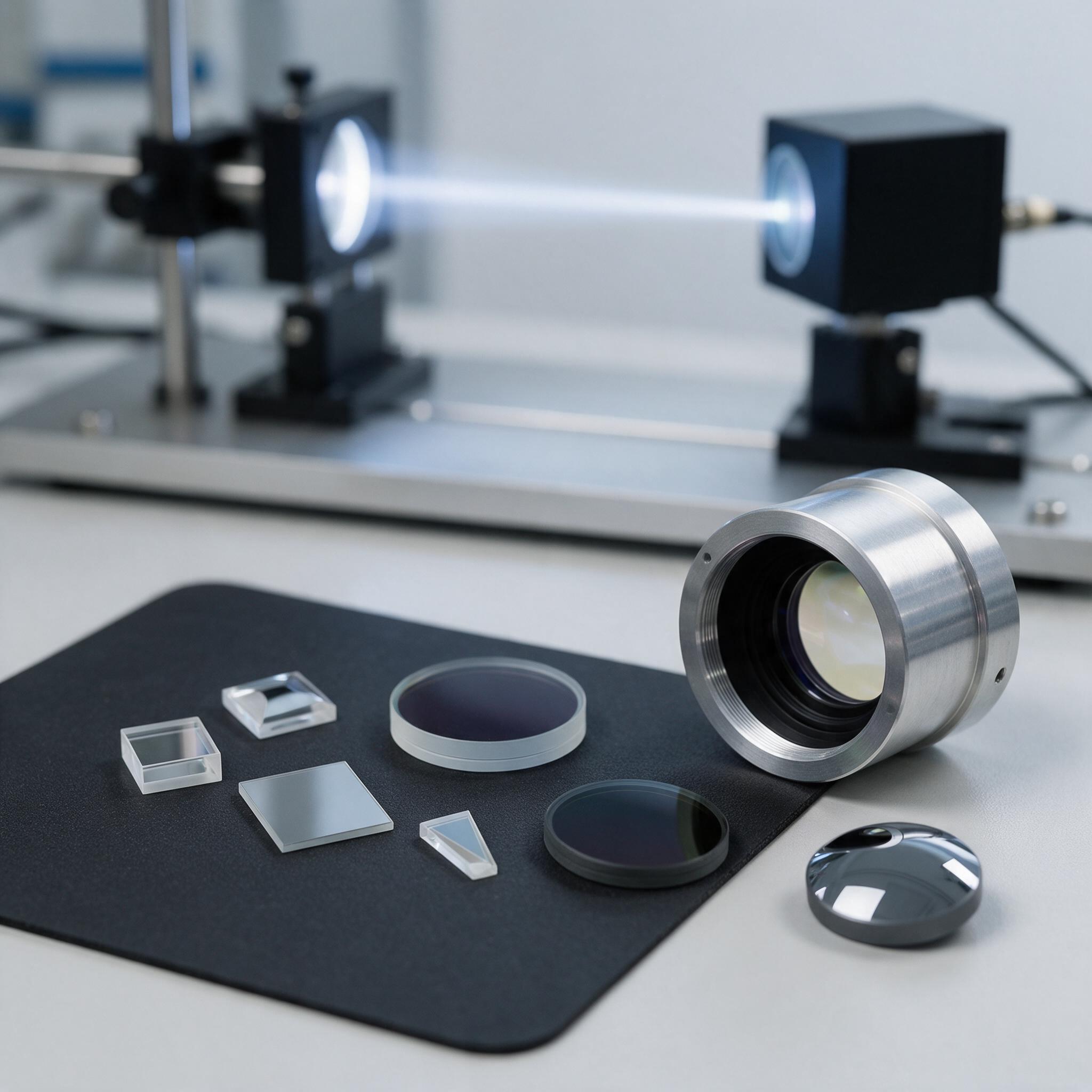
Need silicon micro-optics, infrared lenses or optical windows quoted?
Send your waveband, transmission target, dimensions, coating requirement and annual volume to sales@tuolango.com and we will return a sourcing comparison with sample options.
Sources and disclosure
Sources: Optical Fiber Online (c-fol.net) report of 24 September 2026 covering SUNA’s ECOC 2026 exhibit, including the exhibit date of 21 September 2026, the silicon lens and silicon capacitor product families, the CPO/NPO/optical I/O/optical circuit switching/transceiver/advanced packaging application list, the cumulative silicon lens shipment figure of more than 900 million units, the customer coverage statement of more than 95% of global optical module companies, the silicon capacitor volume delivery status, the company’s 2014 founding by researchers from Tsinghua University and the Chinese Academy of Sciences, and its stated wafer-level manufacturing and full-chain chip development and manufacturing capability. The two claims about shipment volume and customer coverage are reproduced exactly as the cited source states them and have not been independently audited by us. The customer coverage statement is a count-based claim whose scope is not defined in the source. The silicon transparency and infrared window material context is general industry knowledge presented as background and is not attributed to the cited source. The exact split of silicon lens shipments by end application, pricing and customer names were not disclosed and are not estimated here. This article is original editorial analysis by TUOLAN TRADE for industry reference, not investment advice or an offer of securities. Product and company names remain the property of their respective owners.