
Insights
Subsea Cable Capacity Is Booked Past 2030: Sourcing Impact
INDUSTRY NEWS · SUBSEA FIBER & CABLE SUPPLY · SEPTEMBER 2026
An operator says the resources needed to build new submarine cables are committed beyond 2030. When a 7,000-kilometre asset class sells out years ahead, the people who feel it first are the buyers of ordinary fibre, connectors and repeaters.
On 24 September 2026, Optical Fiber Online reported that the Australian carrier Vocus described subsea cable construction resources as committed out to beyond 2030, with customer demand for subsea capacity growing by orders of magnitude compared with earlier cycles. The report frames this as a capacity-planning problem rather than a technology problem.
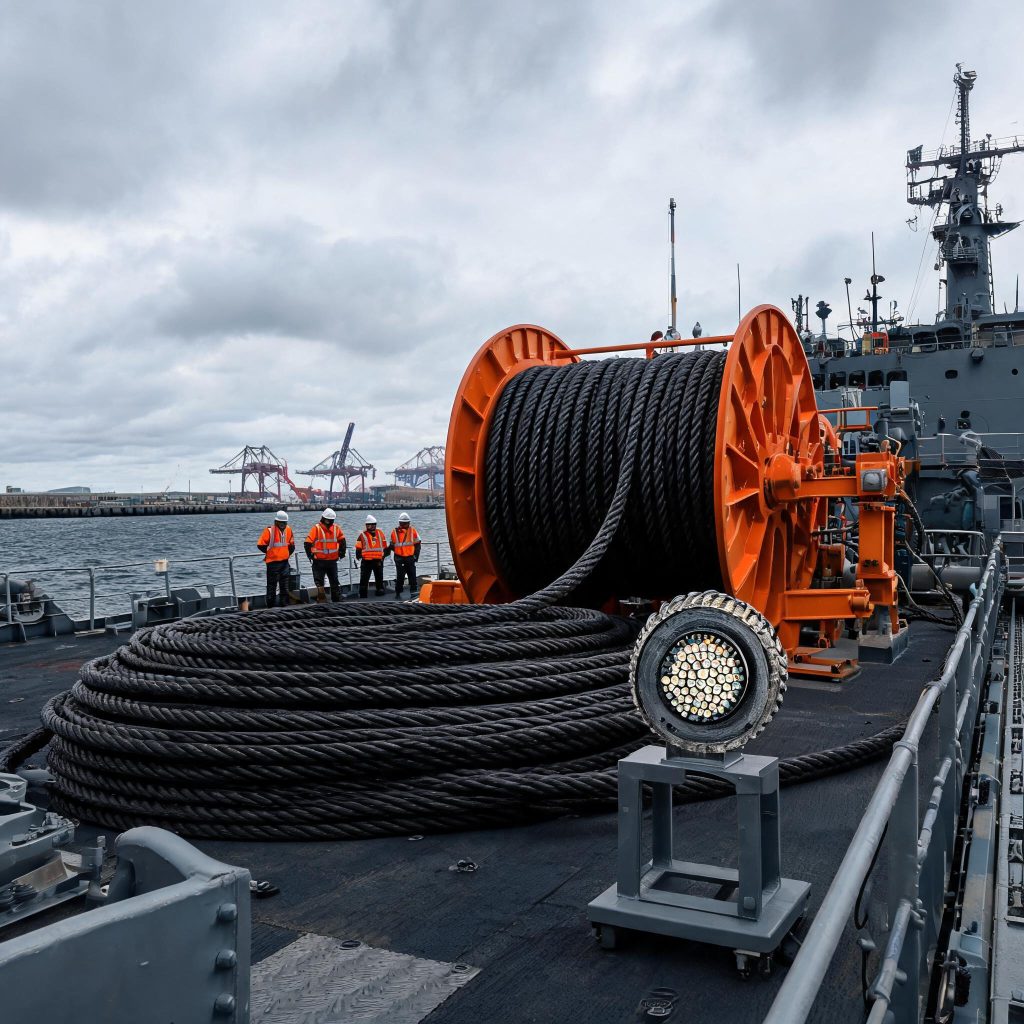
Submarine systems sit at the far end of the delivery spectrum. A new cable needs a marine survey, a manufacturing slot for the cable itself, repeaters and branching units, a cable-laying vessel with a booked weather window, and landing and permitting work in every jurisdiction it touches. Each of those steps is a bottleneck on its own, and they have to line up in sequence. That is why availability, not price, becomes the binding constraint first.
What this changes for component buyers
- Incremental capacity comes from upgrading existing systems, not building new ones. When new builds are queued to the next decade, the near-term answer is higher spectral efficiency on cables already in the water. That demand lands on coherent interfaces, higher-order modulation and the optical components behind them.
- Long-lead items get priced differently. A component that can only be delivered inside a fixed construction window behaves more like a project milestone than a catalogue part. Expect deposits, allocation and delivery-window language rather than published lead times.
- Demand is migrating from telecom to data-centre driven traffic. The capacity pressure reported by operators is being described in the same terms as AI and cloud growth, which means the buyer mix for subsea components now includes parties that never previously bought subsea capacity at all.
- Repair and spares deserve a line in the budget. If the fleet is fully committed to new builds, the maintenance queue competes with installation for the same vessels. Spares held locally stop being an accounting question.
- Domestic and regional routes still clear faster than transoceanic ones. Resource constraints hit the longest, most complex builds hardest. Buyers who can substitute a shorter or regional route should re-examine that option before accepting a transoceanic delivery window.

Explore Our Fiber Optic Cables →
How to quote cable and connectivity when capacity is the constraint
- Ask for a delivery window, in writing, before discussing unit price. On constrained products a favourable price with an unusable window is worth nothing, and the reverse is often the better trade.
- Qualify a second supplier on the same specification, not a similar one. Substitution only works at the exact cable construction, fibre type and connector interface. “Equivalent” parts frequently are not.
- Separate standard terrestrial product from long-lead project product in your escalation plan. Terrestrial indoor/outdoor cable and submarine-grade assemblies come from different lines and different queues.
- Confirm connectorisation at the factory. Pre-terminated assemblies move labour and testing into the supplier’s controlled environment, which reduces installation risk when site windows are tight.
- Hold buffer stock deliberately. When construction slots bind, the cheapest insurance is a modest buffer on the specific lengths and connector types that your projects repeat.
Need fibre cable, pre-terminated assemblies or connectivity quoted?
Send your fibre type, cable construction, connector interface, lengths and required delivery window to sales@tuolango.com and we will return a sourcing comparison with available windows.
Sources and disclosure
Source: Optical Fiber Online (c-fol.net) report of 24 September 2026 quoting Vocus on subsea cable construction resources being committed beyond 2030 and on the scale of growth in customer demand for subsea capacity. The delivery-sequence and procurement observations above are TUOLAN TRADE analysis and are not attributed to the cited source. Edited and analysed by TUOLAN TRADE.