
Insights
AT&T–Corning US$3B Fiber Cable Deal: What Cable Buyers Should Expect

FIBER OPTICS · CABLE SUPPLY & CAPACITY · SEPTEMBER 2026
AT&T has signed a multi-year fiber and cable supply agreement with Corning worth more than US$3 billion. It is the second nine-figure-scale fiber lock-in from a major US operator in a month, and it lands in the same window as a Chinese carrier tender where cable prices jumped roughly 90%. For anyone buying fiber, the message is about capacity, not demand.
The agreement was reported on 30 September 2026: AT&T and Corning have signed a multi-year fiber and cable supply deal with a total contract value of more than US$3 billion. Corning will continue delivering fiber and cable to support AT&T’s home broadband build-out.
The demand numbers AT&T published alongside the deal explain why. Average monthly data traffic per AT&T fiber customer has passed 1 TB, roughly five times the 2016 level. The company expects that figure to reach 2–2.5 TB per month by 2030 as AI applications, cloud services, high-bitrate video and large games keep spreading. AT&T’s stated target is fiber coverage of 60 million homes by 2030.
This is not an isolated order. Earlier in September, Verizon signed its own multi-year Corning supply agreement running to 2032, covering more than 80 million miles of fiber between 2027 and 2032. That order serves two distinct loads: FTTH broadband expansion supporting a 40–50 million broadband access target, and a nationwide long-haul backbone for AI supercomputing clusters.
Two US carriers locking capacity in one month is a supply signal
When two of the largest North American operators both choose multi-year commitments rather than spot purchasing, they are buying certainty of supply, not a discount. Fiber preform and draw capacity cannot be switched on in a quarter. Locking volume years ahead is how a carrier protects a construction schedule that is already financed and politically visible.
The domestic picture points the same way. China Mobile’s 2026–2027 ordinary cable tender covered roughly 2.1618 million km (about 69.22 million core-km). The first round failed to clear. After the ceiling price was raised for a second round, 17 of 18 bidders priced at the ceiling, and the resulting average price rose roughly 90% against the previous tender round. That is a seller’s market showing up in a formal procurement result.
Read together, the two events describe the same imbalance from opposite ends: North American hyperscale-adjacent broadband demand pulling on global fiber capacity, and a Chinese carrier tender confirming that cable pricing has already re-based upward.
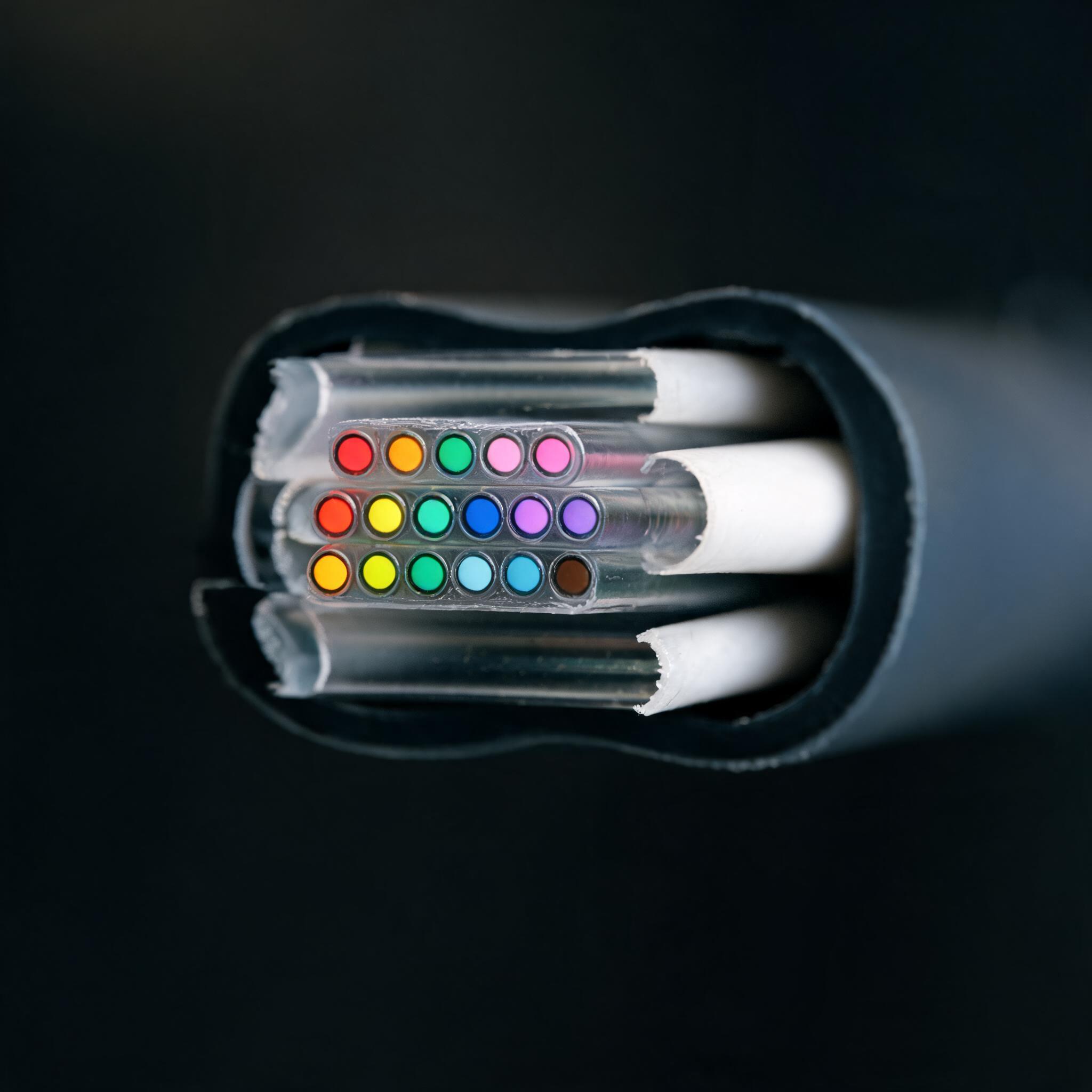
Fiber Optic Cables & Modules Sourcing →
What this changes for fiber and cable buyers
- Lead time becomes the negotiation. In a capacity-constrained market the supplier who can promise a delivery week is worth more than the supplier who quotes the lowest unit price. Ask for a schedule, then price against it.
- Single-core-count quotes are fragile. Long-haul and FTTH programs consume different cable constructions. If your supplier is committed to one operator’s construction bill of materials, your own change requests will queue behind it.
- Book against a rolling forecast, not a single release. Carriers are booking multi-year. Distributors and system integrators who can present a rolling twelve-month forecast get allocation; one-off POs get quoted and forgotten.
- Expect coating, jacket and strength-member substitution. When base fiber is tight, secondary specifications are where suppliers look for cost relief. Freeze the acceptance criteria that matter to your installation — bend radius, attenuation at 1310/1550 nm, and jacket material — before anyone proposes an alternative.
- Qualify a second source now, not during an outage. Fiber supply is shared with hyperscale, subsea and metro programs. Two qualified suppliers convert a scheduling risk into a commercial choice.
The module side moves with the cable
Fiber capacity does not travel alone. Every additional long-haul and AI-cluster route terminates in optical modules at both ends, which is why module demand and cable demand tend to tighten together. Buyers running programs that touch both should treat them as one procurement package rather than two independent line items.
Sourcing fiber cable, patch cords or optical modules?
Send your construction list, count, jacket and coating requirements, annual volume and required delivery window to sales@tuolango.com and we will return a sourcing comparison with qualified suppliers and lead times.
Sources and disclosure
Sources: C114 report of 30 September 2026 on the AT&T–Corning multi-year fiber and cable supply agreement (contract value above US$3 billion; AT&T average fiber customer usage above 1 TB per month, 5× the 2016 level; 2–2.5 TB per month expected by 2030; 60 million homes target by 2030); C114 reporting on the September 2026 Verizon–Corning multi-year agreement to 2032 covering more than 80 million miles of fiber from 2027 to 2032; C114 reporting on China Mobile’s 2026–2027 ordinary cable tender (about 2.1618 million km, roughly 69.22 million core-km, second-round ceiling-price bidding by 17 of 18 vendors, average price up about 90%). Procurement, qualification and supply-chain observations are TUOLAN TRADE analysis and are not attributed to any cited source. Edited and analysed by TUOLAN TRADE.