
Insights
Humanoid Robot Shipments Hit 25,000 in H1 2026: Component Demand Follows
ROBOTICS · HUMANOID AND MOBILE PLATFORMS · SEPTEMBER 2026
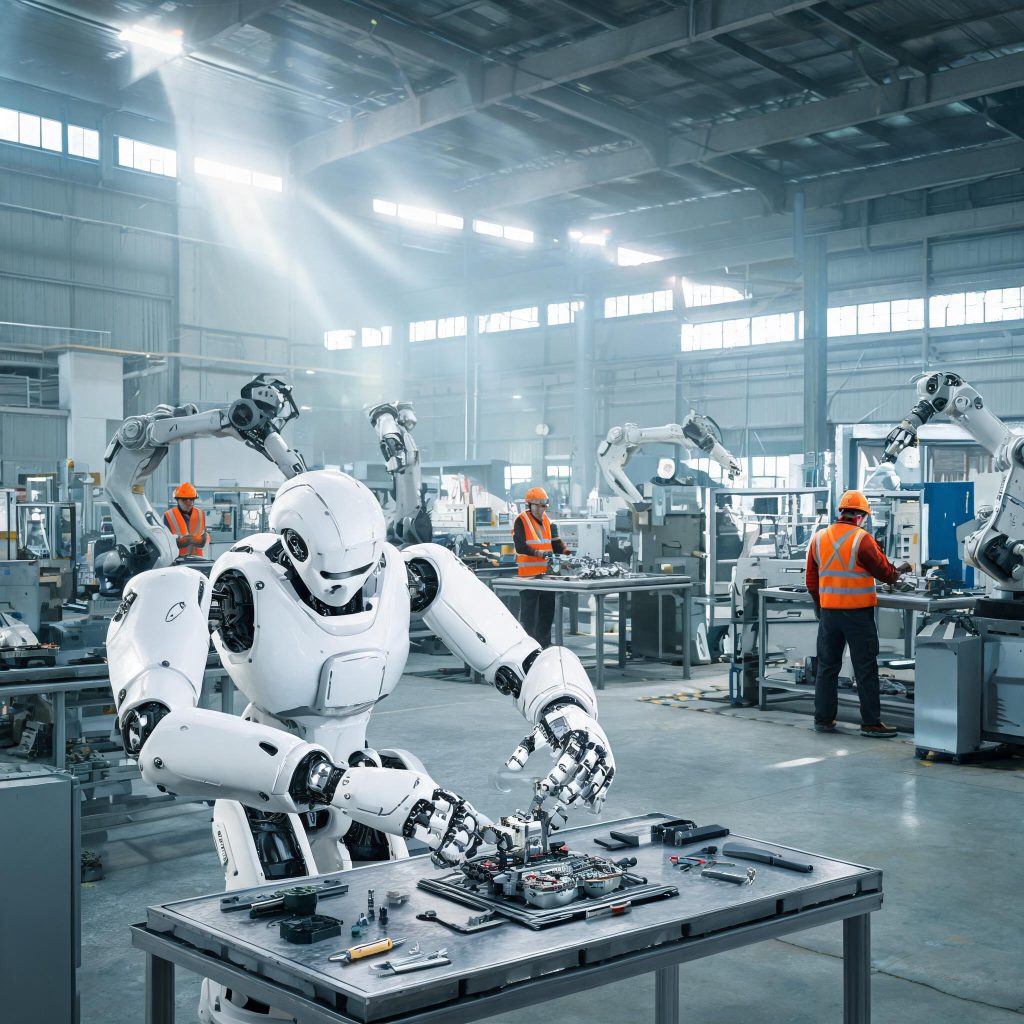
IDC puts first-half 2026 global humanoid robot shipments at close to 25,000 units, up 432% year on year, with China accounting for more than three quarters of them. The number that matters for hardware buyers is not the growth rate — it is that the industry has started shipping instead of demonstrating.
IDC’s latest figures, reported on 30 September 2026, put global humanoid robot shipments in the first half of 2026 at just under 25,000 units, a 432.1% year-on-year increase and a record for the category. China accounted for roughly 19,000 units, more than three quarters of the global total.
The structural point behind those figures is a phase change. Through 2024 and 2025, humanoid robots were mostly laboratory validations, trade-show demonstrations and small pilots. IDC attributes the 2026 step-up to the simultaneous maturing of large models, motion control, perception systems and supply chain depth — the combination that lets a robot leave a controlled demo for a real work cell.
The first real market is industrial, not domestic
IDC identifies industrial manufacturing as the leading deployment scenario. The reasoning is straightforward and it is the same logic that has driven every robotics adoption wave: a humanoid that can use existing fixtures and tools needs no factory redesign, so the cost of trying it is low. Automotive manufacturing, electronics assembly and warehouse logistics are the segments moving from trial to scaled validation.
The vendor list supporting Chinese volume is also the list most component buyers are already tracking: Unitree, UBTech, Fourier, AgiBot and Leju are named as the companies driving product iteration and commercial deployment.
Camera Robot & Robotics Sourcing Support →
What 25,000 units of demand actually pulls
A humanoid robot is not one product, it is a cluster of repeat components. Even at modest volumes, the parts that scale first are the ones with the shortest life and the highest count:
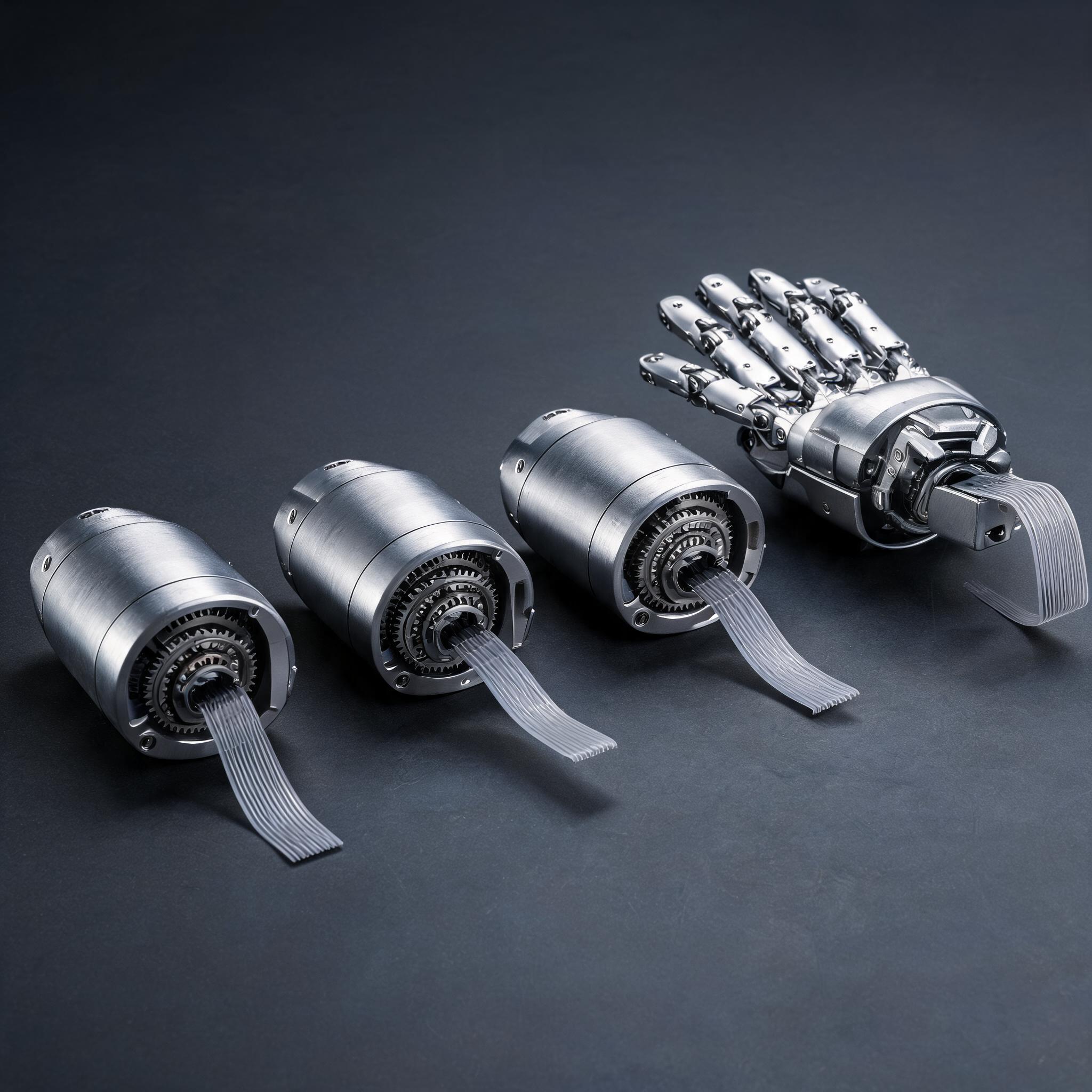
- Joint actuators and harmonic drives. A humanoid typically carries dozens of actuator units. Each one is a precision assembly with gears, bearings, a motor and an encoder, and each has a wear life that generates aftermarket demand independent of new-unit sales.
- Vision and depth sensing. Head and torso cameras, depth modules and their lens barrels are conventional precision optics with tightening tolerance requirements — the same supplier base that serves machine vision and automotive cameras.
- Optical sensing inside the joint. Encoders, force sensing and tactile skin increasingly use optical or photonic sensing rather than purely electrical methods, which pulls precision optics into a component class that used to be mechanical.
- Batteries and power electronics. Swappable packs are becoming standard, so lithium cells, BMS boards and connectors become repeat purchase items with their own certification requirements.
- Cable harnesses and ribbon assemblies. High-degree-of-freedom platforms are cable-intensive, and harness quality shows up directly as joint reliability.
How to position for robot component demand
- Quote the sub-assembly, not the part. A tested actuator module removes calibration and incoming-inspection work from the customer’s line, and it commands a better price than the sum of its components.
- Ask for lot traceability on moving parts. Gears, bearings and encoders vary lot to lot. Traceable batches turn a field failure into a targeted containment instead of a blanket recall.
- Design for the second generation. First-generation platforms typically converge on a short list of cost, thermal and reliability changes within two quarters. Suppliers already qualified when that list is written usually capture it.
- Plan accessory supply on day one. Batteries, lens covers, harnesses and joint spares are where repeat revenue sits, and they are the cheapest way to stay in the customer’s supply chain between platform generations.
- Treat optic and robot demand as one pipeline. The lens, coating and precision-molding capacity that serves robotics is shared with camera and telecom programs. A single qualified optical source is a scheduling risk, not a price risk.
Sourcing robot optics, actuators or accessories?
Send your target specification, annual volume, packaging constraints and required delivery window to sales@tuolango.com and we will return a sourcing comparison with qualified suppliers and lead times.
Sources and disclosure
Sources: IDC figures reported on 30 September 2026 — first-half 2026 global humanoid robot shipments just under 25,000 units, up 432.1% year on year; China accounting for about 19,000 units, more than three quarters of the global total; industrial manufacturing identified as the leading deployment scenario; Unitree, UBTech, Fourier, AgiBot and Leju named as companies driving product iteration and commercial deployment. Component, qualification and procurement observations are TUOLAN TRADE analysis and are not attributed to any cited source. Edited and analysed by TUOLAN TRADE.