
Handheld low-light observation optics · Objective lens
KN902501 25 mm F/1.23 Low-Light Objective Lens
A 25 mm optical objective component for handheld low-light observation systems, with F/≤1.23 aperture, a ≥40° field for a 17.5 mm image format and a weight of ≤41.2 g.
This is an optical component for integration into a complete viewing system.
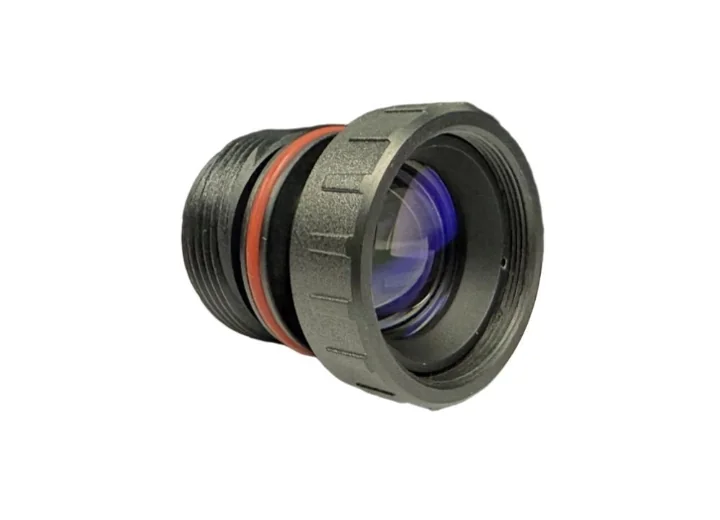
KN902501 reference specifications
| Parameter | Source specification |
|---|---|
| Model | KN902501 |
| Optical function | Objective lens |
| Focal length | 25 mm ±0.5 mm |
| F-number | ≤1.23 |
| Field of view | ≥40° for a 17.5 mm image format |
| Lens material | Optical glass, including an aspheric element |
| Distortion | ≤−4.56% at a 20° semi-field angle |
| Weight | ≤41.2 g |
| Environmental reference | IP67; waterproof to 20 m for at least 2 hours |
Reference values are subject to confirmation against the approved drawing, mechanical interface and acceptance specification for each project.
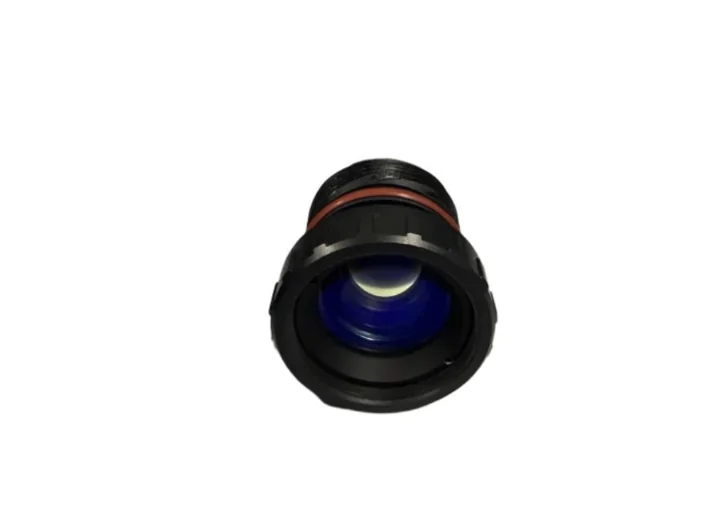
Second product view
KN902501 front view
The supplied specification includes two photographs of the KN902501 objective. The front view below shows the same model.
Fast, lightweight optics for low-light observation
The KN902501 is an objective-lens component, not a complete night-vision or handheld observation device. Its fast F/≤1.23 aperture supports light collection in low-illumination applications, while the ≤41.2 g reference weight helps reduce the optical load in compact assemblies.
For a matching direct-viewing reference, review the KE902501 10× wide-field eyepiece. System performance still depends on the detector or image intensifier, optical spacing, housing and final acceptance tests.
Information required for an RFQ
- Detector or image-intensifier type and active image format
- Target wavelength response and coating requirements
- Object distance, focus method and required field of view
- Mechanical interface, envelope and sealing requirements
- Prototype and production quantities
Frequently asked questions
Is KN902501 a complete night-vision device?
No. KN902501 is a front objective lens for integration into a low-light observation system.
What must be confirmed before integration?
The image format, detector or image intensifier, spectral requirements, optical spacing, mechanical interface, focus arrangement and environmental test criteria must be confirmed.