
Insights
Ball Lens Coupling: Specify the Beam Before the Lens Diameter
TECHNICAL ANALYSIS
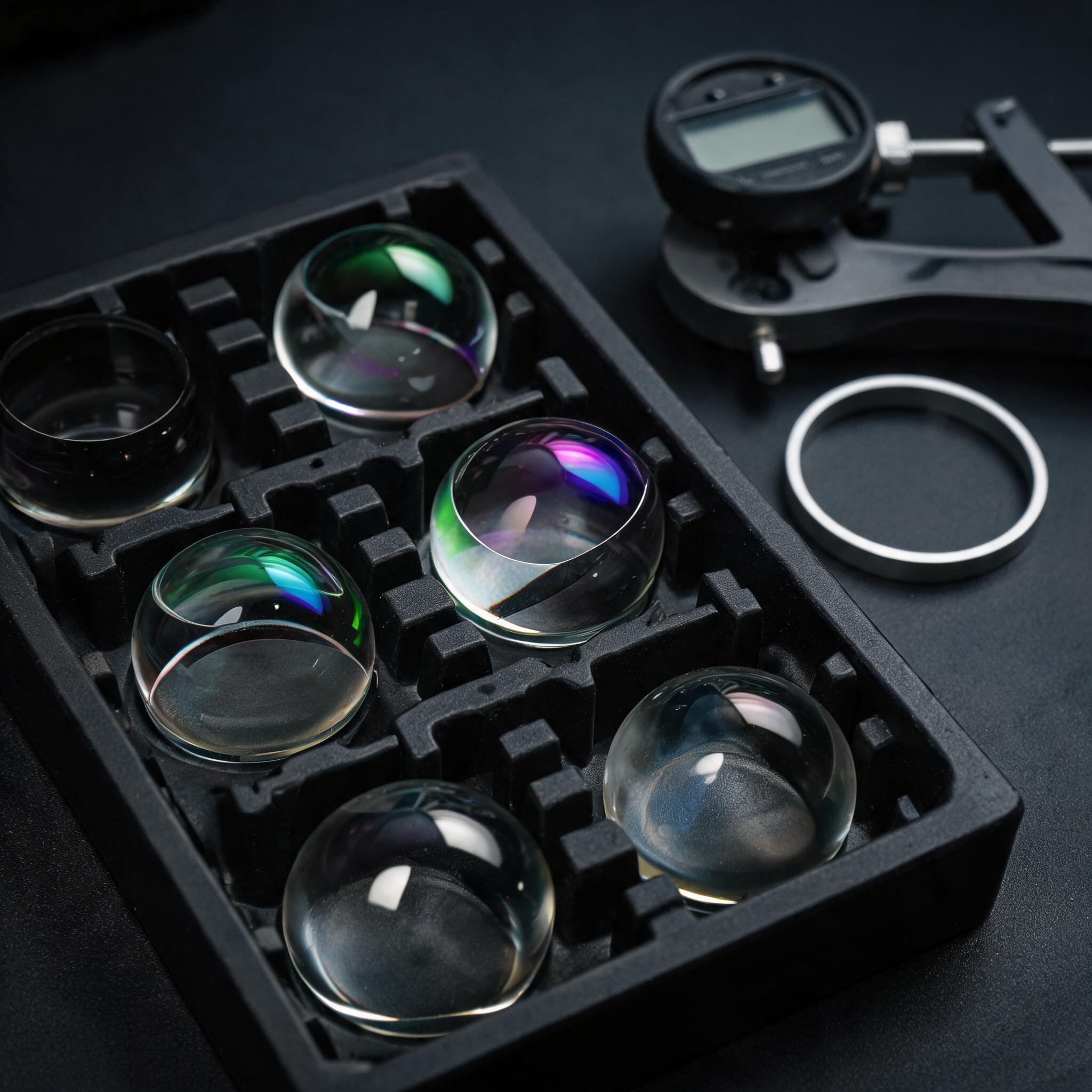
For ball lens coupling, specify the incident beam diameter and state together with the ball diameter and material. A component diameter alone does not define the effective numerical aperture of the application or the delivered coupling efficiency.
The illuminated fraction changes the optical result
Edmund Optics explains that a ball lens’s effective numerical aperture depends on the incident beam size, lens diameter and refractive index for collimated input. Its note also identifies increased spherical aberration as a larger fraction of the ball is illuminated. This undated guide is technical reference, not a coupling-efficiency guarantee.
State the assumptions behind a numerical-aperture estimate
TUOLAN’s application analysis starts with a defined input profile at the lens. Record the beam-diameter convention, wavelength and whether the incident light is collimated. If the source is divergent, an estimate derived for collimated illumination needs review against that geometry. Keep the surrounding medium explicit too; changing it can invalidate an air-based calculation.
For fiber coupling, compare the receiving requirements with the proposed optical arrangement, then assess the actual coupled result. Numerical-aperture compatibility is only part of that assessment. Do not infer complete coupling from it without evaluating the focused distribution and alignment. If more beam area is admitted, compare the useful received signal rather than assuming that collecting more incident power automatically improves delivery.
Measure the received result under controlled alignment
Use the intended receiver and a repeatable alignment procedure for the first article. Record permitted adjustments and the returned result after a controlled removal and reseating where relevant. Keep source drift separate by monitoring or referencing the input. A spherical or aspherical alternative can be compared using the same received-signal requirement, while retaining each design’s own positioning geometry.
Related specifications
spherical lens component enquiries · aspherical alternatives for coupling optics
For a coupling-optics enquiry, include the incident beam profile and the receiver acceptance requirement. Contact TUOLAN: sales@tuolango.com.
Sources and editorial note
Reviewed 2026-10-26. Technical conclusions and proposed acceptance steps are TUOLAN editorial analysis. No manufacturer affiliation is implied.