
Insights
Parfocal Zoom Acceptance: Keep Focus Fixed During the Zoom Check

TECHNICAL ANALYSIS
A parfocal zoom check must preserve the agreed focus setting while magnification changes. If the operator or camera refocuses at every stop, the resulting sharp images do not establish focus retention through the zoom.

The operating claim determines the comparison
Edmund Optics describes its VZM zoom imaging lenses as changing magnification without refocusing. The undated product reference illustrates the meaning of a parfocal claim; it does not give a universal focus tolerance or qualify a TUOLAN assembly.
Separate retained focus from best achievable focus
TUOLAN proposes agreeing the initial focusing procedure, target plane and zoom positions before the test. Hold target distance and camera seating fixed, and identify whether autofocus or other compensation is disabled. If compensation is part of the intended system, record it as a separate operating mode rather than silently including it in an uncompensated check.
At each required zoom state, retain the image obtained without focus adjustment. Where useful, also acquire a best-focus reference and label it separately. Comparing those results distinguishes focus retention from the image quality that can be reached after adjustment. Use a stated detail or contrast criterion appropriate to the application.
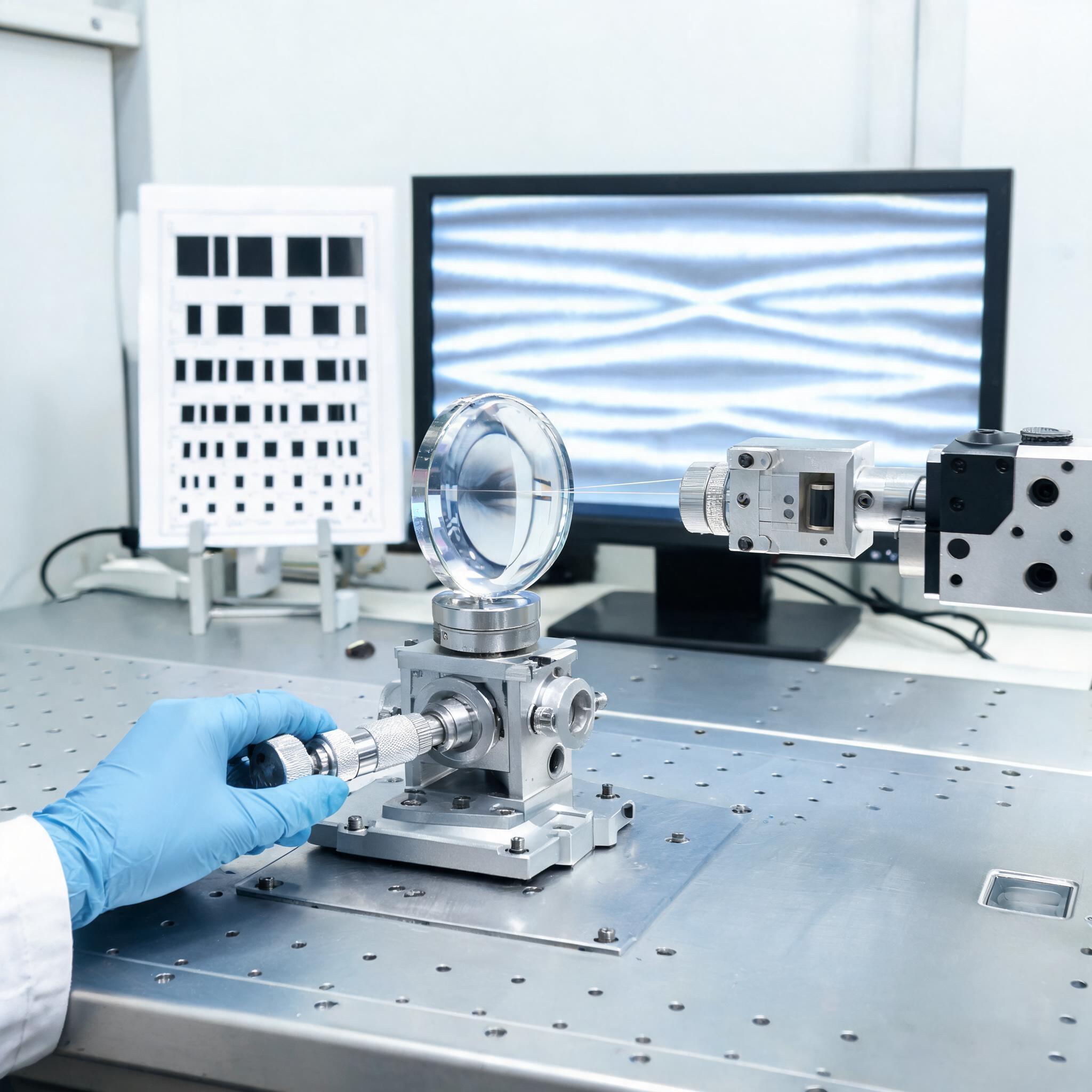
Use the actual camera configuration for approval
Record the aperture and the actual camera interface configuration with the result. Changes to seating or intervening components require review before inheriting an earlier approval. A parfocal acceptance record should show what the assembly preserved during zoom, not merely demonstrate that every zoom position can eventually be made sharp.
Related specifications
lens and optical component references · spherical lens options
For a focus-retention review, send the zoom states, camera configuration and permitted focus-control behaviour. Contact TUOLAN: sales@tuolango.com.
Sources and editorial note
Reviewed 2026-11-02. Technical conclusions and proposed acceptance steps are TUOLAN editorial analysis. No manufacturer affiliation is implied.