
Insights
CIOE 2026 Photos: AI Glasses & IR Optics
FIELD REPORT · SHENZHEN · SEPTEMBER 10, 2026
A photo-led look at the components behind the demonstrations—from LiDAR windows and AI eyewear to thermal imaging, optical glass and precision lens assemblies.
SHENZHEN, China, September 10, 2026 — A case of silicon and germanium wafers, a row of AI glasses and a wall-sized thermal-imaging display offer three very different views of the same industry. The photographs and short videos supplied from a visit to CIOE 2026 connect the finished systems that catch a visitor’s eye with the optical components and manufacturing processes behind them.
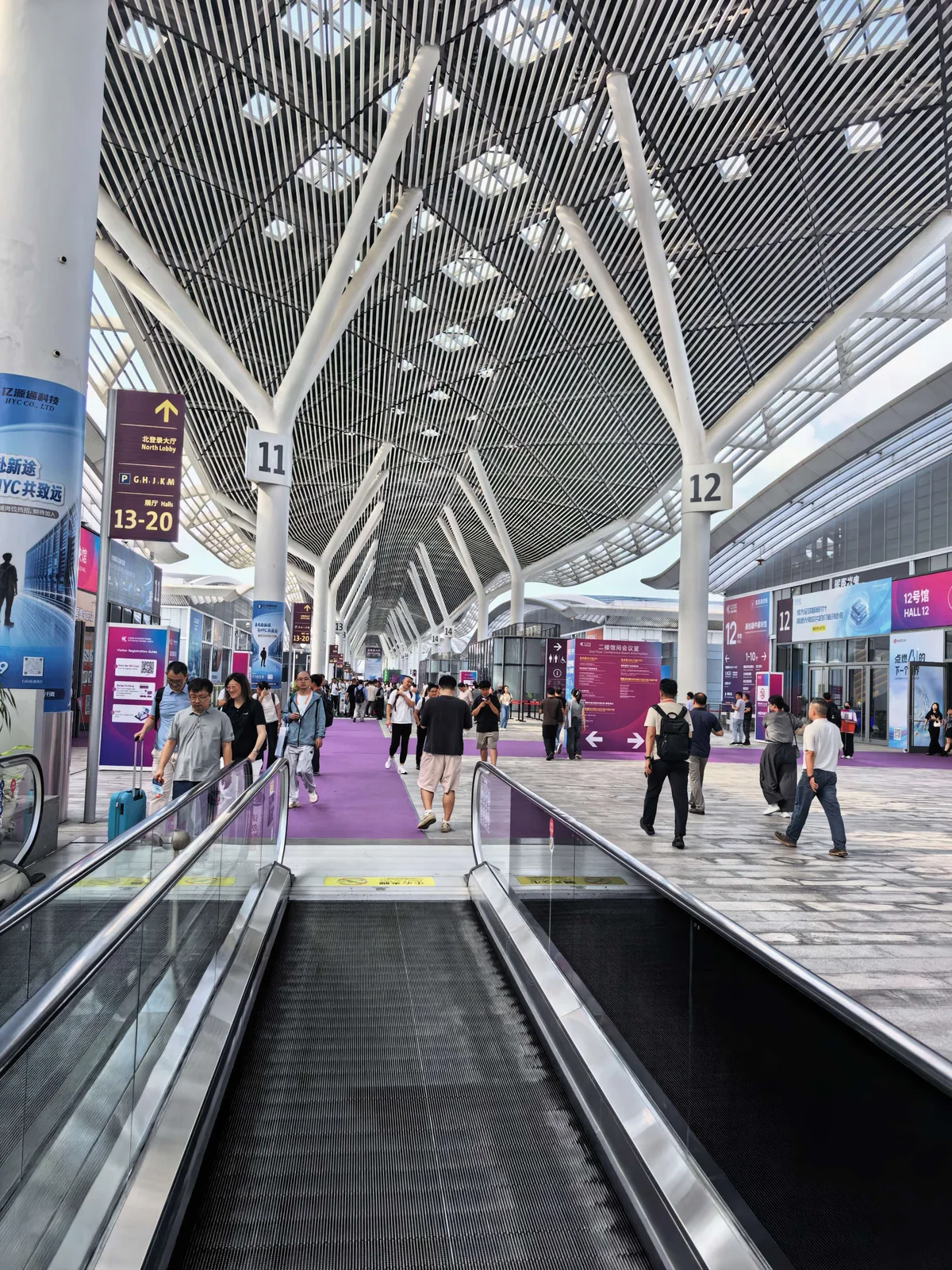
The 27th China International Optoelectronic Exposition runs September 9–11 at the Shenzhen World Exhibition & Convention Center in Bao’an. This September 10 report captures the event while it is still under way. It combines original visit material, selected exhibitor literature and the organizer’s published program—not a final attendance report or an announcement of new supplier partnerships.
Precision optics: the supply chain behind the display
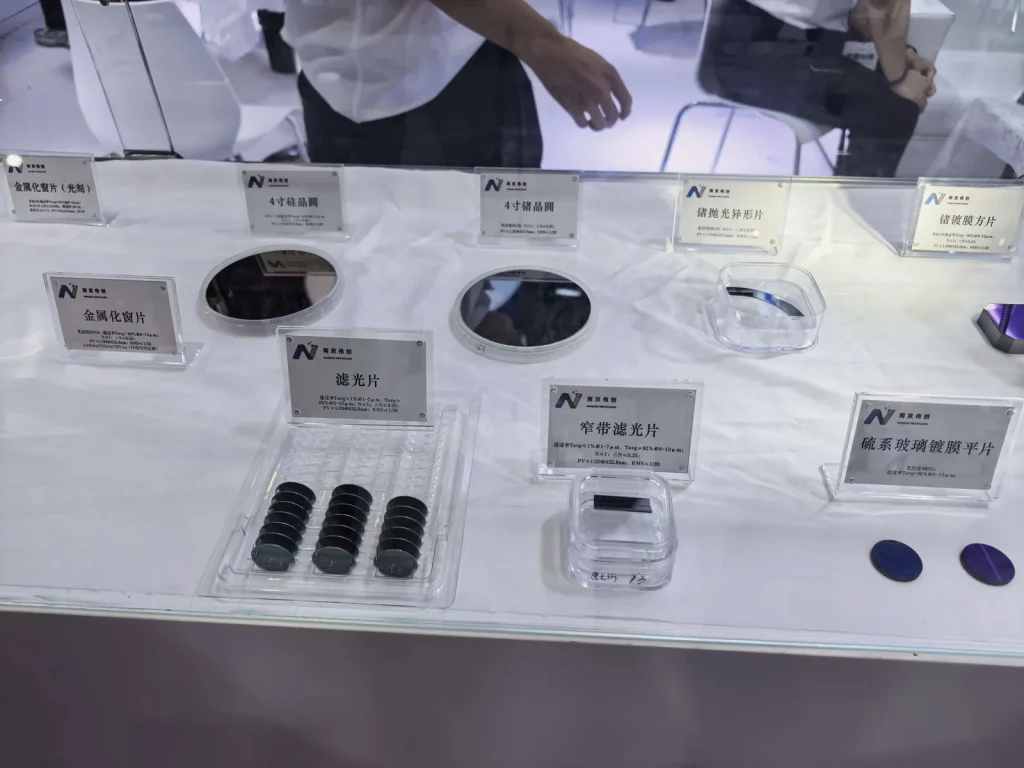
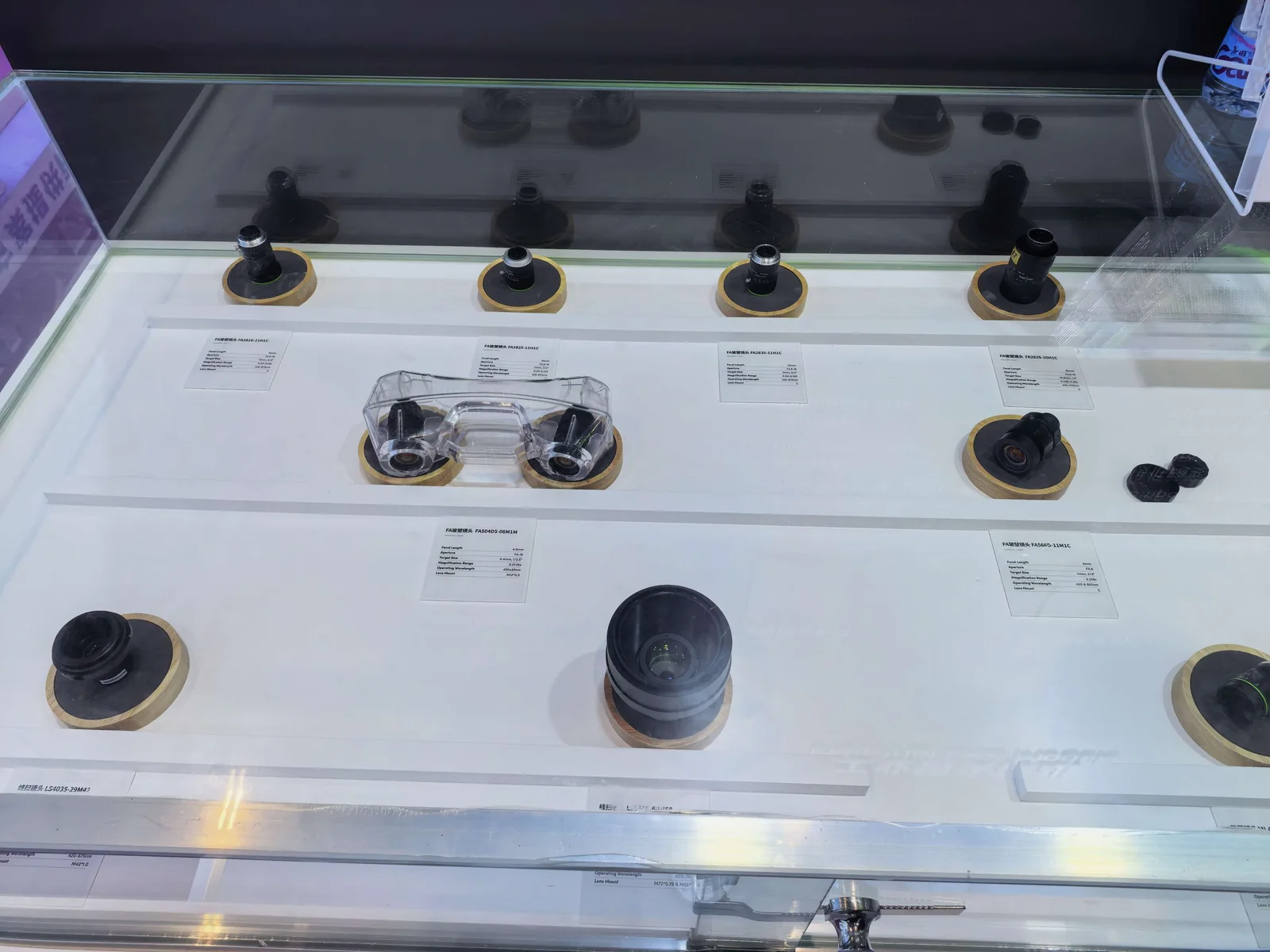
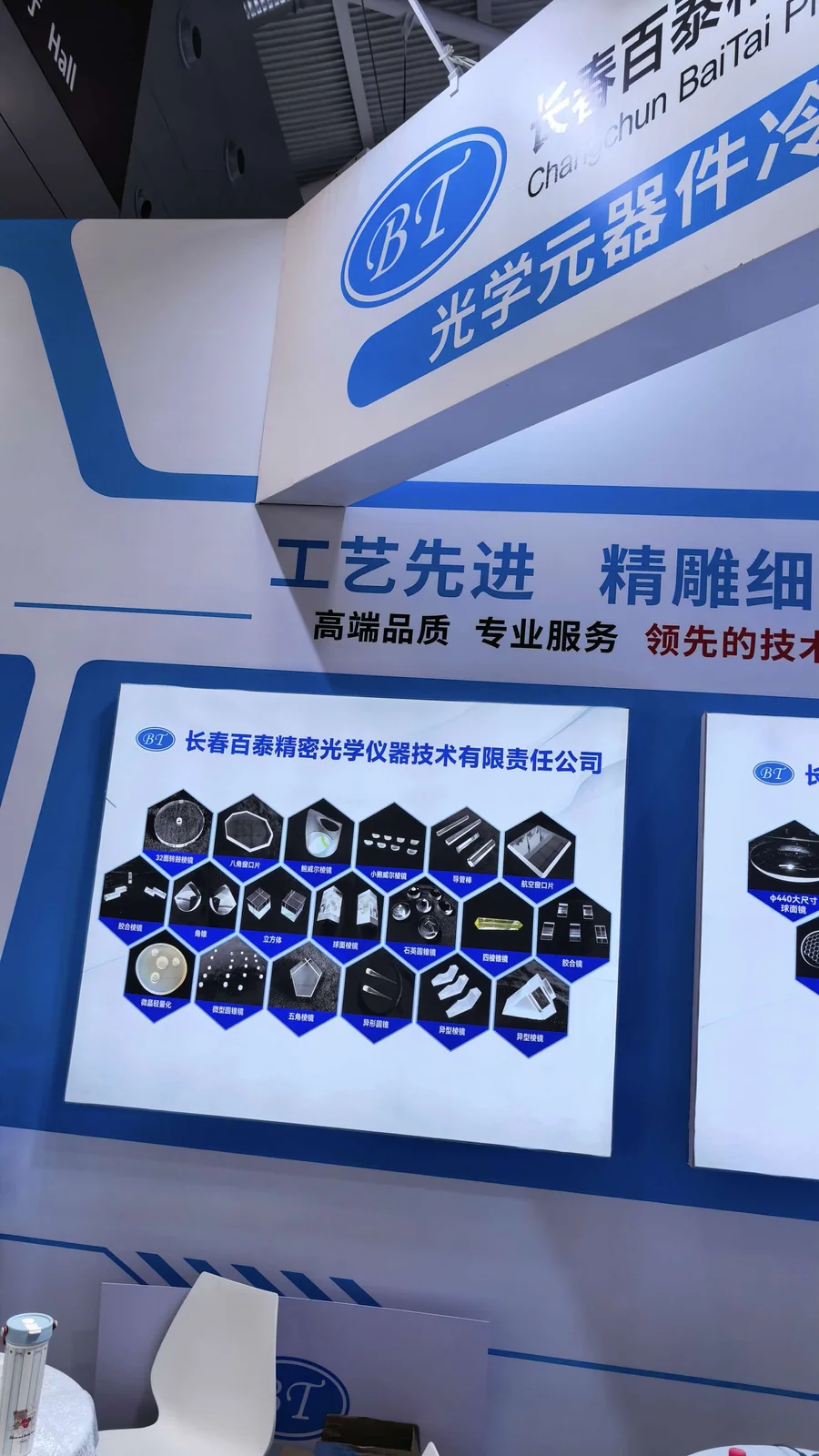
Component cases in the supplied photographs show a wide range of lens assemblies and optical elements. At a display branded Nanjing Weichuang, readable labels identify four-inch silicon and germanium wafers, filters, a narrowband filter and coated chalcogenide-glass plates. Elsewhere, factory-automation lenses and optical-component exhibits put machining, coating and assembly alongside the finished optical design.
These are different sourcing tasks. A lens assembly needs an agreed sensor format, field of view, working distance and mechanical interface. A window or filter needs a defined wavelength band, clear aperture and coating requirement. A polished wafer should not be treated as interchangeable with a finished imaging optic simply because the material name matches.
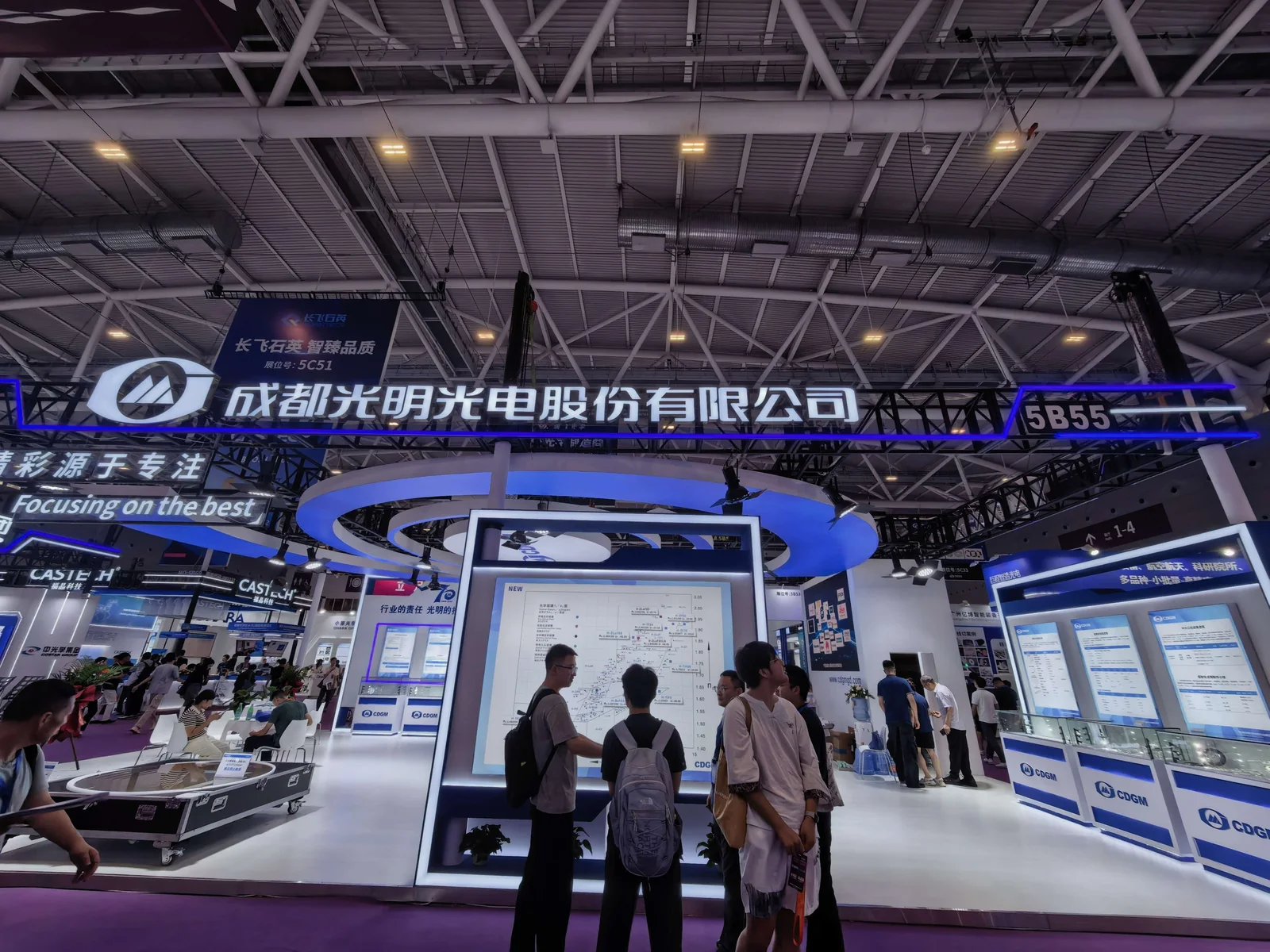
The organizer’s Precision Optics Expo profile spans lenses, prisms, windows, mirrors and manufacturing equipment. Its September 10 manufacturing program also lists small-aperture infrared-lens machining and complex-surface measurement. The program provides context for the exhibits; it is not a report that the visiting photographer attended those sessions.
LiDAR windows and AR-HUD: small components, system-level questions
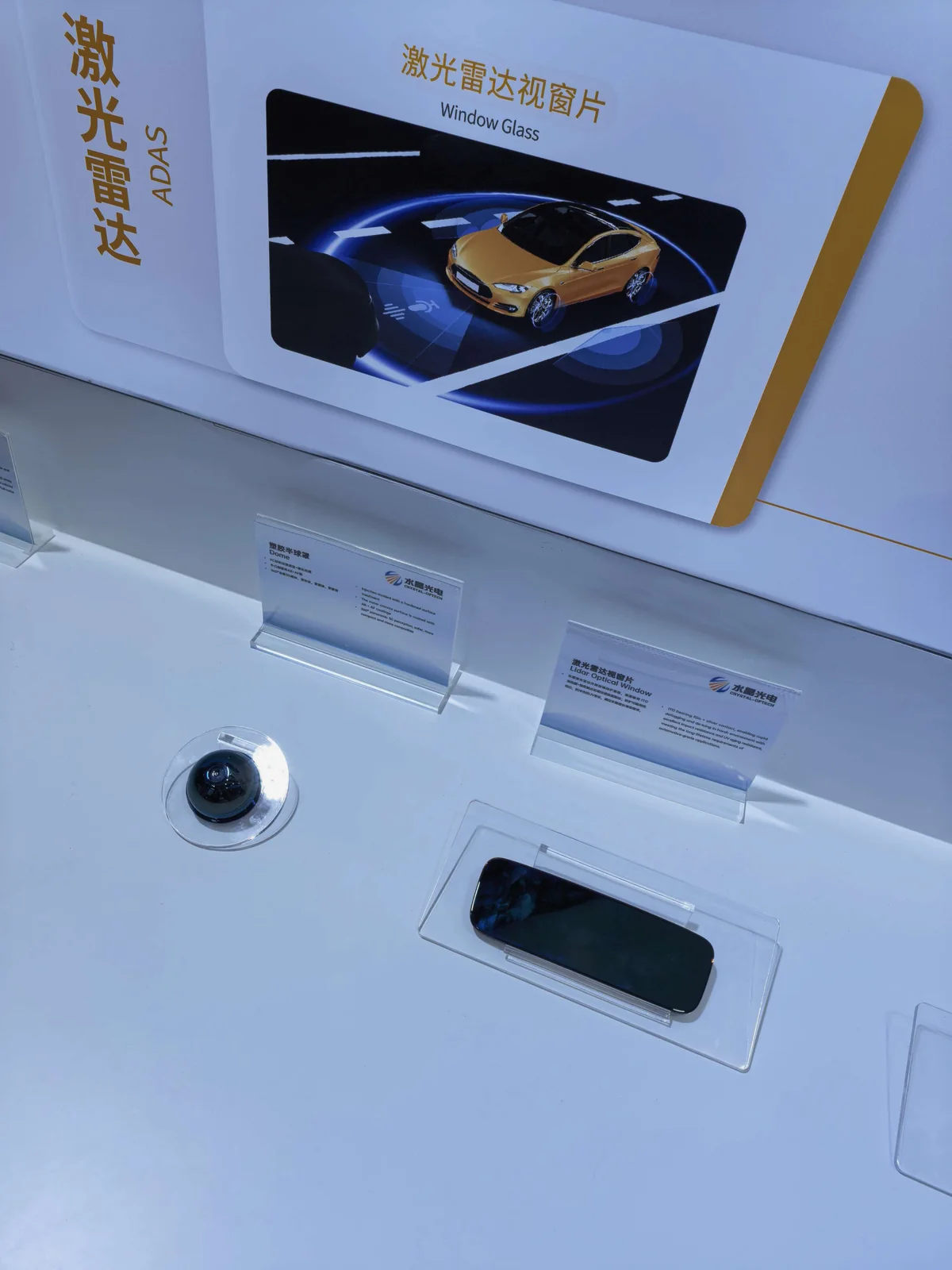
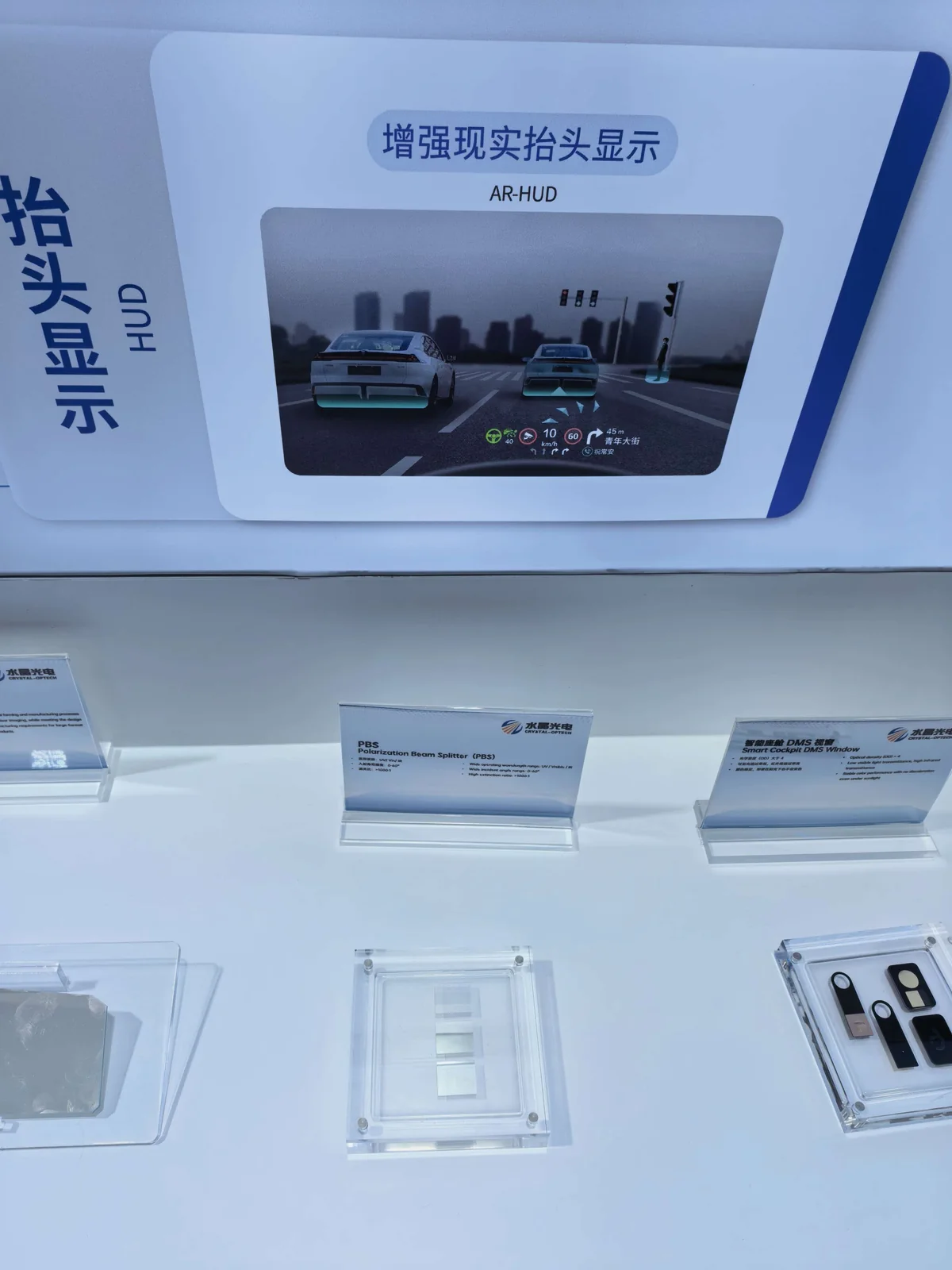
At Crystal-Optech’s display, one case presents a dome and a component labelled “LiDAR Optical Window” beneath an automotive LiDAR graphic. Another shows an augmented-reality head-up display, or AR-HUD, alongside a polarization beam splitter and driver-monitoring-system window samples.
The photographs make the application-to-component link unusually clear. A LiDAR window is part of a sensing system, while a polarization beam splitter performs a different optical function in a projection path. For a buying team, the next step is to ask for the appropriate transmission or polarization data, operating geometry and environmental requirements—not assume that all transparent parts in a display share the same specification.
AI glasses put compact optical integration in the spotlight
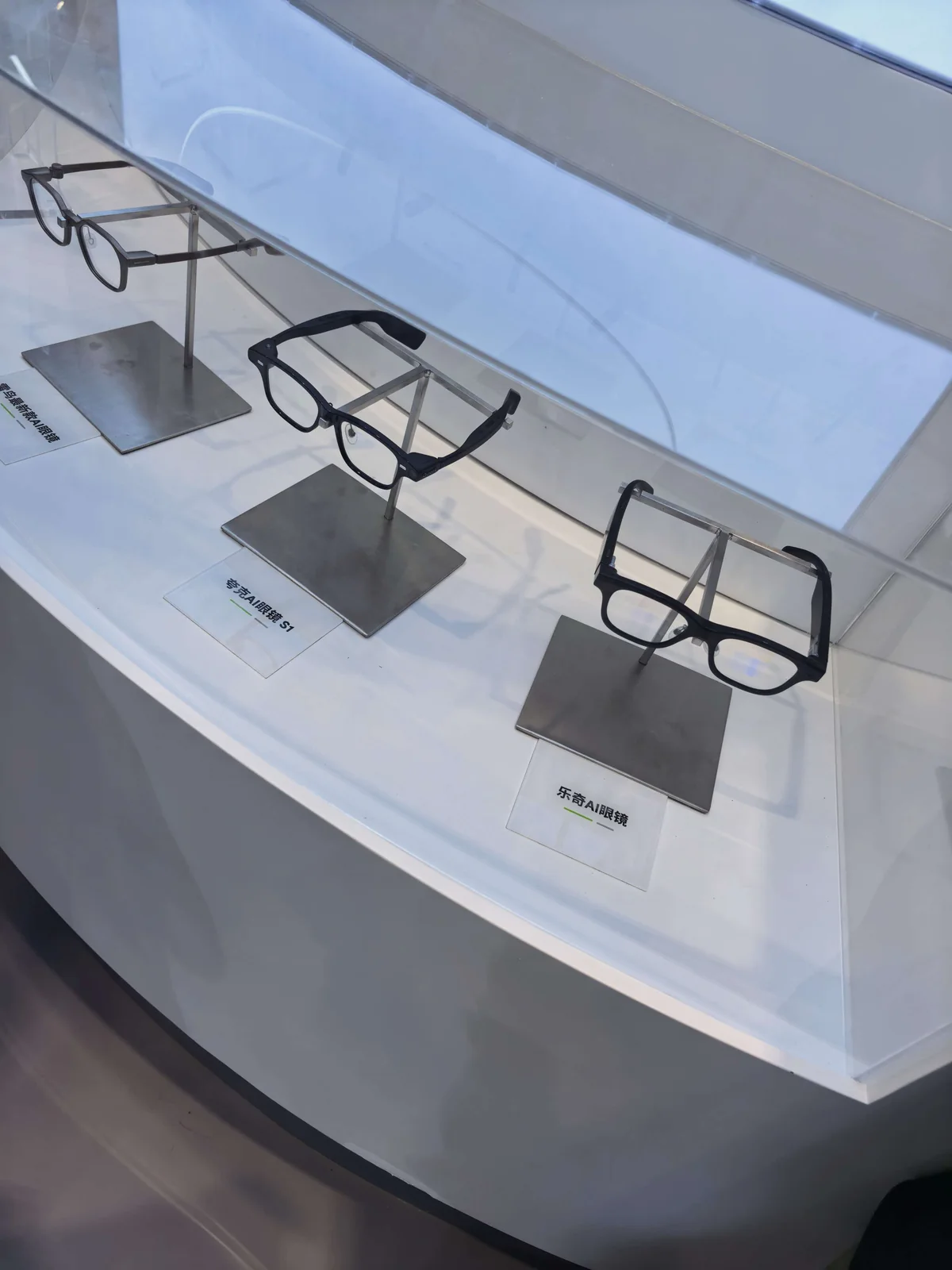
A separate close-up records several pairs of eyewear with exhibit labels identifying AI-glasses products, including S1. Their familiar spectacle form contrasts with the larger industrial and thermal lenses elsewhere in the halls.
There is an important distinction for international readers: AI glasses are not automatically AR display glasses. A product may center on cameras, audio or connected functions without projecting an image into the wearer’s view. The photograph documents the exhibited form factors, not their internal optical architecture, software performance, battery life or commercial availability.
That distinction also matters when specifying a project. Camera integration, near-eye displays and automotive AR-HUDs require different optical paths and evaluation criteria. A clear application brief is more useful to a potential supplier than a broad request for an “AI lens.”
Infrared imaging: a striking screen is only one part of the system
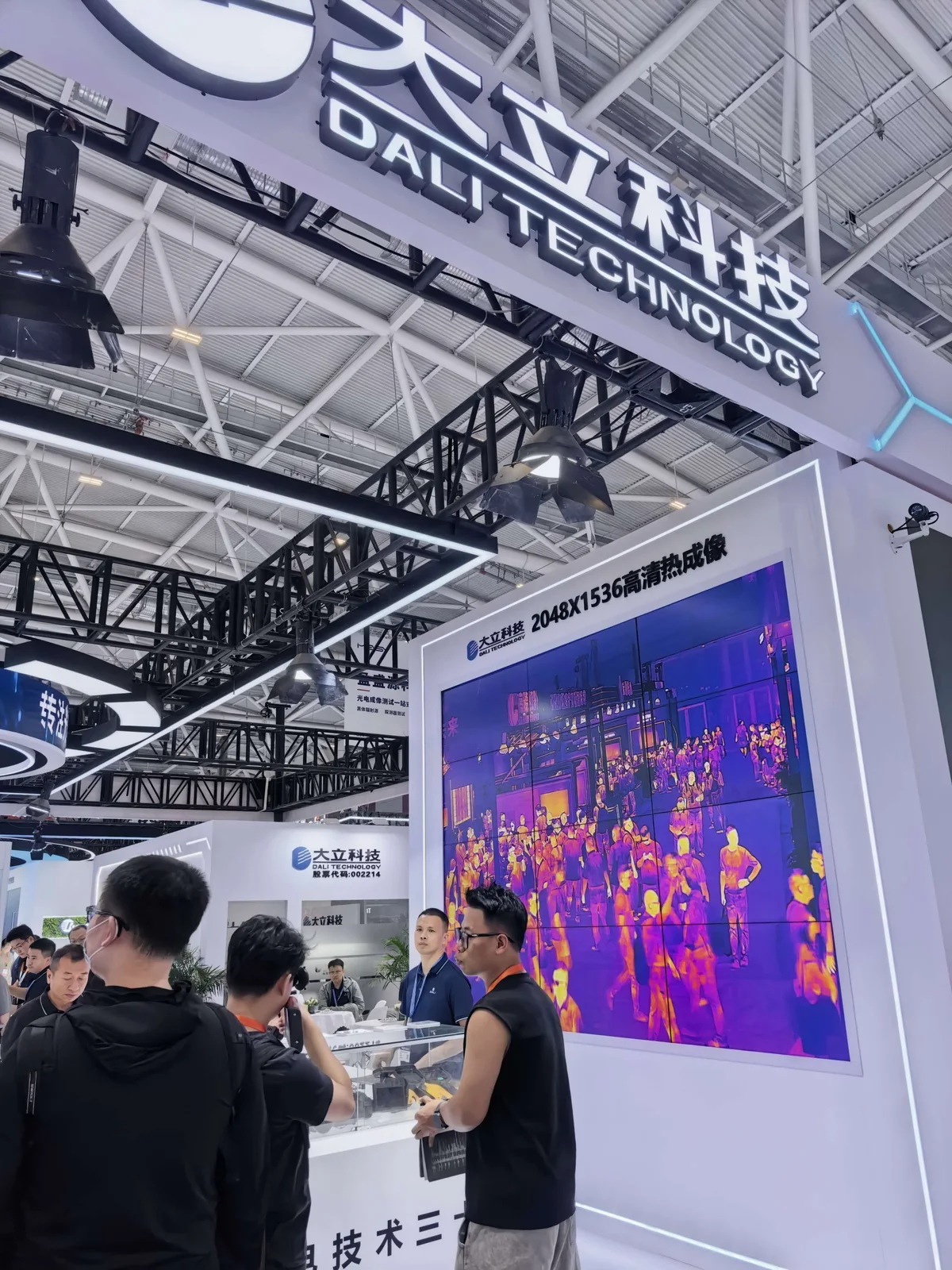
The DALI Technology booth photograph shows a thermal image of people in the exhibition area. The display carries a “2048 × 1536” high-definition thermal-imaging label. That is the exhibitor’s displayed claim; the visit material does not independently establish the detector resolution or the complete camera specification.
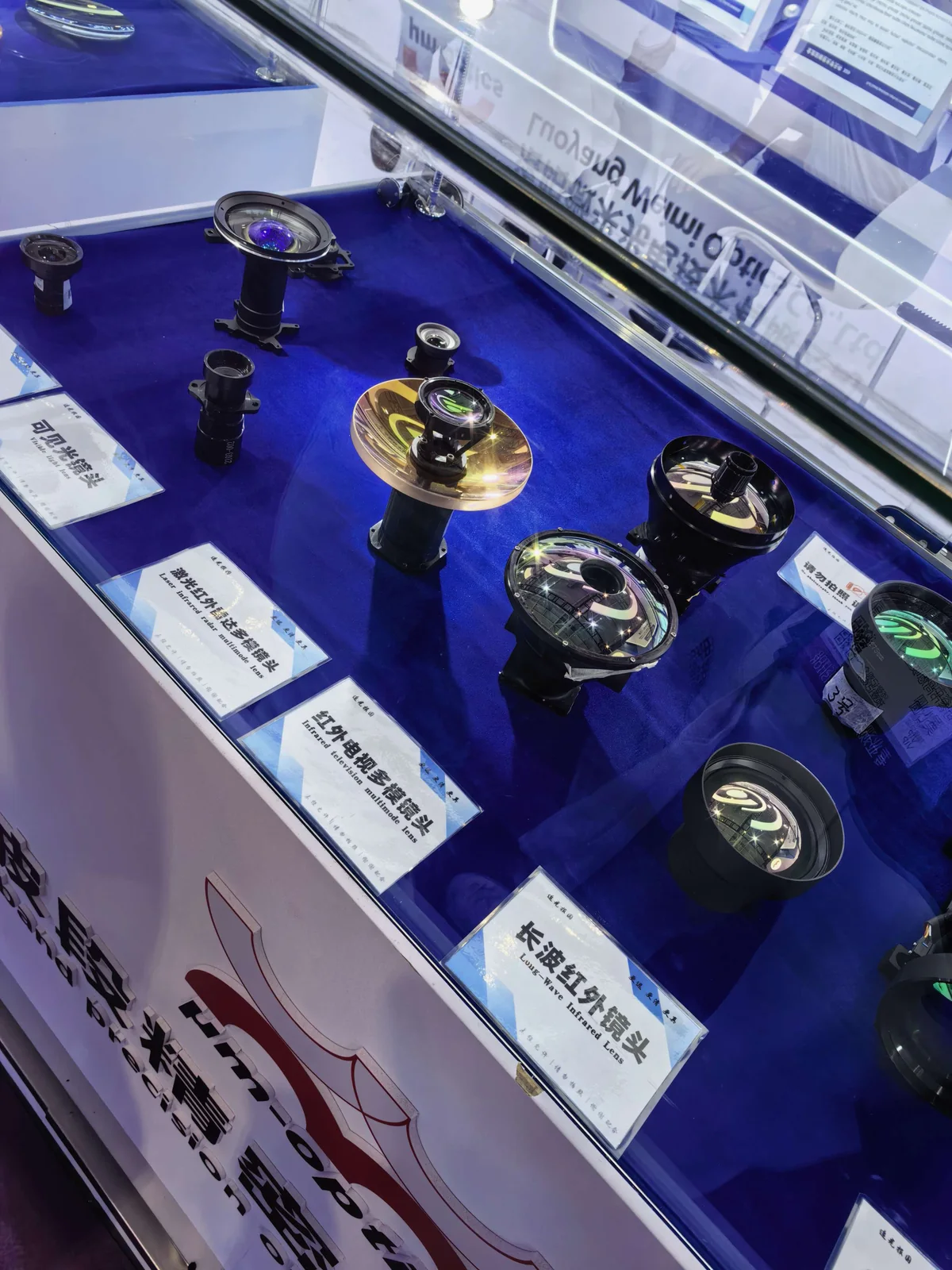
A second photograph shows assemblies labelled for visible-light, long-wave infrared and other imaging applications. Together with the material samples at the start of this report, these exhibits illustrate a useful progression: material, coated element, assembled lens and imaging system.
CIOE’s infrared exhibit profile covers materials, lenses, detector cores and imaging modules. The September 10 infrared forum agenda similarly links optical materials and lens design with detectors and sensing. For sourcing discussions, the spectral band, detector format, pixel pitch, focal length and thermal operating conditions need to be considered together.
From a booth conversation to a usable technical brief
The six supplied catalogs and presentation files add detail beyond what a photograph can show. Selected examples below are attributed to the respective exhibitors’ literature; they are not TUOLAN product specifications or a verified supplier shortlist.
| Exhibitor | Literature topic | Useful follow-up |
|---|---|---|
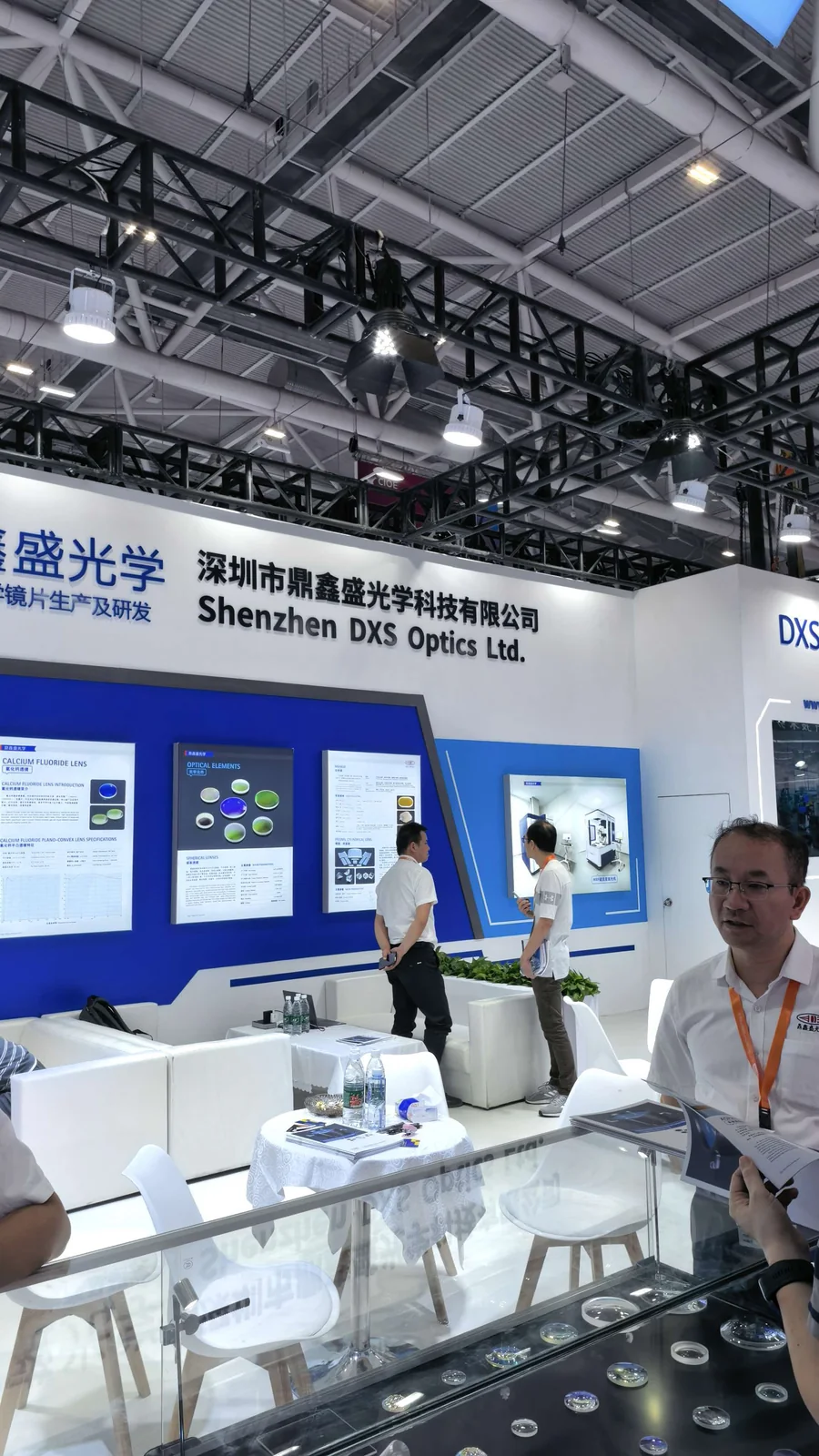
| DXS Optics | F-theta scanning lenses. One listed telecentric model specifies a 355 nm wavelength and 100 mm focal length.[L1] | Confirm the exact model, laser source, scan geometry and coating specification before comparison. |
| Changchun Baitai | Optical integrators, Powell prisms and line-generating optics.[L2] | Ask how beam uniformity or line quality is defined and measured for the intended input beam. |
| Fujian Enlumen | Polarization components and optical assemblies for applications including machine vision and 3D scanning.[L3] | Define wavelength, polarization requirements, packaging and the required inspection report. |
| Attoes | Molded glass aspheric cylindrical-lens arrays for inspection, positioning and industrial sensing.[L4] | Request the array geometry, substrate, tolerances and application-specific evaluation samples. |
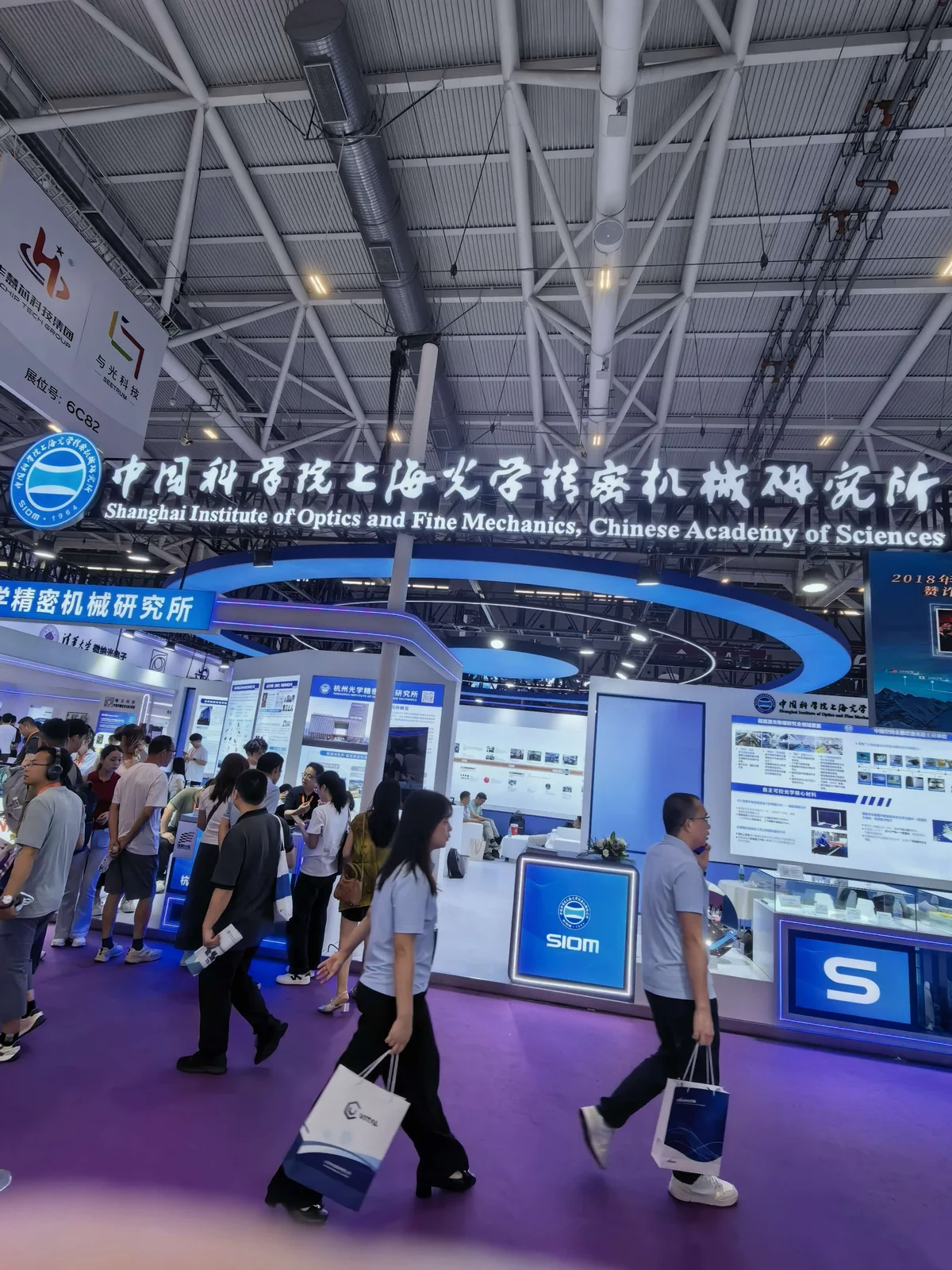
Coating and metrology also deserve a place in that follow-up. The organizer’s September 10 optical-coating agenda lists optical filters, ultrafast-laser coatings and deposition monitoring. For buyers, the practical question is how an agreed optical requirement will be manufactured, measured and documented across a production batch.
Two short views from the exhibition floor
The original visit clips below show a walk through optical-exhibitor aisles, including lens and optical-integration booths. They provide spatial context for the still photographs; no product-performance test is shown or claimed.
What international optical buyers can take away
The strongest story in this selection is not a single “breakthrough” product. It is the connection between application-led exhibits—AI eyewear, automotive sensing and thermal imaging—and the less conspicuous materials, coatings and assemblies that make them possible.
For a follow-up inquiry, bring an application description, drawing or reference model, wavelength range, target quantity and the acceptance data your engineering team needs. Ask separately about samples, production repeatability and supplier evaluation. A compelling demonstration is a starting point for that discussion, not the end of qualification.