
Insights
IBC 2026: PTZ Cameras in Robotic Production
<
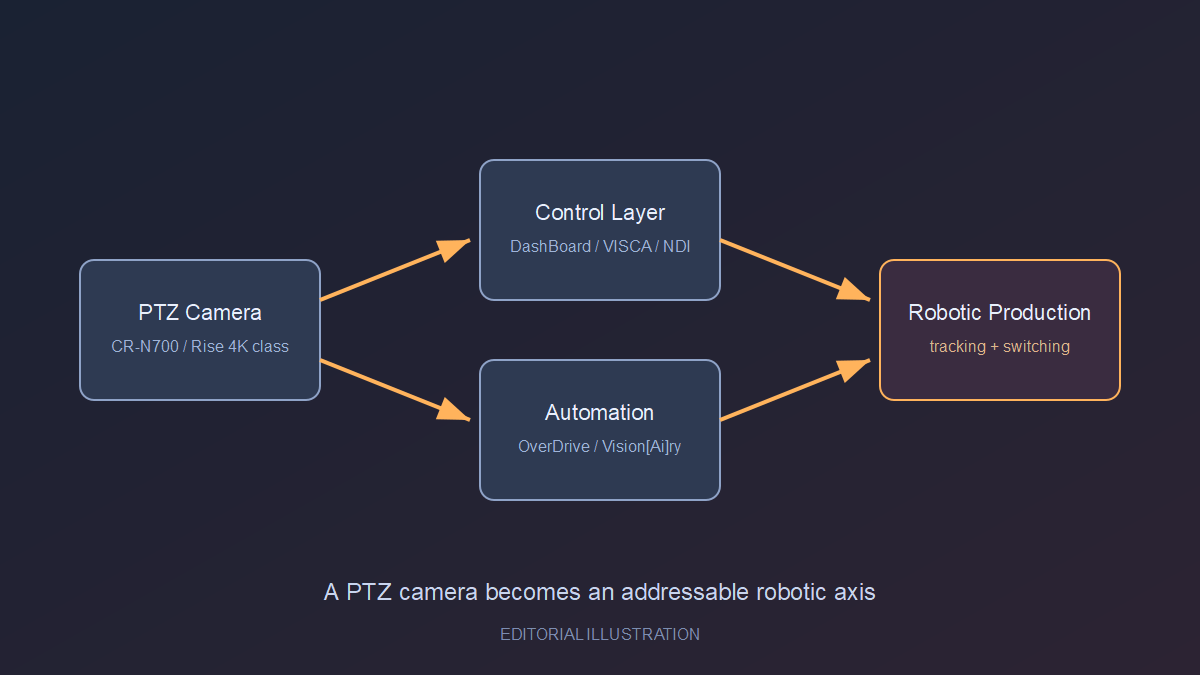
INDUSTRY NEWS · CAMERA ROBOTICS · SEPTEMBER 12, 2026 IBC 2026 opened in Amsterdam with a clear message for the camera-robotics niche: PTZ cameras are no longer accessories to a production workflow — they are becoming the workflow. Two announcements at and around the show illustrate the direction. PTZOptics introduced the Rise 4K, a broadcast-grade PTZ camera now entering its order window. Separately, Ross Video and Canon announced a technology partnership that brings Canon’s CR-N700 and CR-N500 PTZ cameras into Ross robotic and automated production systems. PTZOptics positioned the Rise 4K at broadcast rather than conference-room buyers, the segment where PTZ cameras compete directly with pedestal-mounted studio cameras. For integrators, the practical question is less the sensor specification than the control layer: how the camera behaves inside an existing robotic or automation environment, and how firmware support is maintained over a multi-year deployment. The Ross Video and Canon partnership is the more structural announcement. Canon’s CR-N700 and CR-N500 PTZ cameras are being integrated with Ross’s DashBoard control, OverDrive automation, Vision[Ai]ry tracking and Quorum production workflows, with a joint demonstration planned at NAB. In effect, a PTZ camera becomes an addressable robotic axis inside a larger automated system — the same architectural idea that consumer camera robots apply at smaller scale. TUOLAN TRADE follows imaging and camera-robotics products for overseas buyers evaluating Chinese manufacturing options. For sourcing inquiries, use the contact page or email sales@tuolango.com. This article was compiled from the public internet sources listed above. Product capabilities reflect manufacturer statements as of their publication dates; shipping schedules are manufacturer estimates, not confirmed delivery. All images are original editorial illustrations, not photographs of any product.PTZOptics Rise 4K enters its order window
Ross × Canon: PTZ inside robotic production systems
Why this matters beyond broadcast
Sources