
Insights
Humanoid Robot Sales Hit 7,000 Units in 2025: IFR Figure
INDUSTRY NEWS · ROBOTICS SOURCING · SEPTEMBER 2026
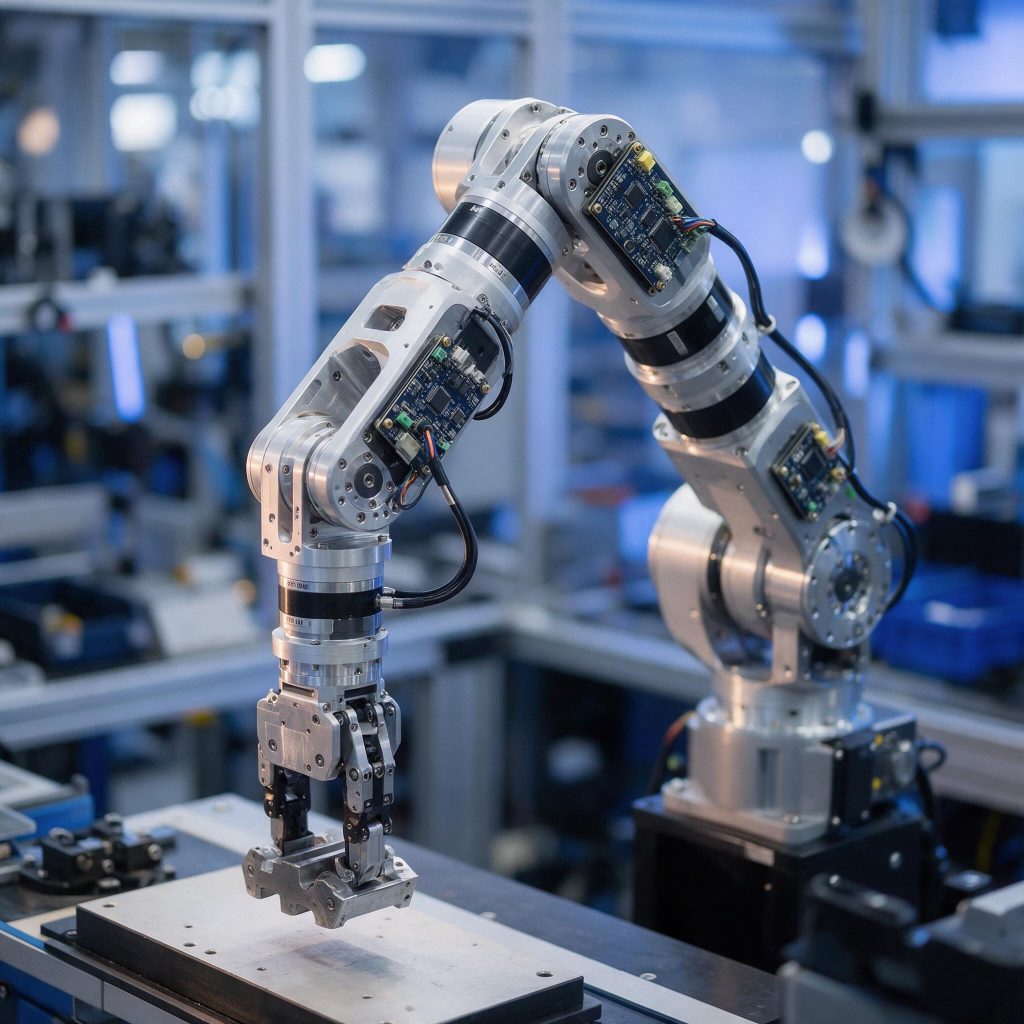
The International Federation of Robotics is due to publish its first dedicated humanoid robot sales figures, reported at about 7,000 units worldwide in 2025 — most of them not doing production work. In the same week, Chinese suppliers signed a 2,000-unit force-controlled arm order and put an industrial humanoid on a factory payroll. The gap between those two numbers is the real sourcing story.
Humanoid robotics has a measurement problem: plenty of demonstrations, very few shipment numbers. September 2026 delivered the first official attempt at the latter. According to Reuters, reporting ahead of publication, the International Federation of Robotics puts 2025 global humanoid robot sales at roughly 7,000 units. The figure covers industrial and professional-service robots only — consumer, military and medical units are excluded — and the federation’s secretary general noted that many of the units sold are not performing productive work, but are used by research institutions and companies to generate training data.
Meanwhile, China signed real orders
| Date | Development | Signal for buyers |
|---|---|---|
| 22 Sep | FA Robotics and Boyin Hechuang signed an agreement for 2,000 humanoid force-controlled arms, covering overseas market development and delivery. FA Robotics will build a transparent test laboratory that streams factory test video to customers. | Order sizes in the thousands now exist for sub-assemblies, and delivery transparency is becoming a commercial promise rather than a courtesy |
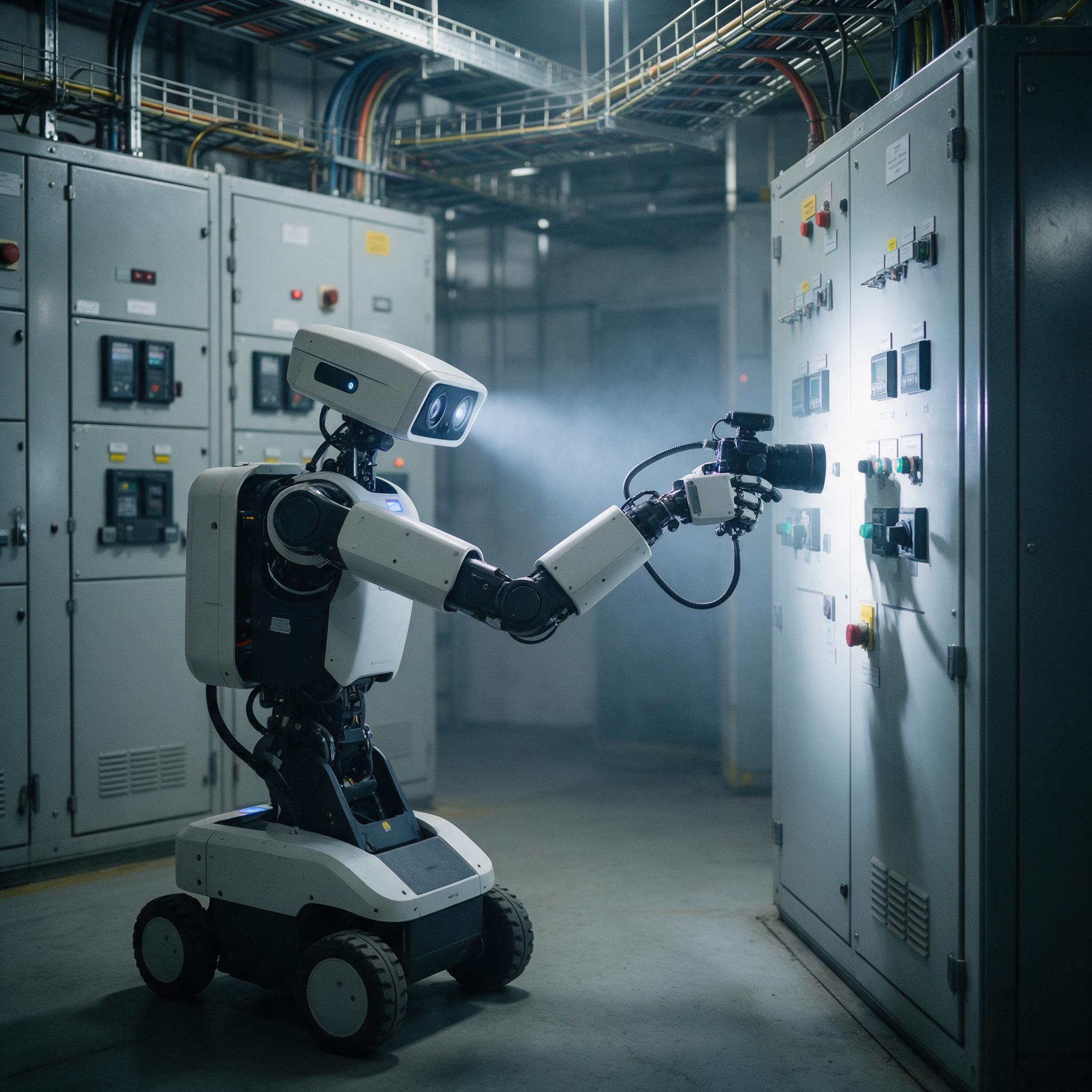
| 22 Sep | Realman Intelligent and Zhuxin IoT launched “Silicon-Based Duty”, putting RealBOT robots into power distribution rooms through a remote operation network. | High-risk utility inspection is becoming a paid use case, with remote operation substituting for on-site specialists |
| 21 Sep | Jinbei (a Shenyang Automotive Group affiliate) put its first industrial embodied robot to work as “Employee 001” and opened a data factory; the first automotive embodied-AI datasets received certification. | Automotive parts makers are building their own training data assets — a durable moat that suppliers cannot easily copy |
| 23 Sep | Drone imagery showed the main steel structure of Tesla’s Texas Optimus factory nearing completion, with production still expected in late 2027 according to the observer; Tesla’s Q2 2026 report described both Optimus plants as under construction. | Announced capacity is far ahead of installed capacity — do not plan component volume against a construction photo |
Why the economics are still awkward
A widely shared Chinese industry analysis this week put the problem plainly: the typical embodied-AI company produces an impressive demonstration, signs a proof-of-concept, and then enters a long customisation phase in which every new scenario needs new data, every new task needs a retrained model, and every new customer needs a bespoke delivery. Revenue stays project-based, teams grow, and gross margin thins. The missing piece, in that analysis, is a general foundation model for physical work.
That diagnosis matters for anyone buying robots rather than building them. If the industry is still project-based, then the correct procurement instrument is not a large framework agreement but a paid pilot with defined acceptance criteria, followed by a scale decision once the failure-recovery data exists. Geekplus made a related point on 22 September when it published long-horizon task results for its Gravity embodied model, explicitly measuring decision speed, motion precision, adaptability and self-correction rather than task completion alone.
How to buy into a market with 7,000 units a year
- Buy sub-assemblies, not narratives. Force-controlled arms, joint modules, harmonic and cycloidal reducers, torque sensors and cooling parts are already shipping in the thousands; whole humanoids are not.
- Write acceptance criteria around failure recovery. Specify how many consecutive cycles the unit must complete unattended, how it reports a failed attempt, and how it recovers without a full restart.
- Demand the process evidence behind the promise. If a supplier offers streamed factory testing, ask what the stream shows, which units are excluded, and how the test result is recorded per serial number.
- Plan spares and serviceability before volume. In a market with short production runs, spare parts availability is a greater risk than unit price.
- Confirm the certification and safety position for your market. Electrical, machinery and, for service robots, functional-safety documentation differ by destination and are usually the real gate to deployment.
- Do not size orders on announced capacity. Treat factory construction announcements as directional, and volume commitments as contingent on a qualified pilot.
Sourcing robotics hardware and vision modules from China?
TUOLAN TRADE helps overseas buyers specify robot sub-assemblies and imaging modules, verify process and test evidence at the factory, and structure pilot-to-volume purchasing with documented acceptance criteria. Send your requirement to sales@tuolango.com.
Sources and disclosure
Figures are compiled from public internet sources dated September 2026: Reuters reporting, via China Robot Network, on the International Federation of Robotics’ forthcoming first humanoid robot sales statistics covering approximately 7,000 units in 2025; China Robot Network reporting on the FA Robotics and Boyin Hechuang 2,000-unit force-controlled arm agreement of 22 September, the Realman and Zhuxin IoT “Silicon-Based Duty” launch, the Jinbei industrial embodied robot and data factory launch of 21 September, Geekplus Gravity long-horizon task results, and drone imagery of the Tesla Texas Optimus factory. The IFR figures are described as pending publication and were not independently audited here; Tesla’s production timing is an observer’s estimate, not a company statement. Editorial analysis and sourcing guidance in this article are our own assessment. TUOLAN TRADE is not affiliated with any company mentioned; company and product names belong to their respective owners.