
Insights
Lithography Optics: Keep the Process Conditions Beside the Resolution

NEWS + TECHNICAL ANALYSIS
For lithography optics procurement, keep the process conditions attached to a claimed pattern resolution. A complete exposure-system result cannot be copied directly into a lens drawing as proof of component performance.

A recent announcement includes a necessary qualification
On 2026-10-26, Nikon announced orders for the FX-6ASLH. Its stated 0.85 µm L/S resolution uses a phase-shift mask and chemically amplified resist; L/S means line and space. Nikon lists the sales launch as 2027-12. This is a system announcement, not evidence that TUOLAN supplies the equipment or its optics.
Turn the application result into optical requirements
TUOLAN’s procurement analysis is to ask which optical properties the application designer needs from the component. Define the operating spectrum, field, conjugates and allowable optical errors independently of the printed-pattern claim. The designer must connect those requirements to the intended mask and process; a single resolution number does not supply that connection.
For a proposed substitution, distinguish an optical comparison from a process demonstration. Keep the component drawing, coating requirements and optical test conditions with the candidate, while retaining the mask and resist conditions with the process result. Do not describe agreement on one document as automatic agreement on the other.
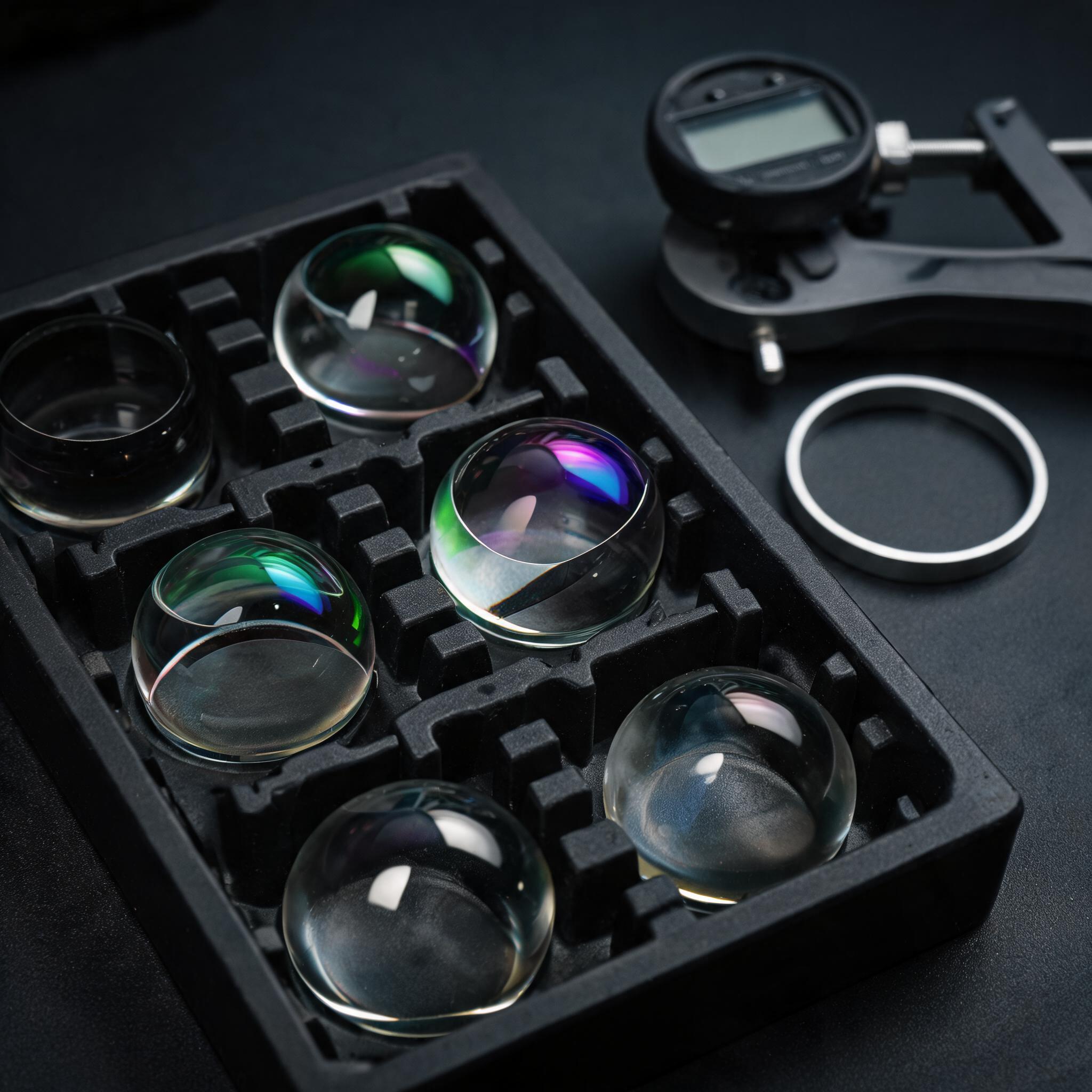
Preserve separate component and process evidence
At acceptance, identify which requirement each piece of evidence establishes. A supplier’s optical report can support the approved component specification, while the application result still needs the agreed system and process validation. This separation lets a buyer review changes without treating a manufacturer’s system-level announcement as a transferable lens guarantee.
Related specifications
precision polished aspheric lens references · optical coating requirements
For a component review, send the approved optical requirements and the process conditions behind the application target. Contact TUOLAN: sales@tuolango.com.
Sources and editorial note
Reviewed 2026-11-02. Technical conclusions and proposed acceptance steps are TUOLAN editorial analysis. No manufacturer affiliation is implied.