
Insights
Machine Vision Turns the Corner: 3% Growth and Rising Optics Component Demand
VISIBLE-LIGHT OPTICS · MACHINE VISION COMPONENTS · OCTOBER 2026
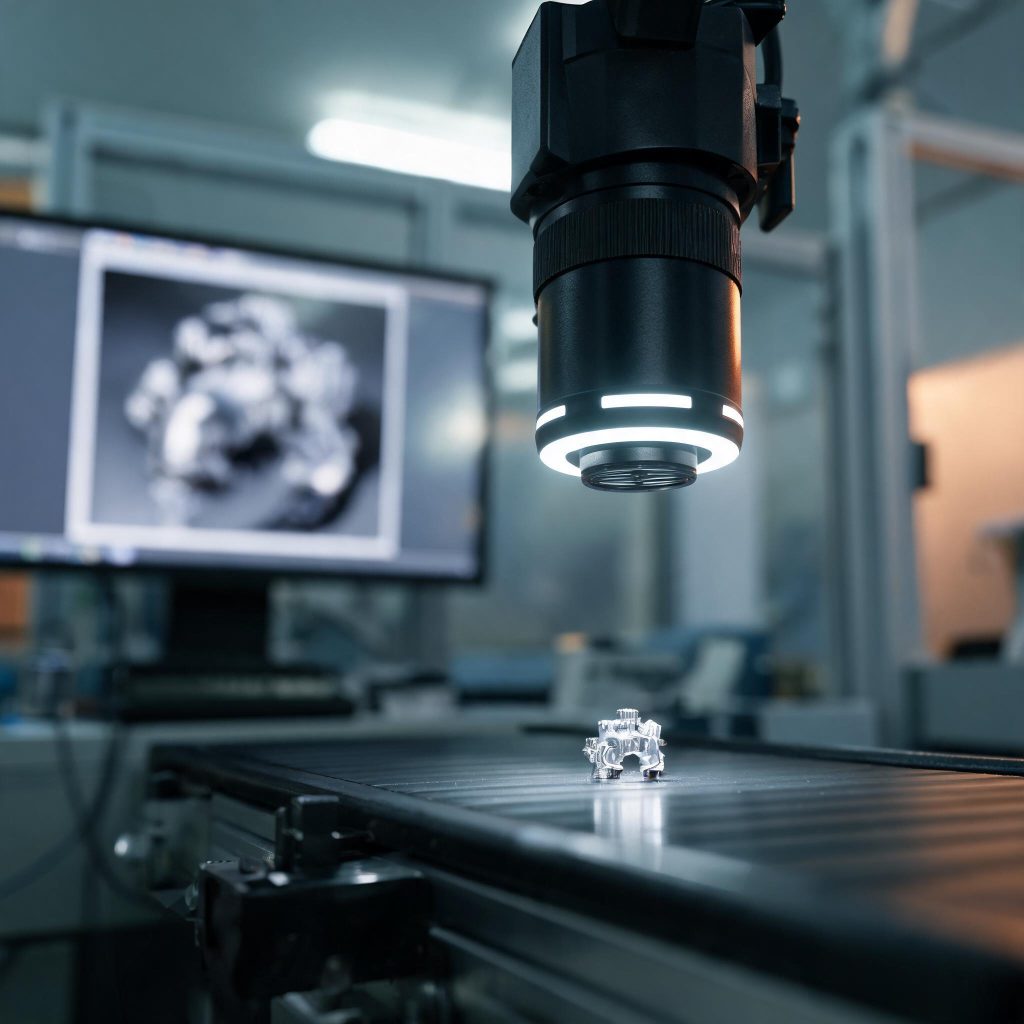
Europe’s machine vision industry is expected to return to growth in 2026 with revenue up around 3 per cent, ending three consecutive years of declining turnover. The number that matters for component buyers sits underneath it: component manufacturers — cameras, sensors and optics — grew revenue by 4 per cent in 2025, and survey demand points to further growth this year while complete vision systems still lagged.
optics.org reported the forecast on 6 October 2026, from the press conference opening the VISION trade fair in Stuttgart. Daniel Seiler, chairman of VDMA Machine Vision, said the industry regards itself as back on a growth path and remains “cautiously optimistic for 2026”, while noting that demand in Germany specifically remains subdued and continues to weigh on the European total.
Components recovered first; systems did not
The split inside the data is the interesting part. Component manufacturers turned around in 2025, increasing revenues by 4 per cent against 2024, and current surveys indicate demand for cameras, sensors, optics and other components will keep growing through 2026. The systems segment moved the other way, with revenues down 6 per cent in 2025, held back by persistently weak demand in Germany in particular.
In other words, the optics and camera supply chain recovered roughly a year before the integrators who buy from it. For anyone specifying lenses, filters, windows or illumination for inspection equipment, that sequence is a planning signal: component order books are already firming while system builders are still working through cautious capital budgets.
What machine vision actually buys
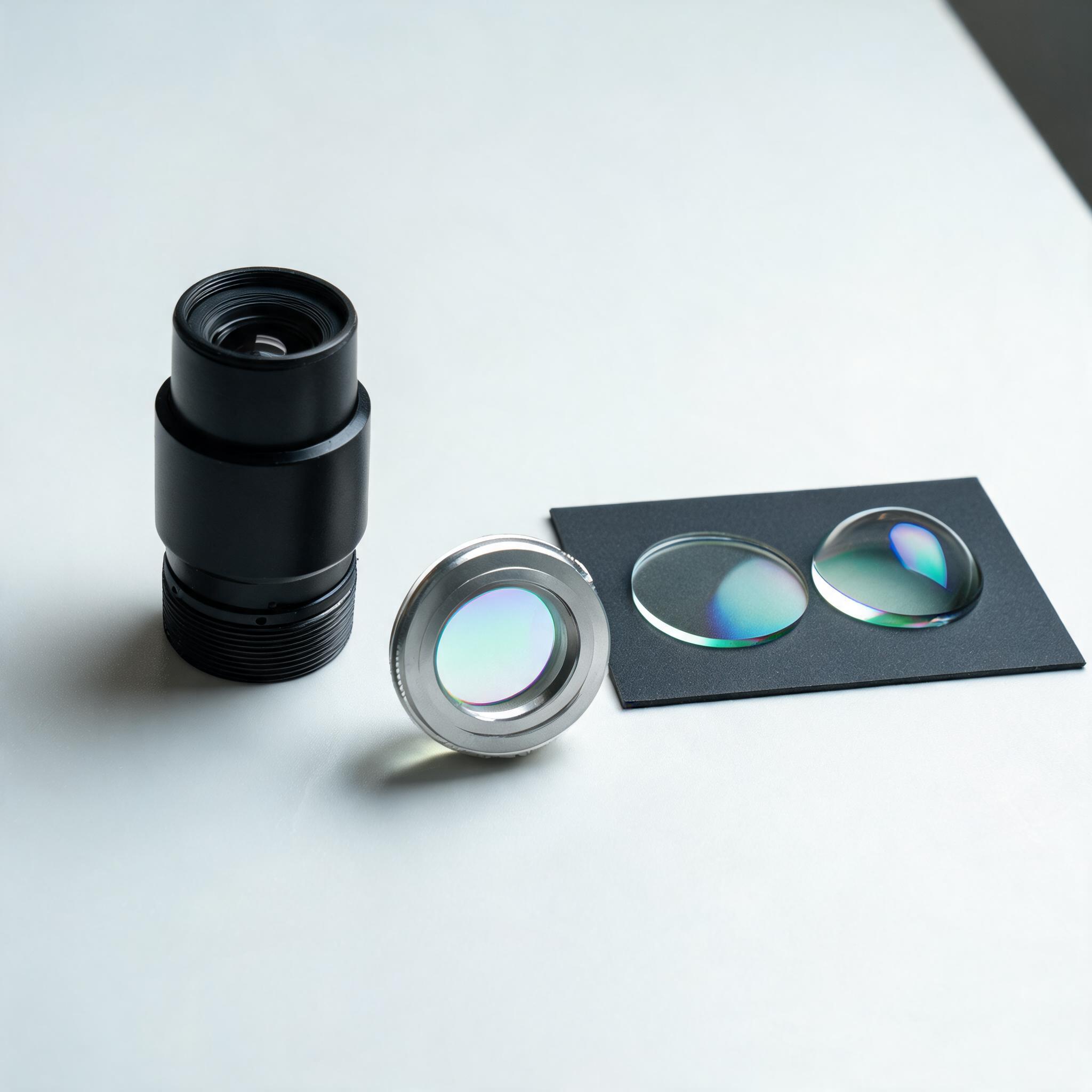
Machine vision is one of the most demanding volumes for visible and near-infrared optics, because every system needs a defined optical path rather than a single catalogue lens.
- Imaging objectives with controlled distortion, telecentricity and field flatness across the full sensor format.
- Bandpass and longpass filters matched to the illumination wavelength, so that factory ambient light is rejected rather than amplified.
- Windows and protective optics that survive washdown, abrasives and thermal cycling without losing transmission or flatness.
- Illumination optics — collimating and diffusing elements that decide whether the part is evenly lit or merely brightly lit.
A three per cent market-growth figure is modest in isolation, but it moves a much larger installed base of inspection lines. Component demand is a function of both new machines and the retrofit, expansion and replacement cycle on existing ones, which is why the component segment can grow while system revenue contracts.
Visible-Light Lenses & Objectives Sourcing →
What to do with a recovering component market
- Lock coating specifications before capacity tightens. Coating lines are the usual bottleneck when vision demand recovers. Centre wavelength, bandwidth, transmission and blocking belong in the drawing, not in a verbal agreement.
- Buy the optical stack as one specification. A filter optimised for one illumination wavelength behind a window that shifts that wavelength is a channel that underperforms its own datasheet. Specify filter, window and objective together.
- Demand transmission curves, not just grades. For inspection optics, a measured transmission curve across the stated bandwidth is worth more than a coating class label.
- Plan the second source during the growth phase. Component capacity is added when order books rise, so qualification slots are easier to obtain before a market peak than during one.
- Check environmental qualification for industrial windows. Washdown chemicals, temperature cycling and abrasion decide service life on the factory floor, and those tests cost far less at qualification than at replacement.
Specifying optics for inspection or machine vision?
Send your wavelength, sensor format and pixel pitch, field of view, working distance, environmental conditions and annual volume to sales@tuolango.com and we will return a qualified-supplier comparison for objectives, filters, windows and illumination optics.
Sources and disclosure
Sources: optics.org, “VISION 2026: machine vision industry shows upward trend, says Germany’s VDMA”, 6 October 2026, reporting the VDMA Machine Vision press conference opening the VISION trade fair in Stuttgart — European machine vision industry expected to grow by around 3 per cent in 2026 after three years of declining turnover, component manufacturers increasing revenues by 4 per cent in 2025 compared with 2024 with demand for cameras, sensors and optics expected to keep growing in 2026, machine vision systems segment revenue down 6 per cent in 2025 with demand in Germany still subdued, positive demand forecasts for 2027, and comments by VDMA Machine Vision chairman Daniel Seiler. Product categories, qualification and procurement observations are TUOLAN TRADE analysis and are not attributed to any cited source. Edited and analysed by TUOLAN TRADE.