Skip to content
Factory visits & supplier audits welcome by appointmentsales@tuolango.com
TUOLAN TRADE TUOLAN TRADEGLOBAL SOURCING · RELIABLE SUPPLY Contact Us

Optical Components / Germanium & Chalcogenide Optics

Infrared elements · LWIR 8–12 μm · MWIR 3–5 μm

Germanium & Chalcogenide Infrared Optics

Germanium windows, germanium lenses and molded chalcogenide-glass lenses are the material backbone of infrared imaging. Every LWIR and MWIR lens assembly starts as a set of elements whose material, figuring and coating decide the final image. We source and qualify infrared optical elements from prototype singles to production volumes, covering machining, single-point diamond turning, molding and coating. Expand each product card for the full reference specification.

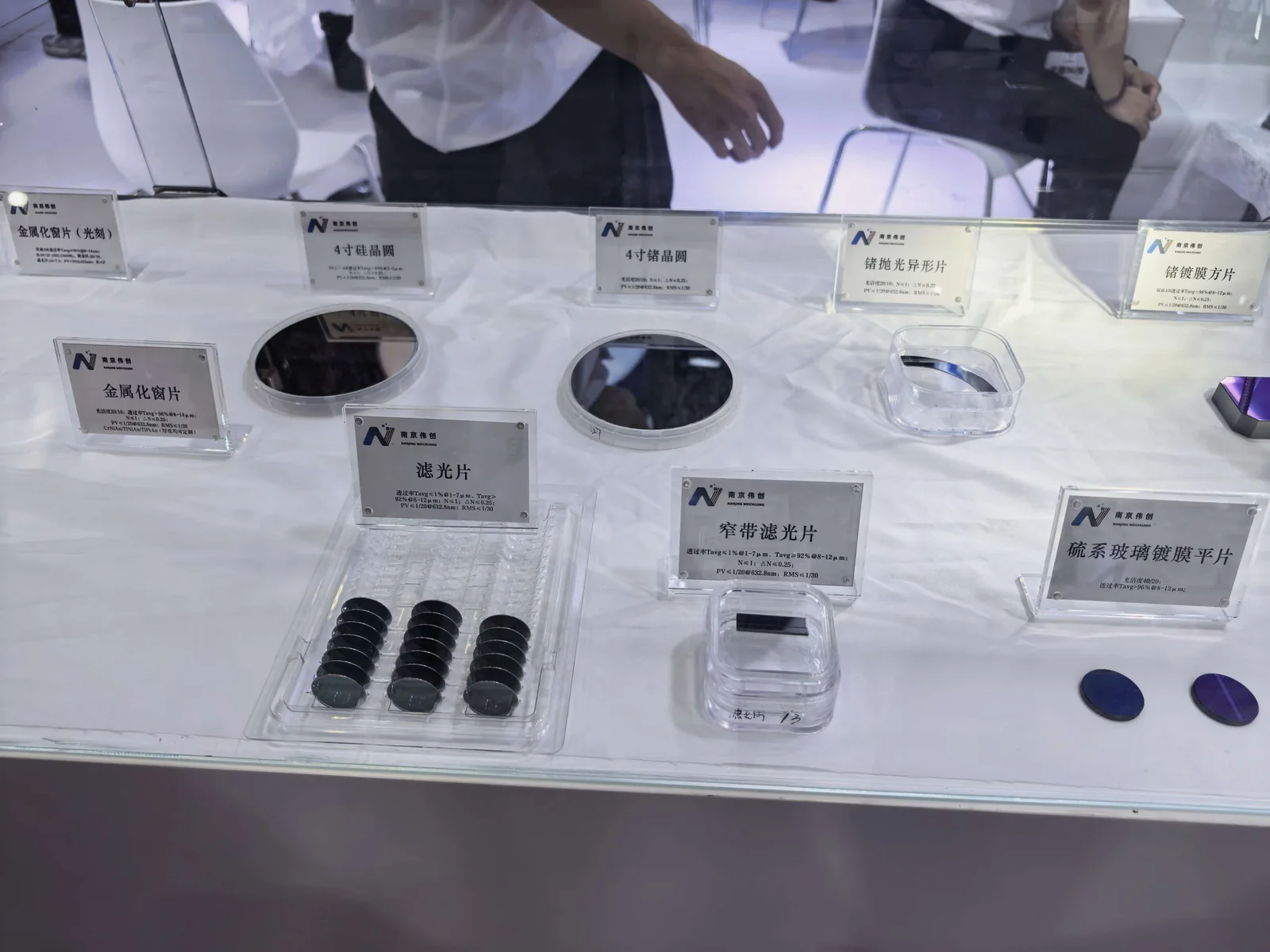
Infrared optical material samples including germanium, silicon and coated chalcogenide glass
Germanium, silicon and coated chalcogenide samples from our CIOE 2026 exhibition visit.

Element-level products

Three product families, full specifications on every card

Numerical ranges are engineering references and are confirmed per project drawing. Product images are original illustrations; final geometry follows the approved drawing.

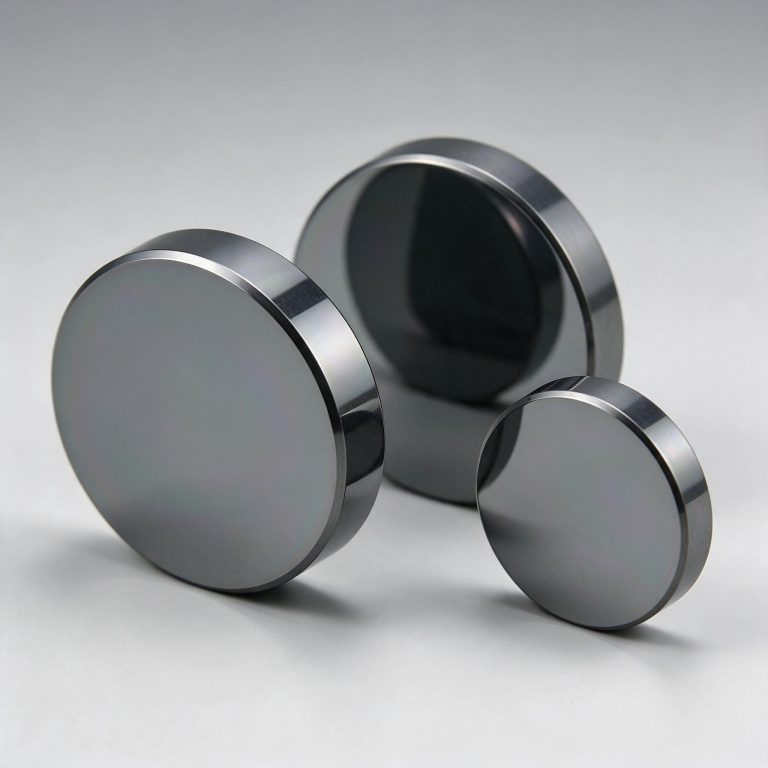
Germanium window for thermal camera protection with AR and DLC coatings
8–12 μm / 3–5 μmØ10–300 mmDLC option

Germanium Windows

Protective germanium windows for thermal cameras and sensor housings, with high-efficiency anti-reflection coatings and diamond-like carbon (DLC) on the exposed face for sand and rain erosion resistance.

  • Diameter10–300 mm
  • CoatingAR + DLC front
  • Flatnessλ/4–λ/8
View full specifications
Diameter range
10–300 mm
Thickness
1–15 mm (±0.05 mm typical)
Parallelism
≤3 arcmin standard; ≤30 arcsec precision
Surface quality
60-40 / 40-20 scratch-dig
Flatness
λ/4–λ/8 PV @ 632.8 nm
Wedge option
0.5°–3° for ghost suppression
Coatings
AR 8–12 μm, AR 3–5 μm, dual-band AR; DLC on front surface; hydrophobic top-coat option
Average transmission
≥95% in-band with AR both sides (reference)
Operating temperature
−40 to +70 °C

Request this configuration →

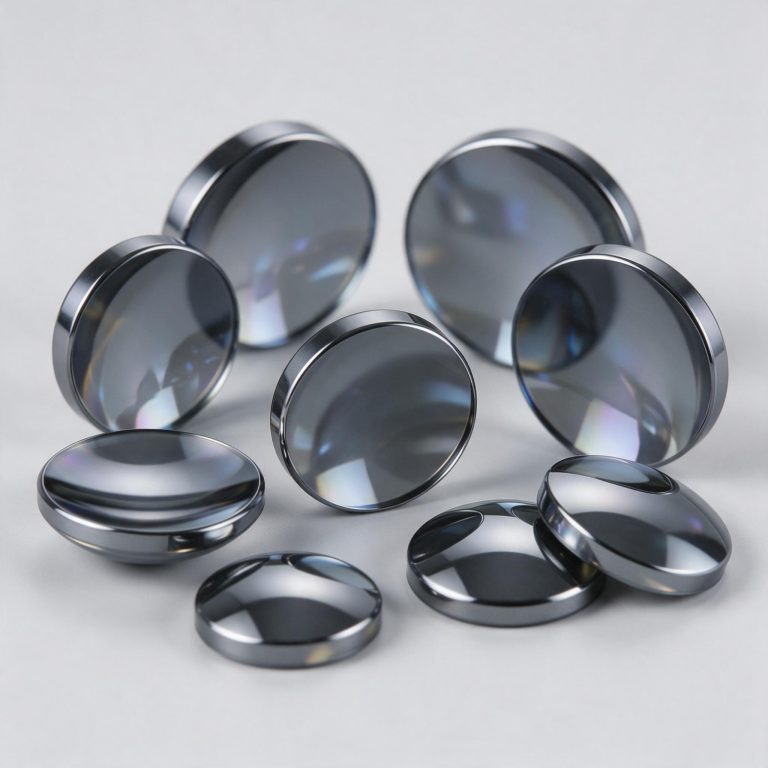
Germanium lens element available as spherical, aspheric or diffractive surface
LWIR / MWIRAsphere + diffractiveSPDT

Germanium Lenses

Spherical, aspherical and diffractive germanium lens elements for LWIR and MWIR objectives. Single-point diamond-turned aspheres support athermalized designs; hybrid refractive–diffractive elements correct chromatic aberration across wide bands.

  • Diameter10–200 mm
  • FormsSpherical / aspheric / diffractive
  • Centration≤1 arcmin
View full specifications
Diameter range
10–200 mm
Focal length
5–500 mm, custom
Surface forms
Plano, spherical, aspheric, diffractive (hybrid)
Process
CNC polishing; single-point diamond turning (SPDT)
Surface figure
λ/4–λ/8 PV @ 632.8 nm
Surface quality
60-40 scratch-dig typical
Centration
≤1 arcmin
Coatings
AR 3–5 μm, AR 8–12 μm, dual-band AR
Design support
Athermalized and dual-band designs on request

Request this configuration →

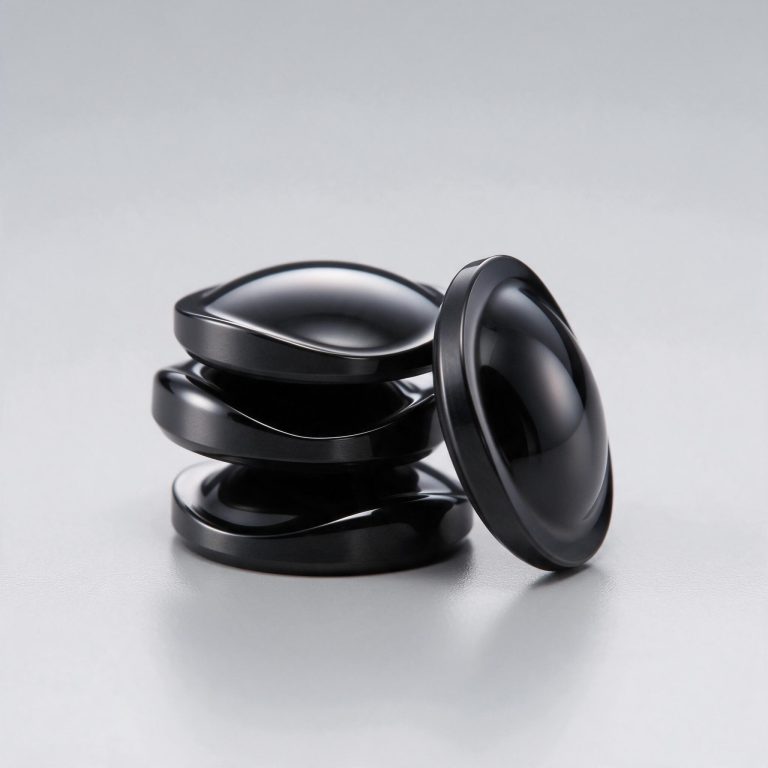
Molded chalcogenide glass aspheric lenses for volume LWIR programs
Molded asphereVolume productionLightweight

Molded Chalcogenide Glass Lenses

Precision-molded chalcogenide-glass aspheric lenses for high-volume thermal products — automotive night vision, consumer thermography and drone payloads. Molding cuts unit cost at volume and delivers aspheric surfaces without diamond-turning every part.

  • Diameter3–60 mm
  • FormMolded aspheric
  • Volume1k–100k+ pcs/yr
View full specifications
Diameter range
3–60 mm
Surface forms
Molded aspheric (single- and double-sided)
Material
Chalcogenide glass grades for 8–12 μm (LWIR) and 3–5 μm (MWIR)
Surface quality
60-40 scratch-dig (molded)
Figure accuracy
λ/2–λ/4 PV typical, grade-dependent
Coatings
AR 8–12 μm; protective top-coats
Annual volume
1,000–100,000+ pcs/year
Tooling
Mold tooling amortized across program volume
Typical use
Athermalized LWIR objectives; automotive; consumer thermal

Request this configuration →

Applications

Where germanium and chalcogenide optics are used

The same element rarely serves two applications. LWIR thermal imaging, automotive night vision, mid-wave gas sensing and airborne payloads each push material, coating and mounting in a different direction — so we start from the application and the environment, then work back to the specification.

Thermal imaging

LWIR thermal imaging and night vision

Germanium is still the default objective material for 8–12 μm thermal cameras: high refractive index, low dispersion and good machinability at moderate diameters. Molded chalcogenide aspheres take over where volume and weight matter more than index. Typical builds are uncooled LWIR modules for handheld thermography, non-contact screening and wildlife observation.

Automotive and mobility

Automotive night vision and pedestrian detection

Thermal cameras fitted to vehicles have to hold focus from a cold start to engine-bay heat, so athermalized designs dominate. Molded chalcogenide elements are the usual route at production volume; germanium still appears where the optical budget favours it. Specifications here normally call for a wide operating-temperature range and documented automotive qualification, not just a room-temperature MTF.

Security

Security, perimeter and border surveillance

Long-range PTZ and perimeter cameras pair an uncooled or cooled LWIR core with germanium optics for detection in total darkness, haze and light smoke. Exposed front elements usually carry DLC or a hard protective coating against sand and rain erosion, often finished with a hydrophobic top coat.

Industrial

Firefighting, industrial and process thermography

Cameras used through smoke, or mounted on furnaces, kilns and process lines, keep the window under continuous heat load. Germanium transmission falls away above roughly 70 °C, so fixed installations often move to silicon, ZnS or chalcogenide — a frequent sourcing error when a handheld-camera specification is copied straight into a fixed build.

Defense and aerospace

Defense, aerospace and UAV payloads

MWIR and dual-band seekers, thermal sights and gimbal payloads use germanium for its index, and ZnS or silicon where band coverage matters more. On airborne platforms the binding constraints are mass and thermal soak, which is why molded chalcogenide elements and lightweight windows are increasingly specified for UAV and drone cameras.

Sensing and analysis

Gas sensing, spectroscopy and mid-IR analysis

The 3–5 μm band carries the absorption fingerprints used to detect hydrocarbons, CO₂ and methane. Chalcogenide glass transmits across the mid-IR and molds into small aspheres, which makes it the practical choice for compact NDIR and spectroscopic instruments, while germanium is used mainly for windows and filters in the same optical path.

Material follows the application. Germanium remains the all-round LWIR default within its temperature window, but it is dense and its transmission is temperature-sensitive — for volume automotive, UAV and mid-IR instrument optics, molded chalcogenide usually wins on cost, weight and athermal design. We match material, coating and mounting to the application and confirm every parameter against the approved drawing before quoting. Related pages: Infrared Lenses for complete objectives, Optical Windows for protective flats, and Optical Coatings for AR and DLC options.

Material selection

Germanium, chalcogenide or ZnS? A quick selection guide

Germanium

All-round LWIR default

  • Best all-round LWIR index and machinability
  • Density and price rise with diameter
  • Transmission drops above ~70 °C

Chalcogenide glass

Moldable at volume

  • Moldable, lighter, lower cost at volume
  • Ideal for athermalized consumer and automotive lenses
  • Aspheric surfaces without per-part diamond turning

ZnS and silicon

Special-band options

  • ZnS: visible-to-LWIR multispectral windows; softer, needs coating protection
  • Silicon: low density and low cost for 3–5 μm; not usable at LWIR

Complete objectives built from these elements are on our Infrared Lenses page; general-purpose flats are under Optical Windows.

Need infrared elements or a full assembly?

Send drawings or a target specification — single prototypes and volume pricing both available. Factory visits and audits can be arranged.

Open the inquiry form

WhatsApp