
Insights
Silicon Photonics: On-Chip Isolator and Fiber Combiner Standard
INDUSTRY NEWS · LASER & PHOTONIC INTEGRATION · SEPTEMBER 2026
Two September developments close gaps that have held photonic integration back: local laser annealing has produced an on-chip optical isolator inside a silicon photonics flow, and China has started writing an industry standard for the fiber combiners used in industrial lasers. Both change what can be specified, and what must be tested.
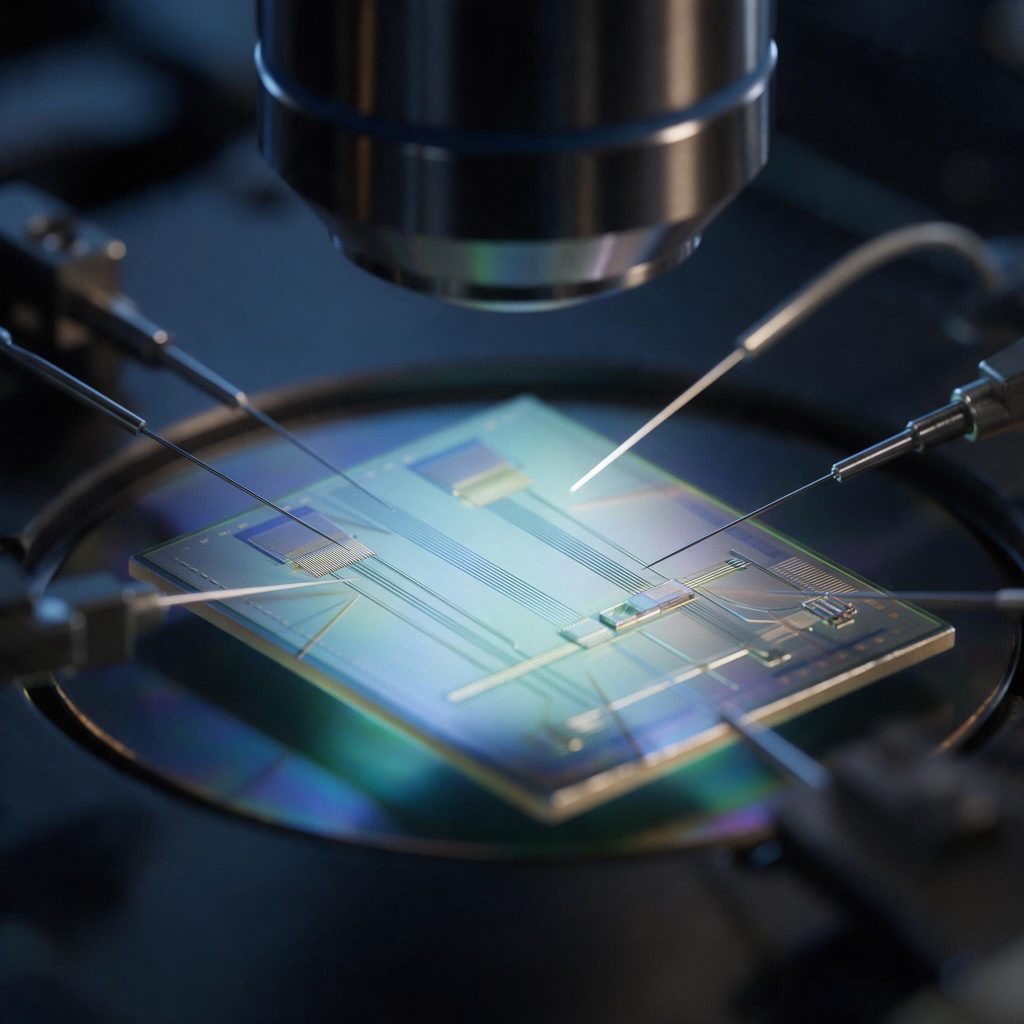
Silicon photonics integrated almost everything — waveguides, modulators, splitters, detectors — and still could not integrate the one component that protects a laser from its own reflections. That gap has now been addressed in the laboratory: Chinese trade reporting on 23 September describes an on-chip optical isolator realised through local laser annealing, integrated within the silicon photonics process rather than assembled beside it. In the same week, the standards committee responsible for high-power laser applications launched an industry standard project for fiber combiners used in industrial lasers, with laser manufacturer Dake Laser named as a principal participant.
Why an integrated isolator matters
An isolator is a one-way valve for light. In a discrete optical assembly it is a small part with a magneto-optic element and a polariser, mounted after the laser and before the fiber. In a photonic integrated circuit, that approach has always been awkward: the materials and the process steps do not belong to a standard silicon flow. Building the function into the chip means the isolator stops being a discrete line item and becomes a process feature — which reduces component count, assembly labour and the number of optical interfaces that can drift during thermal cycling.
For a buyer the practical consequence is a change in the bill of materials and in the qualification test plan. When a function migrates into the die, incoming inspection cannot verify it the way it verified a discrete part. The evidence has to come from the wafer-level test and the process control data instead.
A standard for fiber combiners
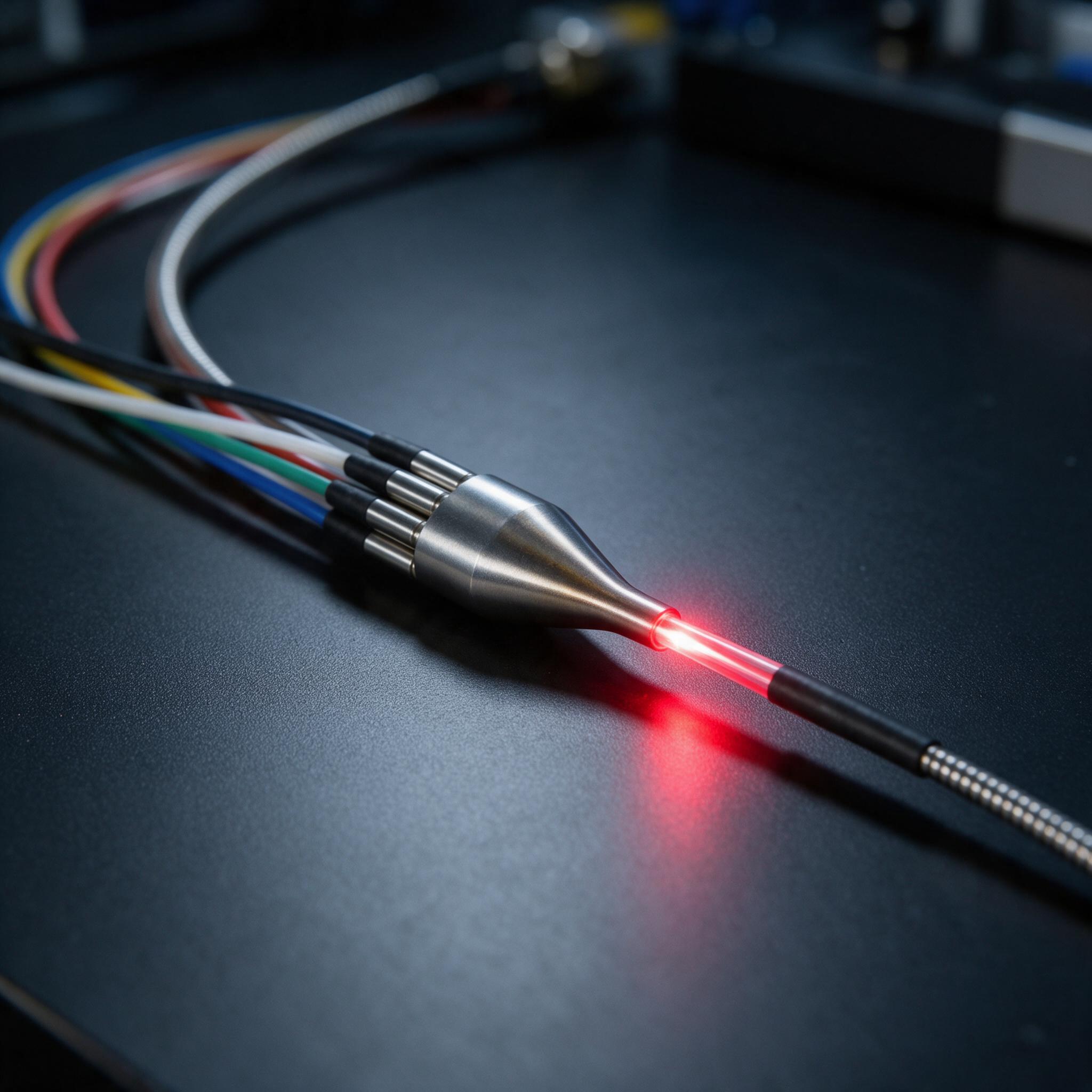
Fiber combiners take the output of several laser modules and merge it into one delivery fiber. They are one of the few high-power laser components that has been bought and sold largely on supplier-specific datasheets. The new project under TC284/SC2 — the high-power laser application sub-committee of China’s national technical committee for optical radiation safety and laser equipment — aims to put a common frame around definitions, test methods and acceptance criteria.
Standards projects move slowly, but they change negotiation positions quickly. Once test methods are agreed, a specification can reference a clause instead of copying a vendor’s datasheet, and cross-supplier comparison becomes possible on paper before it is possible on the bench.
Laser processing moves from tool to production line
A third September signal points the same direction from the application side. Nanjing Zhongke Yuchen Laser Technology and Pinghu Yurui (a Chery Technology affiliate supplying automotive parts) signed an agreement on 20 September to build an automated ultra-high-speed laser cladding line for brake discs. Laser cladding has been available as a service for years; committing it to an automated automotive line is a different level of process control, cycle-time and traceability requirement. It is also a reminder that laser systems are being bought for measured production output rather than for capability demonstrations.
Optical Coatings & Thin Films →
What to ask a supplier this quarter
- For integrated photonic parts: request wafer-level test data and process control records for the isolation function, plus the acceptance criteria for the die-level test that replaces incoming inspection.
- For fiber combiners: ask which test method the supplier uses for insertion loss, power handling and thermal drift, and whether they will accept a third-party test protocol on the first article.
- For coatings on high-power paths: require laser-induced damage threshold data measured at the operating wavelength and pulse regime, not a generic broadband figure.
- For laser processing lines: if you are buying processed parts rather than machines, ask for the process qualification record and the traceability unit used for each batch.
- For any of the above: fix the interface — fiber type, connector, mode field diameter and coating run — in writing before price negotiation, because interface changes re-open the qualification.
Sourcing photonic components, coatings or laser-processed parts from China?
TUOLAN TRADE helps overseas buyers define the interface and the acceptance test before the RFQ goes out, screen suppliers on process data rather than catalogue claims, and coordinate first-article inspection and export delivery. Send your specification to sales@tuolango.com.
Sources and disclosure
Figures and technical descriptions are compiled from public internet sources dated September 2026: Laser Manufacturing Network (laserfair.com) reporting on local laser annealing for on-chip optical isolators, on the launch meeting of the TC284/SC2 industry standard project for fiber combiners used in industrial lasers with Dake Laser as a principal participant, and on the 20 September agreement between Nanjing Zhongke Yuchen Laser Technology and Pinghu Yurui for an automated ultra-high-speed laser cladding line for brake discs. Standards projects and commercial agreements are at early stages and may change. Editorial analysis and sourcing guidance in this article are our own assessment. TUOLAN TRADE is not affiliated with any company mentioned; company and product names belong to their respective owners.