
Insights
XPeng IRON Supply Chain: 62 of 82 Degrees of Freedom
INDUSTRY NEWS · CAMERA & ROBOTICS · SEPTEMBER 2026
XPeng’s humanoid programme moved from roadmap to purchase orders in a single month. On 22 September the company held its first robot supply-chain partner conference and, according to reporting by The Paper, completed supplier audits and core-component designations on the same day. Read as a bill of materials, the most useful number is 62.
The sequence reported by Chinese media is compact. On 25 August 2026 XPeng’s robotics business closed a first funding round of more than USD 900 million. On 8 September the company started what it describes as the world’s first automated production line for high-order general-purpose humanoid robots, with its IRON unit walking off the line under its own control. On 22 September it held its first robot supply-chain partner conference, attended by actuator, dexterous-hand, sensor and AI-chip suppliers, and completed designations.
At the second-quarter earnings call, chairman He Xiaopeng disclosed that more than 85% of the suppliers used by the robotics business overlap with XPeng’s automotive supply chain. That is the mechanism behind the speed. Automotive qualification, quality control and change-management processes already exist, so the robot programme inherits them instead of rebuilding them.
Why one supplier number tells you the volume assumption
The clearest designation reported so far is Fangzheng Motor, which jointly owns Zhejiang Fangde Robot Joint Technology with XPeng. It is described as the exclusive supplier of high-precision motion-control modules for 62 active degrees of freedom on IRON — 75.6% of the robot’s 82 degrees of freedom. The supplier’s robotics order book is reported at more than RMB 1.2 billion for 2025, with a planned capacity of 100,000 joint modules per year from 2026.
That capacity figure is the volume assumption in disguise. At 62 modules per robot, 100,000 modules a year implies an order of magnitude around 1,600 units. For a platform whose stated plan is to start production at the end of 2026 and ship in volume in 2027, that is an aggressive ramp — and it is a planning number, not an output figure.
IRON is reported at 76 degrees of freedom overall and 21 per hand, with the dexterous-hand side involving suppliers such as Zhaowei Machinery & Electronics. Reported domestic content for core components is above 80%. Stated timeline: production begins at the end of 2026 inside XPeng’s own campuses and stores, with market launch and delivery in China and overseas in 2027.
What this means for robotics component sourcing
- Designations are a starting gun, not a finish line. Passing an audit and signing a designation letter says the drawing is frozen. It says nothing about yield, consistency or cost curve, all of which still have to be climbed.
- The automotive playbook is being copied. Cross-over suppliers get pulled in first because their process control is already documented. If you are sourcing for a robot programme and you are not an automotive-tier supplier, expect to be asked for the equivalent evidence.
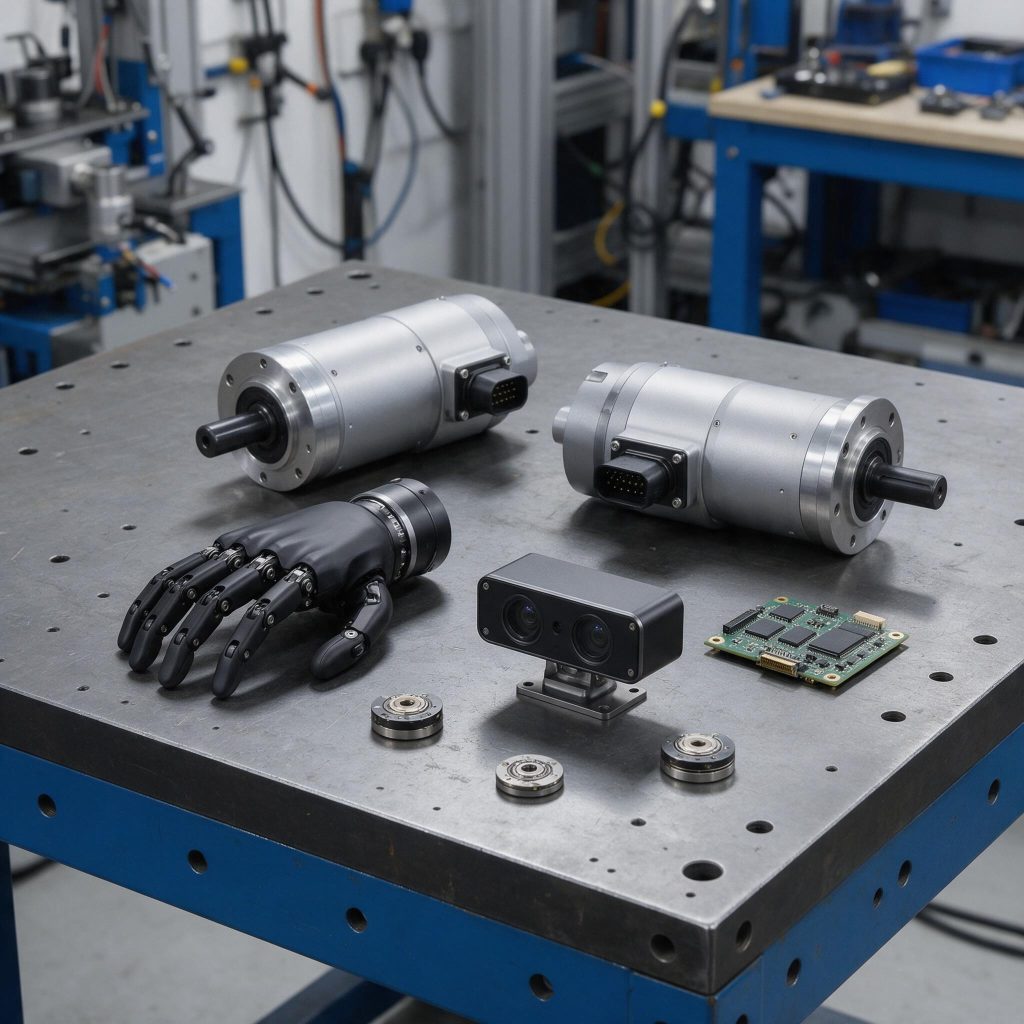
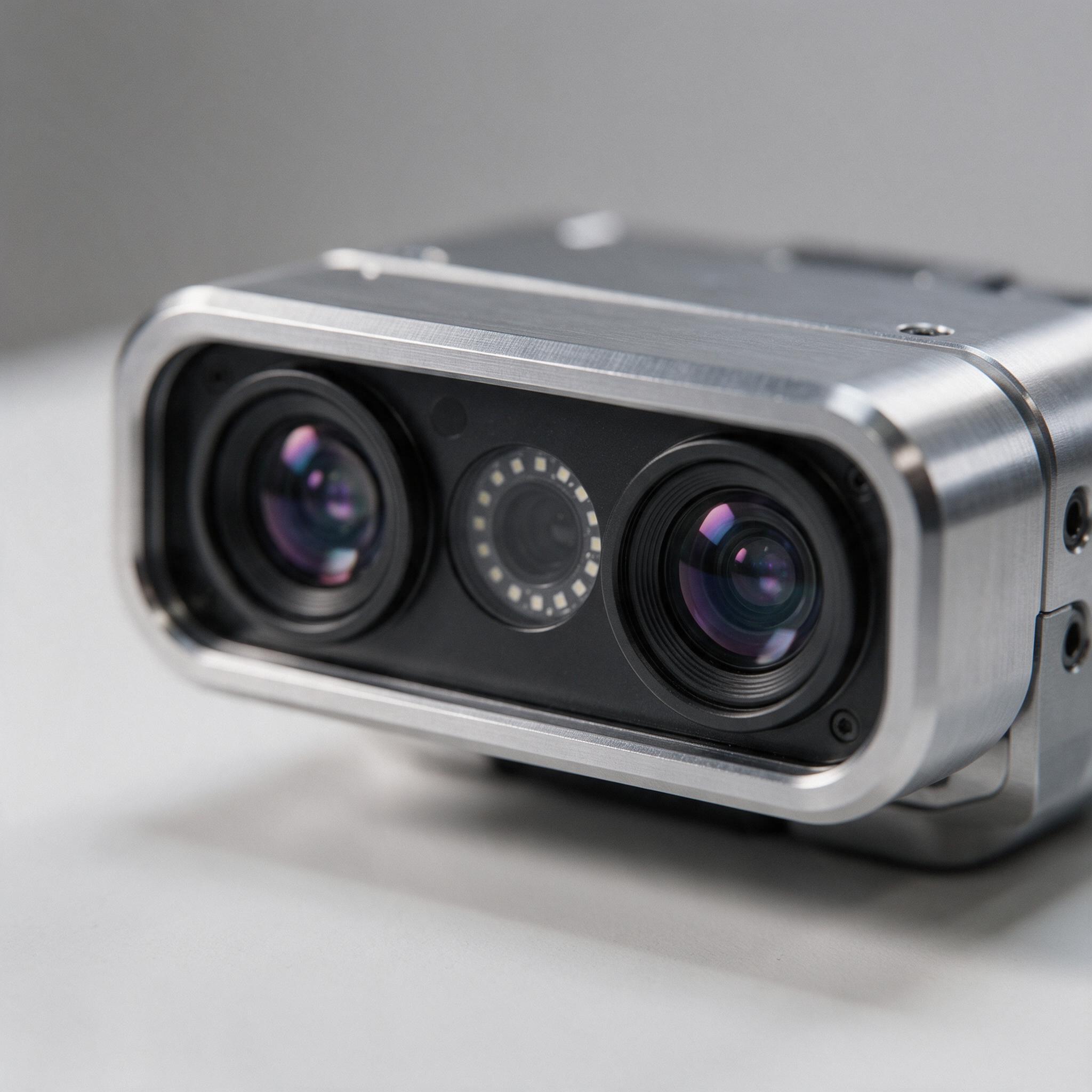
- Sensing and hand modules are the optical openings. Cameras, depth modules, tactile sensing surfaces and the lenses inside them sit in the same qualification flow but come from a different supplier base than joints and reducers.
- Capacity announcements are demand signals. A joint-venture supplier planning six-figure annual module output is making a public bet on its customer’s volume. When you see that number, you know how the customer is forecasting 2027.
- Watch for the naming gap. The specific supplier list and line scheduling data are expected to be disclosed over the coming months — and, as the reporting notes, retail and campus performance of the robot is the real test of the chain.
How to source components into a robot ramp
- Qualify against the ramp, not the prototype. A camera or lens module that passes at 100 units a month may fail at 10,000. Ask for the process-control plan at volume before the price.
- Specify environmental limits early. Vibration, thermal cycling and dust exposure inside a walking robot are different from a fixed industrial camera. These change the optical and mechanical design, not just the test report.
- Put tactile and visual sensing in one conversation. Hand modules increasingly combine imaging with force sensing; sourcing them separately usually produces an integration problem later.
- Tie payment to milestones, not promises. Designation-stage programmes are where schedule slips are normal. Milestone-linked terms protect both sides.
Sourcing robot cameras, lenses or sensing modules?
Tell us the platform, volume ramp and interface at sales@tuolango.com and we will map qualified sources against your qualification plan.
Sources and disclosure
Source: China Robot Network (robot-china.com), “XPeng Robotics finishes locking its supply chain: 85% overlap with automotive partners, IRON volume production countdown begins”, 24 September 2026, sourced from 巨身机器人札记 and citing an exclusive report by The Paper (潘渱新闻) dated 22 September 2026. Funding amount, production-line start date, degrees of freedom, supplier designations, order-book and capacity figures, domestic content ratio and the 2026–2027 timeline are reproduced as the cited sources state them and have not been independently verified by us. Derivations such as the implied unit volume from module capacity are our own arithmetic on published numbers and are illustrative only. This article is original editorial analysis by TUOLAN TRADE for industry reference, not investment advice. Company and product names remain the property of their respective owners.