
Insights
MWIR vs LWIR Infrared Lenses: RFQ Guide
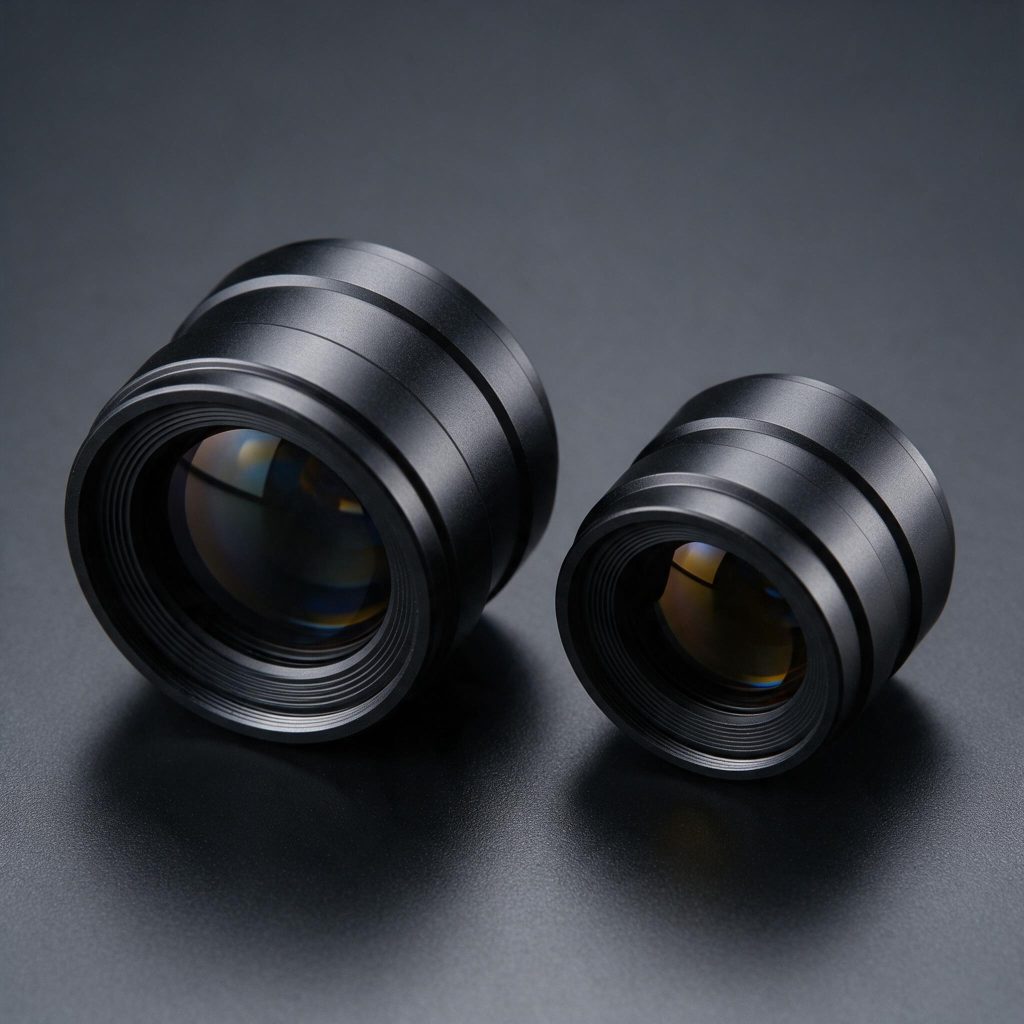
“Infrared lens” is not a complete product specification. A practical RFQ must connect the lens to the detector, spectral band, field of view, focus method, environment and image-quality target. The first decision is usually whether the system works in the mid-wave infrared or long-wave infrared region.
Define the band and detector together
MWIR systems commonly operate around the 3–5 μm region, while LWIR systems commonly use a band around 8–12 μm. The exact detector response and any filters still need to be confirmed. Detector format, pixel pitch, active area and cold-shield or window details affect image circle, focal length selection and optical layout.
Translate field of view into optical requirements
Share the required horizontal and vertical field of view, working distance and target size. If focal length is already fixed, identify whether it is a single field, dual field or continuous zoom design. For zoom systems, provide the focal-length range, zoom ratio and acceptable image shift through the range.
State the focus architecture
- Fixed focus for a defined distance and environment
- Manual focus for operator adjustment
- Motorized focus for remote or automated control
- Athermalized design for performance across a temperature range
Athermalization is not simply a label. The housing material, optical material, detector position and operating temperature range must be considered as one system.
Include image-quality and transmission targets
Specify the F-number, distortion limit, relative illumination, focus range and the image-quality metric used for acceptance. If MTF is required, define spatial frequency, field points, temperature and focus condition. Transmission requirements should identify the band, average or minimum value, and whether the detector window is included.
Describe mechanics and environment
Provide the mounting interface, maximum envelope, mass target, connector or motor requirement, sealing level and expected shock, vibration, humidity and temperature conditions. If the system is intended for outdoor, airborne, vehicle or industrial use, say so at the beginning of the review.
Infrared-lens RFQ checklist
Send the band, detector model or complete detector data, focal length or field of view, F-number, focus architecture, working distance, temperature range, image-quality target, mechanical envelope, environmental requirements, prototype quantity and expected production demand.
See our MWIR and LWIR lens families or email sales@tuolango.com to discuss a detector-matched project.
Related technical guides
Continue with the next RFQ checklist
Each guide covers one specification step for a different optical or fiber product family.