
Insights
Glass Transmission Quotes Need a Thickness Before a Percentage
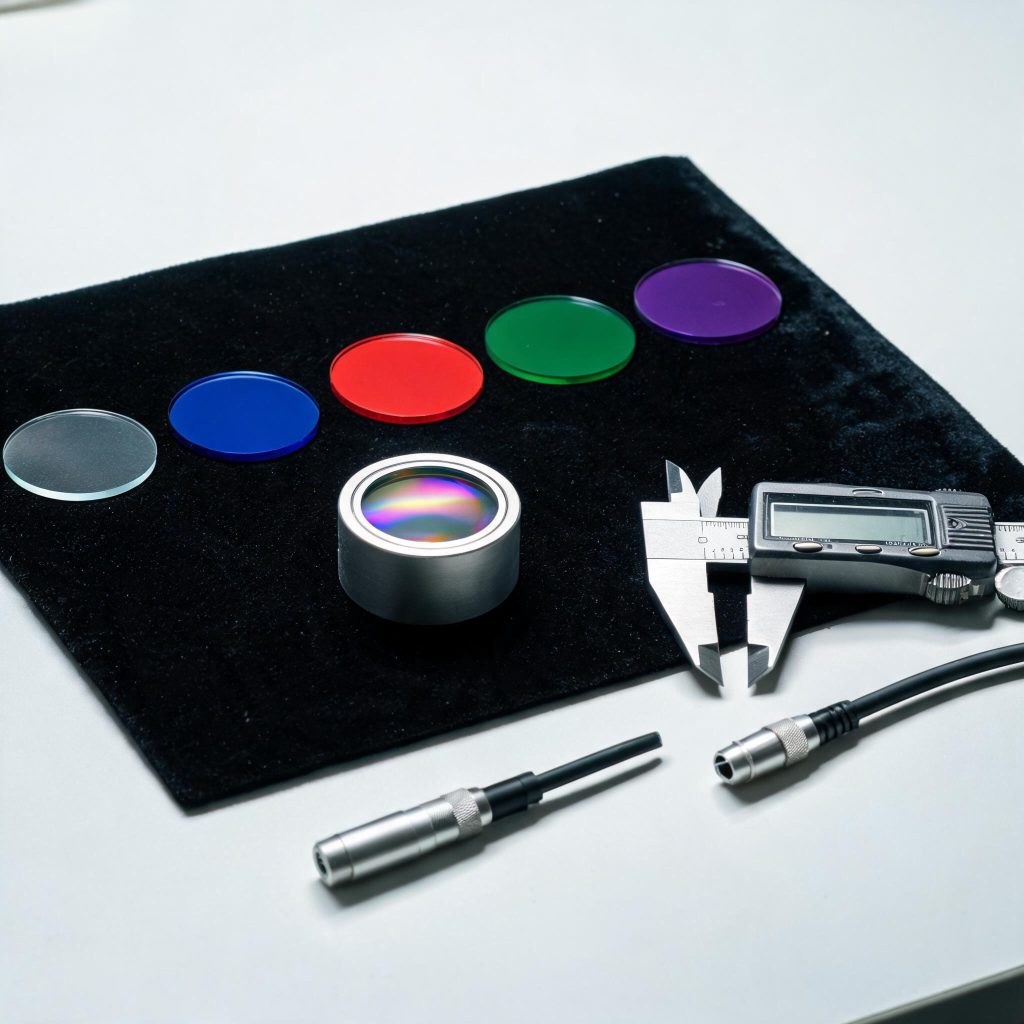
TECHNICAL ANALYSIS
Internal transmittance describes transmission through the material with reflection losses excluded. Before comparing values, establish the wavelength and material path length, then separate that material result from the finished component’s transmission.
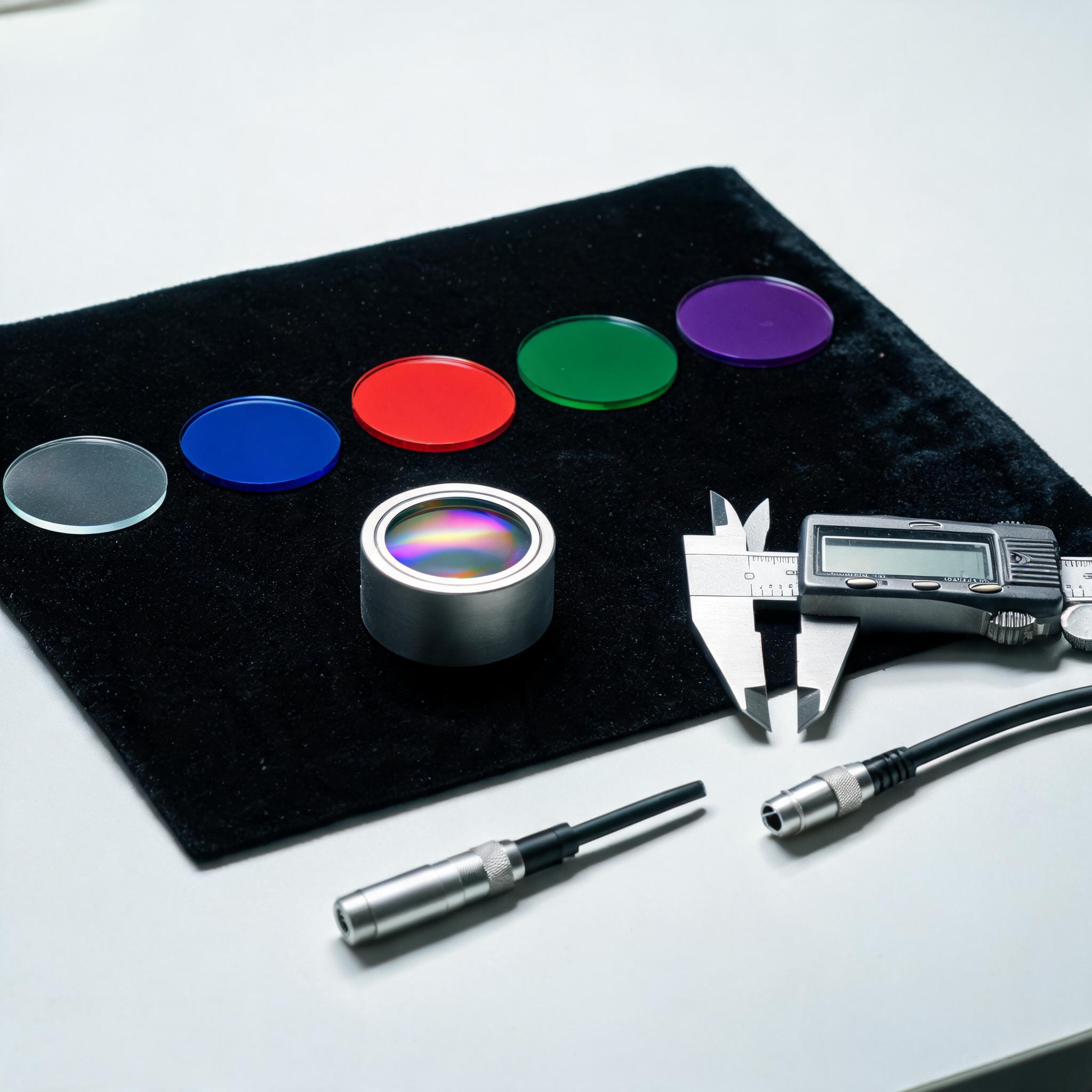
A material curve is not a finished-lens guarantee
SCHOTT’s Optical Glass 2025 reference distinguishes internal transmittance from reflection losses and states that standard catalogue values can represent median values. The catalogue is a historical technical reference. Its material curves should not be presented as measurements of a different supplier’s coated lens.
Compare the path the light actually travels
For TUOLAN enquiries, a useful comparison starts with the same thickness and spectral interval. A prism can give light a longer path through the glass than its smallest mechanical dimension suggests. Ask the optical designer to identify that path before selecting a material on the strength of a curve for a thinner specimen. Near a material’s absorption edge, a convenient single-wavelength value can also leave the edge of the working band poorly specified.
Keep calculations and measurements visibly separate. A thickness conversion under a stated absorption model can support an early design comparison, but it does not become a measured certificate for the delivered part. Ask whether the proposed value is typical or guaranteed and whether it applies to the intended lot, specimen or completed component. Those distinctions can matter more than an extra decimal place in a quotation.

Put the required delivered result on the order
Where the instrument requires total transmission, agree a finished-component test that includes the specified surfaces and coatings. Record the illuminated region and incidence conditions and keep the material evidence alongside that test. If the glass type changes, revisit both the path-length comparison and the component requirement. This approach avoids rejecting a correct material certificate for excluding reflections, or accepting it as proof of transmission that it was never intended to establish.
Related specifications
visible-light lens materials and configurations · optical prism specifications
Send the wavelength range, glass path and required delivered transmission for review. Contact TUOLAN: sales@tuolango.com.
Sources and editorial note
Reviewed 2026-10-21. Technical conclusions and proposed acceptance steps are TUOLAN editorial analysis. No manufacturer affiliation is implied.