
Insights
CPO and NPO Packaging: Connectors Decide Yield in 2026
INDUSTRY NEWS · FIBER OPTICS & CO-PACKAGED OPTICS · SEPTEMBER 2026
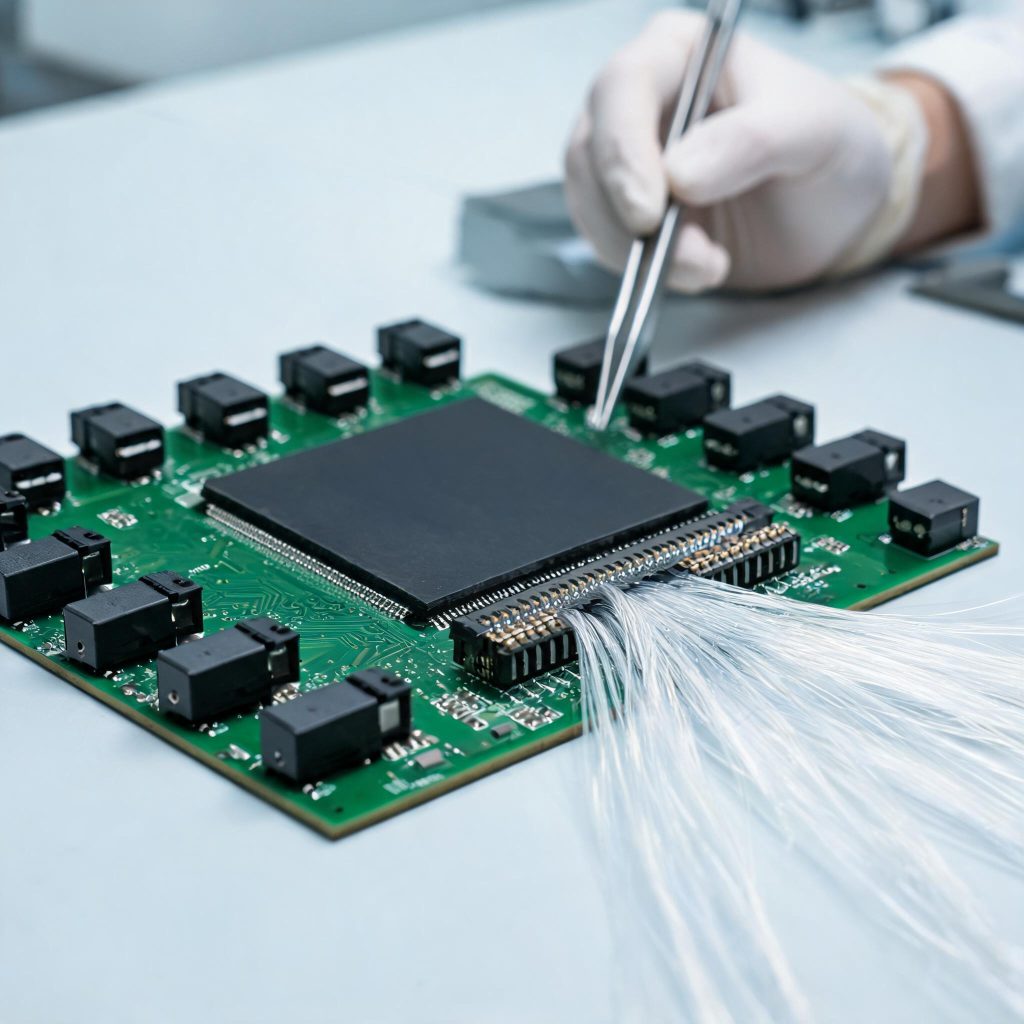
Two announcements inside the same week point at the same conclusion: the hard part of co-packaged optics is no longer the optical engine. It is the connector, the coupling optic and the test step around them.
On 26 September 2026, Optical Fiber Online reported that UTU (邮埋服) high-density optical connectors were used at the Yunqi Conference (云栖大会) to carry NPO and SNPO compute interconnect links. Two days earlier, on 24 September 2026, Corning held its second CPO Technology and Industry Ecosystem Forum, where supply-chain companies discussed what it will actually take to move co-packaged optics into volume production.
The distinction between the two architectures matters commercially. NPO (near-packaged optics) moves the optical engine from the switch faceplate to the edge of the ASIC package while keeping it a separate, replaceable part. CPO (co-packaged optics) goes further and integrates optics with the switch silicon in the same package. NPO is the lower-risk step that the industry is shipping first, and it is the step that creates immediate demand for high-density connectors, fibre arrays and alignment hardware.
Why the connector becomes the bottleneck
When the optical engine sits next to the ASIC instead of on the faceplate, the electrical trace length collapses and the number of fibres that must reach the package rises sharply. That pushes the engineering burden onto mechanical parts that used to be commodity items.
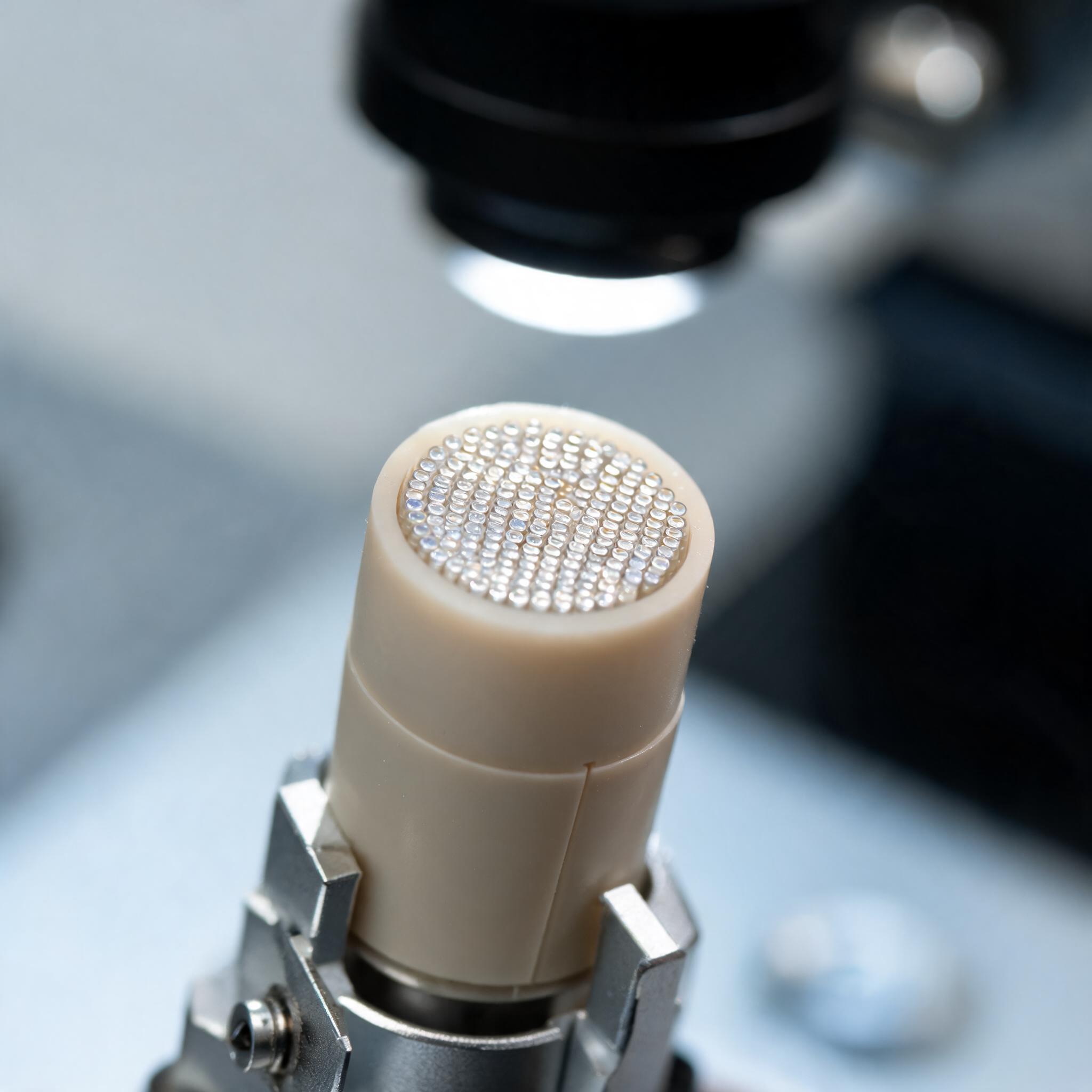
- Insertion loss consistency beats a single low-loss figure. A faceplate module has one or two connector interfaces. A near-packaged arrangement can have an array of them inside a single assembly, so a good average with a wide spread will still fail on the worst channel.
- Mate-and-demate cycles become a serviceability question. If the optical engine remains replaceable, as NPO intends, then the connector must survive field rework. Ask for cycle-test data, not just initial insertion loss.
- Density drives the fibre routing, not the optics. High-density arrays mean tighter bend radii inside the chassis. Bend-insensitive fibre and controlled routing hardware are part of the optical budget, not accessories.
- The test step has to scale with the architecture. Near-packaged and co-packaged assemblies cannot be tested by plugging a faceplate module into a rack instrument. Test access has to be designed into the assembly, which is why test vendors have been repositioning around full-chain capability.
- Coupling optics are now a yield item. Wafer-level micro-optics have moved from accessory to yield-determining component as modules approach 1.6T and 3.2T; suppliers reporting shipments above 900 million units are describing process maturity, which is exactly what a new packaging architecture needs from its bill of materials.
Explore Our Optical Transceivers & Modules →
How to build an RFQ for near-packaged and co-packaged optics
- Split the RFQ by function, not by supplier. Optical engine, coupling optic, high-density connector, fibre assembly and test fixture have different failure modes and usually different vendors. One combined RFQ produces a combined answer that hides the weak link.
- Specify the channel count and the worst channel. Ask for insertion loss distribution across the array, with a stated maximum, not a typical value. This single change removes most of the ambiguity in high-density quoting.
- Request rework and cleaning procedures with the samples. A connector that cannot be cleaned and re-mated in the field is a laboratory part, regardless of its datasheet performance.
- Confirm the shipping form of the coupling optics. Bare die, lens array and integrated subassembly carry very different assembly cost and yield implications downstream. Ask which one your supplier will actually deliver.
- Treat the test fixture as a line item. If your supplier cannot state how the assembly will be tested, the architecture has not been industrialised yet — useful to know before you commit to a volume plan.
Sourcing optical modules, connectors or coupling optics?
Send your channel count, wavelength, connector type, insertion-loss budget and annual volume to sales@tuolango.com and we will return a sourcing comparison with sample options.
Sources and disclosure
Sources: Optical Fiber Online (c-fol.net) report of 26 September 2026 on UTU high-density connectors supporting NPO and SNPO compute interconnect at the Yunqi Conference; Optical Fiber Online report of 24 September 2026 on Corning’s second CPO Technology and Industry Ecosystem Forum and its discussion of the co-packaged optics volume-production path; Optical Fiber Online report of 24 September 2026 on SUNA silicon lens and silicon capacitor products at ECOC 2026, including the cumulative silicon lens shipment figure of more than 900 million units. Architectural descriptions of NPO and CPO follow the terminology used in the cited Chinese-language trade reporting. Edited and analysed by TUOLAN TRADE.